
Lieferung heute & morgen

Qualitätsgarantie

Willkommens-Angebote freischalten: KOSTENLOSE Lieferung | Bis zu 80 % RABATT | Kostenlose 30-Tage-JoyPlus-Testphase
App herunterladen
A large decorative vase can make an eye-catching standalone statement in the living room, hallway or office. However, unclear measurements, delicate materials or an unsuitable opening can quickly lead to disappointing purchases. This is especially true when ordering online, so it is worth checking the technical product details rather than relying solely on product photos and marketing descriptions.
A vase measuring 35 or 40 cm in height will not necessarily take up a lot of room. You also need to consider its diameter, base and weight. A slim bottle vase can sit neatly on a sideboard, while a bulbous floor or table vase can quickly overhang a small console.
Before buying, measure the available space and use a tape measure to mark out the product dimensions on the furniture. This makes it easier to judge whether the vase is suitable for the entrance area, a side table or as a decorative vase for the living room.
Many models are primarily intended as decoration for dried flowers, pampas grass or artificial flowers. With ceramic, dolomite, clay or metal vases, you should therefore check whether the inside is glazed to make it watertight. Some product descriptions explicitly recommend confirming water resistance before using the vase with fresh flowers.
For a vase intended for dried flowers, dry cleaning is sufficient. Fresh flowers, on the other hand, require a safe water level, a suitable inner coating and a stable base.
Ridges, stepped details, ombre effects and gold-coloured accents can give a modern vase plenty of visual appeal. However, they do not automatically make it practical for everyday use. Delicate surfaces should not be treated with abrasive cleaners. Narrow openings only accommodate a few stems, while very wide openings may require additional support for pampas grass.
A large ceramic vase made from dolomite, stoneware or clay often feels sturdy and works well as a decorative standalone piece. According to the available product details, ceramic and clay surfaces should generally be cleaned with a soft, damp or dry cloth. Many models are explicitly not dishwasher-safe.
Glass offers a different look: it can be transparent, coloured or finished with a gradient. At the same time, you should make sure that a glass vase is placed somewhere secure. Metal vases are an option for sculptural designs and easy cleaning, but they must be protected from prolonged contact with water unless they are specifically described as water-resistant.
Tall, narrow models are often well suited to long dried flowers, branches and pampas grass. The Halla Bottle Vase, for example, is listed as 40 cm high with a diameter of 20 cm and has a narrow opening for long-stemmed decorations.
A slim vase measuring 10 cm in width can be placed neatly on sideboards or desks. Wider models need more surface space, but can be used as standalone sculptures or as containers for a generous bouquet.
A decorative vase should stand on a level, stable surface. Check that the base is wide enough and consider whether branches or a tall bouquet could make the vase top-heavy. In homes with children or pets, it is sensible to place it away from walkways. Even a seemingly lightweight vase should be positioned securely, as long branches can alter its centre of gravity.
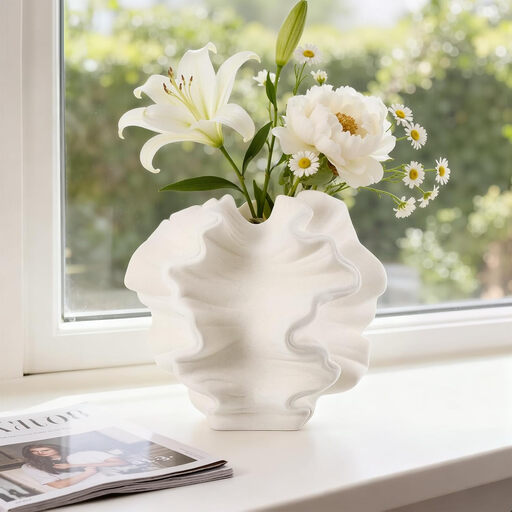
Why this product fits the profile: At around 17 cm high, this beige ceramic vase is suitable for a coffee table, shelf, desk or small sideboard. Its matt finish works well with Scandinavian, boho and neutral interiors.
The stated dimensions prevent you from expecting a tall floor vase. It is clearly intended for dried flowers or as a standalone decorative piece.
Ceramic body, matt beige finish and versatile placement on smaller pieces of furniture.
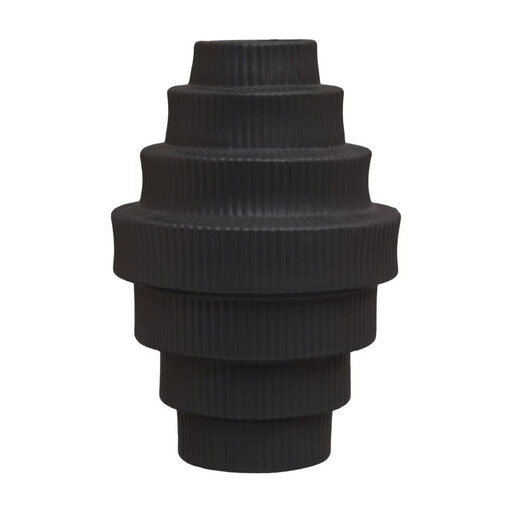
Why this product fits the profile: This black vase combines a stepped silhouette with a ribbed surface. Measuring 26 cm high with an 18 × 18 cm base, it makes a striking feature on a sideboard, console or side table.
The product details specify the material, dimensions, care instructions and a capacity of 2,700 ml. This makes it easier to assess the required surface space and intended use before buying.
100% dolomite according to the product details, fully assembled and finished with a ribbed stepped structure in black.
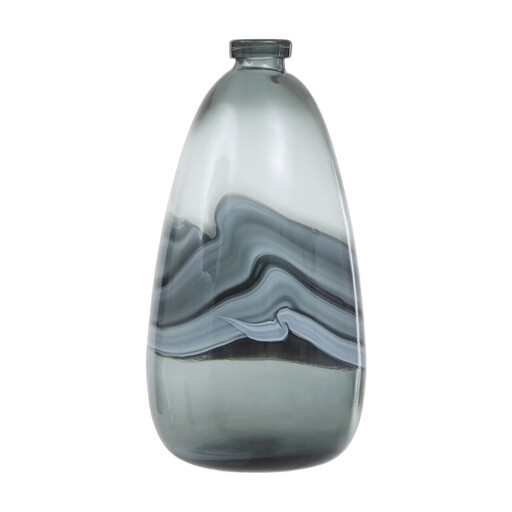
Why this product fits the profile: Measuring 40 cm high with a diameter of 20 cm, this glass vase is designed for long stems, branches and decorative arrangements. The grey gradient complements modern, minimalist and contemporary interiors.
The height and diameter are clearly stated. The slim bottle shape supports long stems rather than being designed for wide floral arrangements.
Glass as the stated material, a 12,000 ml capacity according to the product details and cleaning with a soft cloth.
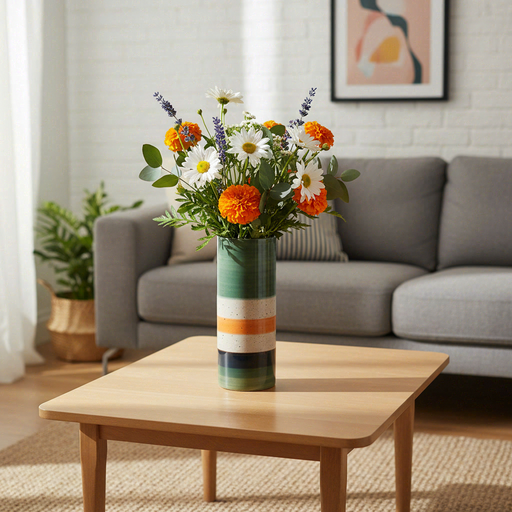
Why this product fits the profile: Measuring 30 cm high and 15 cm wide, this colourful vase adds a clear accent to the living room, bedroom or entrance area. The stripe pattern works well with colourful and rustic interior schemes.
Its more compact width is clearly stated alongside its height. This makes the vase better suited to tables, shelves and consoles than to large floor spaces.
100% clay according to the product details, horizontal stripes in green and orange, and a format suitable for floral arrangements or standalone decoration.
We have put together a complete, regularly updated list of products that fully meet these strict selection criteria and the safety regulations applicable in the EU.
For sideboards and consoles, a height of around 20 to 35 cm is often easy to manage. Models around 40 cm are better suited to larger furniture, open floor areas or long branches. As well as height, you also need to consider the width and base.
Tall models with a stable base and a suitable opening are ideal for pampas grass. A slim bottle vase keeps individual stems together, while a wider vase can accommodate more volume. Lightweight vases should be secured against tipping over when used with an arrangement.
A soft, damp cloth is usually all that is needed. Avoid abrasive cleaners, hard brushes and the dishwasher unless the manufacturer specifies otherwise. Before using the vase with water, check whether the inside of the vessel is watertight.