
Lieferung heute & morgen

Qualitätsgarantie

Willkommens-Angebote freischalten: KOSTENLOSE Lieferung | Bis zu 80 % RABATT | Kostenlose 30-Tage-JoyPlus-Testphase
App herunterladen
Creating large, multi-color 3D prints presents a unique challenge for engineers, small business owners, and ambitious hobbyists. The market offers a wide array of devices, but not every machine lives up to its marketing promises. The wrong choice can quickly lead to wasted material, unusable results, and significant costs. This guide illuminates the crucial criteria to help you separate the wheat from the chaff.
As a Joybuy Product Recommendation Officer, I filter the essential information for you, enabling you to make an informed decision based on facts, not just marketing slogans.
Before investing in a large-format 3D printer, it's important to recognize common marketing traps that often lead to disappointment.
To avoid the pitfalls mentioned above, you should closely examine three core technical parameters. These define a printer's true performance for demanding projects.
Instead of making a blanket recommendation, we have identified models tailored to different professional and ambitious user profiles.
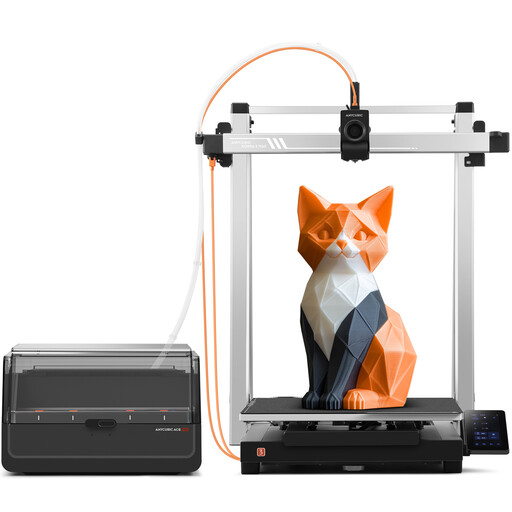
Why This Fits Their Persona: Ideal for users who need maximum size, speed, and color variety for large prototypes, architectural models, or small-batch production. Anyone looking to buy the Kobra 3 Max is seeking an uncompromising solution for demanding projects.
The stable gantry system and precise LeviQ 3.0 leveling ensure the massive 420×420×500mm build area is fully usable. The ACE Pro system for 8 colors is designed for efficiency, and the high speed is supported by AI functions and vibration compensation.
Combines an enormous 88-liter build volume with an advanced 8-color printing system and a print speed of up to 600 mm/s.
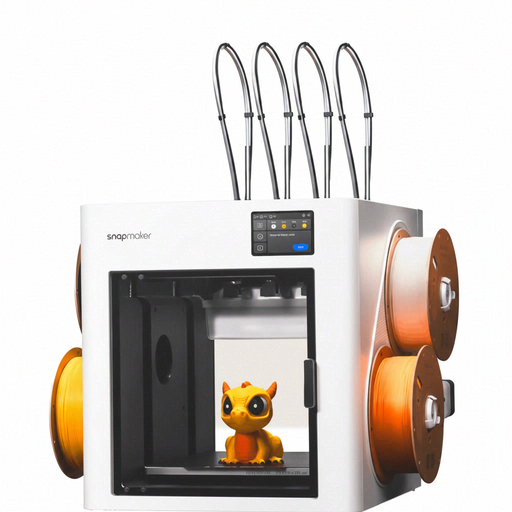
Why This Fits Their Persona: Perfect for users focused on reducing material waste and precisely processing different materials, such as printing with soluble supports (PVA) or various engineering filaments in a single object.
This device completely bypasses the trap of inefficient color systems. By using four independent tool heads (SnapSwap), it eliminates the purging process, saving up to 80% of material waste compared to single-nozzle systems, according to the manufacturer.
Virtually waste-free multi-color and multi-material printing by quickly swapping entire print heads. High precision thanks to advanced calibration algorithms between the tool heads.
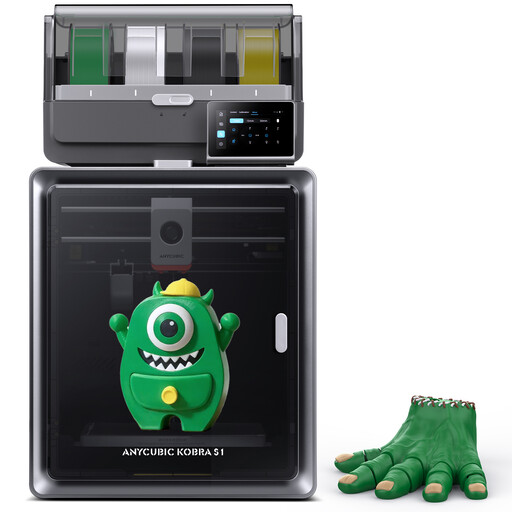
Why This Fits Their Persona: For advanced users seeking high speeds and multi-color capabilities in a more compact format. The 250x250x250 mm build area is more than sufficient for most hobby projects, without the footprint of a massive industrial machine.
This model avoids the "speed without quality" trap. Its reinforced CoreXY structure and intelligent calibration systems (LeviQ 3.0) ensure that the high print speed of up to 600 mm/s also results in precise and clean print outcomes.
Offers a powerful combination of high speed and multi-color printing (up to 8 colors with ACE Pro) in a stable and proven CoreXY frame. Ideal as an upgrade for experienced users.
We have compiled a complete, up-to-date list of products that fully meet these strict selection criteria and relevant safety regulations.
1. How much filament is actually wasted in multi-color printing? The amount of wasted filament depends heavily on the technology used. With traditional single-nozzle systems that use a purge tower, waste can be substantial during frequent color changes, often accounting for 50% or more of the material used for the colors. Modern systems like the Anycubic ACE Pro are optimized to minimize this waste. Systems with independent print heads (IDEX), like the Snapmaker U1, almost completely avoid this specific waste, as no nozzle purging is required.
2. Does a large 3D printer like the Anycubic Kobra 3 Max Combo require special maintenance? Fundamentally, the same maintenance principles apply as with smaller printers, but they are more critical on large machines. This includes regularly checking the frame's screw tightness, cleaning the linear guides for smooth long-distance travel, and inspecting belt tension. Thanks to advanced automatic leveling systems like LeviQ 3.0, manual print bed calibration is eliminated, which significantly simplifies maintenance.
3. Can I really print a single, massive object with a 3D printer that has a 420x420x500mm build volume? Yes, it is possible, but it requires careful preparation. Such a print can take several days. Crucial factors include a stable power supply (a power-loss recovery feature is essential here), a controlled ambient temperature (an enclosure can prevent warping with temperature-sensitive materials like ABS), and ensuring you have enough filament on hand.