Players who prioritise fast movement
If you often practise quick changes of direction, give more weight to motion clarity, input lag and the frame rate you can actually achieve than to the maximum resolution.


For fast-paced action on a large screen, a dual-mode OLED is one option – provided your PC and game can output the mode you want. ASUS lists the PG32UCDP as offering 4K at 240 Hz or Full HD at 480 Hz. The faster mode therefore comes with a lower resolution. If you’d rather not switch modes, consider a QHD monitor or a 4K model with a fixed refresh rate. RTINGS observed VRR flickering in dark scenes at changing frame rates on the PG32UCDP they tested. That’s why it’s worth looking at the advertised response time, actual frame rate and connection together.
If you often practise quick changes of direction, give more weight to motion clarity, input lag and the frame rate you can actually achieve than to the maximum resolution.
If you want to use the same large screen for fast-paced games and sharp 4K visuals, consider whether you’re happy to switch between different resolution and frame-rate modes.
If you switch between a PC, console or other screen use, check the connections alongside the output modes supported by each device.
First, check the frame rate your game and device can actually output at your preferred resolution. Then you can make a more informed decision about sharpness, connections and day-to-day use.
A good fit if: you want to switch between high-resolution gaming and an especially high frame rate. ASUS lists the PG32UCDP as offering 4K/240 Hz and FHD/480 Hz as separate modes.
The trade-off: on this model, 480 Hz is available at Full HD, not 4K. RTINGS also observed VRR flickering in dark scenes at changing frame rates on the PG32UCDP they tested.
A good fit if: you’d prefer a fixed QHD mode with a high refresh rate rather than switching resolutions. Dell lists a 240 Hz refresh rate for the curved 32-inch AW3226DM.
The trade-off: QHD has fewer pixels than 4K, so check that you’re happy with the level of sharpness on a large screen.
A good fit if: you prioritise 4K visuals on a large screen and don’t need an FHD/480 Hz mode. MSI specifies 4K at 240 Hz for the MPG 321URX QD-OLED.
The trade-off: to achieve high frame rates at 4K, your connected system needs to support the required output. You should also check OLED care guidance and the warranty terms for the specific model.
| What matters when buying | What to check | Who particularly values this |
|---|---|---|
| Motion and responsiveness | Check independent measurements for your chosen mode, as well as the frame rate you can actually achieve in your game. | When I practise quick changes of direction, clear motion and a responsive feel matter most to me. Around 36% of consumers put motion clarity and responsiveness first. |
| A large, sharp gaming screen | Compare the screen size and native resolution with the resolution of the mode you’ll actually use. | On a large gaming screen, I want details to look clear at my preferred resolution. Around 29% of consumers prioritise a large, sharp picture. |
| Devices and connections | Check your device’s output, the monitor input and the cable for your chosen resolution and frame-rate combination. | When I connect a PC or console, I want to be sure my device can output the mode I’m planning to use through the input I’ve chosen. Around 21% of consumers put device compatibility first. |
| Panel care and running costs | Compare the model-specific OLED care guidance and warranty terms, as well as the energy label and product information sheet. | For longer sessions, I want to weigh up panel care and running costs before prioritising extra hertz. Around 14% of consumers prioritise running costs and panel care. |
For the ASUS PG32UCDP, the manufacturer lists 480 Hz at Full HD and 240 Hz at 4K. These are different operating modes.
Always consider resolution and refresh rate together, and check which mode your device can output.
An advertised response time alone doesn’t tell you how motion and input lag will feel at your preferred frame rate. Under certain conditions, RTINGS observed VRR flickering in dark scenes on the PG32UCDP they tested.
Compare independent measurements for the mode you actually plan to use, and take VRR performance into account too.
For the Dell S3222DGM, Dell lists up to 165 Hz at QHD over DisplayPort and 144 Hz over HDMI.
Before buying, consider the monitor input, device output and cable together as one system.
Care features and voluntary manufacturer warranties vary by model. The EU energy label, on the other hand, helps you compare energy information; it doesn’t predict your individual electricity costs.
Read the OLED care guidance and warranty terms separately, and also compare the energy label for the specific model.
According to ASUS, the PG32UCDP offers 4K/240 Hz and FHD/480 Hz across two modes.
LG specifies the 32GS95UE-B as a 32-inch OLED monitor with Dual Mode.
The models listed offer different combinations of resolution, panel and design.
According to MSI, the MPG 321URX QD-OLED is a 4K monitor with a 240 Hz refresh rate.
The Joybuy models below are designed for large gaming screens with a focus on 4K, including dual-mode and fixed 4K options.
 No image available
An option if you want to weigh up 4K visuals against a higher frame rate at Full HD.
 No image available
An option if you’re looking for a large, curved 4K screen for gaming and other uses.
 No image available
An option if you’re looking for a large 4K screen with a high refresh rate and a choice of connections.
 No image available
An option if you’re considering 4K at 240 Hz and connections for multiple devices.
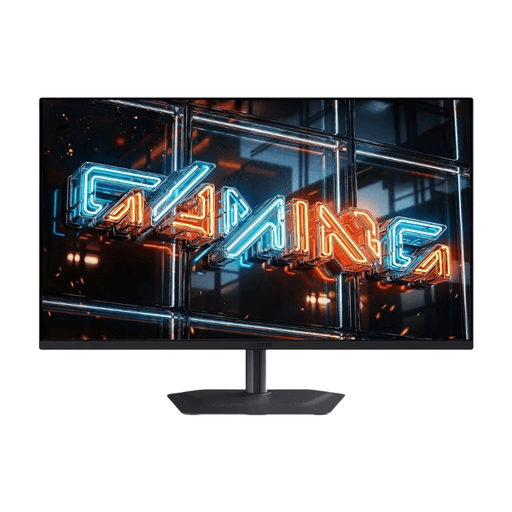 No image available
An option if a large UHD screen and an adjustable stand are important to you.
No, not for the examples mentioned here. ASUS and LG specify 4K at 240 Hz and Full HD at 480 Hz for the PG32UCDP and 32GS95UE-B. Check the resolution and frame-rate combinations supported by the specific model.
Use an input that supports your chosen resolution and frame rate, then check the output and monitor settings. Maximum values can vary by input: for the S3222DGM at QHD, Dell lists 165 Hz over DisplayPort and 144 Hz over HDMI.
Follow the care guidance for your specific model and read the terms of any manufacturer burn-in warranty before buying. ASUS and MSI describe protection features for their respective models, but these don’t guarantee that burn-in won’t occur.
For models sold in Germany, compare the energy label and product information sheet. The EU energy label for electronic displays also includes information about use with HDR content. Your usage time and electricity tariff will also affect your individual energy costs.
For a qualifying private online consumer purchase, you generally have a 14-day right to cancel. You must notify the retailer that you wish to cancel. You also have statutory rights against the seller if goods are faulty; Your Europe states that purchases of goods in the EU are generally covered by a minimum period of two years. Exceptions and the terms of the specific purchase should also be considered.