
Lieferung heute & morgen

Qualitätsgarantie

Willkommens-Angebote freischalten: KOSTENLOSE Lieferung | Bis zu 80 % RABATT | Kostenlose 30-Tage-JoyPlus-Testphase
App herunterladen
Transforming high-resolution wedding photography into tactile keepsakes requires far more precision than printing routine utility brackets. Whether rendering back-lit monochrome lithophanes, layered relief portraits or multi-tonal decorative plaques, photographic printing places heavy demands on layer consistency and colour handling. Even minor micro-layer shifts or uneven filament extrusion can create harsh banding across a couple portrait, immediately spoiling the gentle gradients of skin tones, bridal veils and ceremonial backgrounds.
Selecting the right printer comes down to balancing build area against motion stability, drying capabilities and automated filament switching. For apartments and living spaces in Germany, factors such as operating noise, enclosure design and bed calibration accuracy determine whether an intricate, multi-hour photographic project finishes cleanly or fails halfway through. This guide highlights the essential technical criteria to evaluate before investing, helping you choose a machine that renders your milestone moments with clarity.
Lithophanes depend entirely on precise light transmission through varying plastic thicknesses to simulate photographic contrast. When standard PLA or PETG absorbs ambient humidity, the trapped water boils in the hotend, leaving micro-bubbles, stringing and hazy patches throughout the model. These microscopic voids scatter light unpredictably, transforming what should be a smooth gradient in wedding attire into blotchy, milky artefacts across the lit image.
High-fidelity lithophanes must be printed standing vertically on edge rather than laid flat on the build plate to capture maximum resolution along the X and Y axes. On open-frame bed-slingers with tall uprights, rapid bed movement back and forth introduces vibration at greater heights. Without robust frame rigidity or input shaping, this oscillation causes noticeable horizontal layer banding across faces and delicate floral arrangements.
Large photo panels printed flat with subtle multi-colour layer changes span wide surface areas with initial layers as thin as 0.08 mm. If the print surface deviates by even a fraction of a millimetre across corners, the nozzle will either scratch the bed or fail to lay down a continuous base layer. Inadequate multi-point automated mesh levelling leads to warped corners that ruin framed wall plaques.
Photo plaques, framed prints and lithophane lightboxes require generous printable dimensions to avoid chopping images into disjointed segments.
Translating full-colour photography into physical models requires smooth switching across white, cyan, magenta, yellow and black filaments without manual intervention.
Consistent first-layer adhesion and active material conditioning prevent optical imperfections from developing during long print jobs.
These three multi-colour platforms cater to distinct project scales, from massive framed wall panels to whisper-quiet apartment studios.
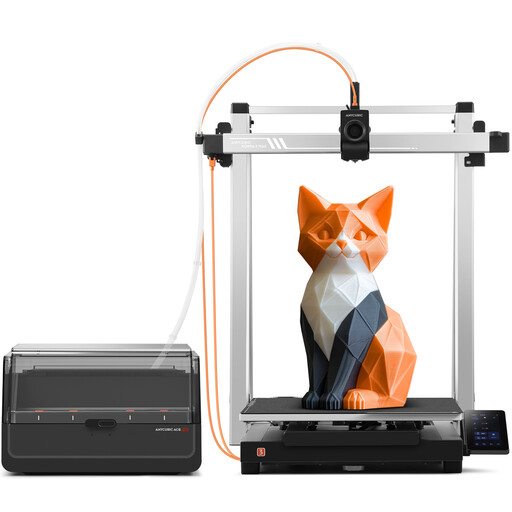
Why This Fits Their Persona: Equipped with an expansive 420 x 420 x 500 mm build volume, this machine allows you to produce full-scale wedding photo wall hangings, expansive back-lit panels and multi-piece memory boxes in a single pass without segmenting your prints.
Its high-speed kinematics capable of up to 600 mm/s ensure that huge multi-colour display pieces finish in manageable time frames rather than stretching across multiple days.
Offers the largest working envelope in the lineup, making it the practical choice for expansive architectural photo displays and large decorative wedding gifts.
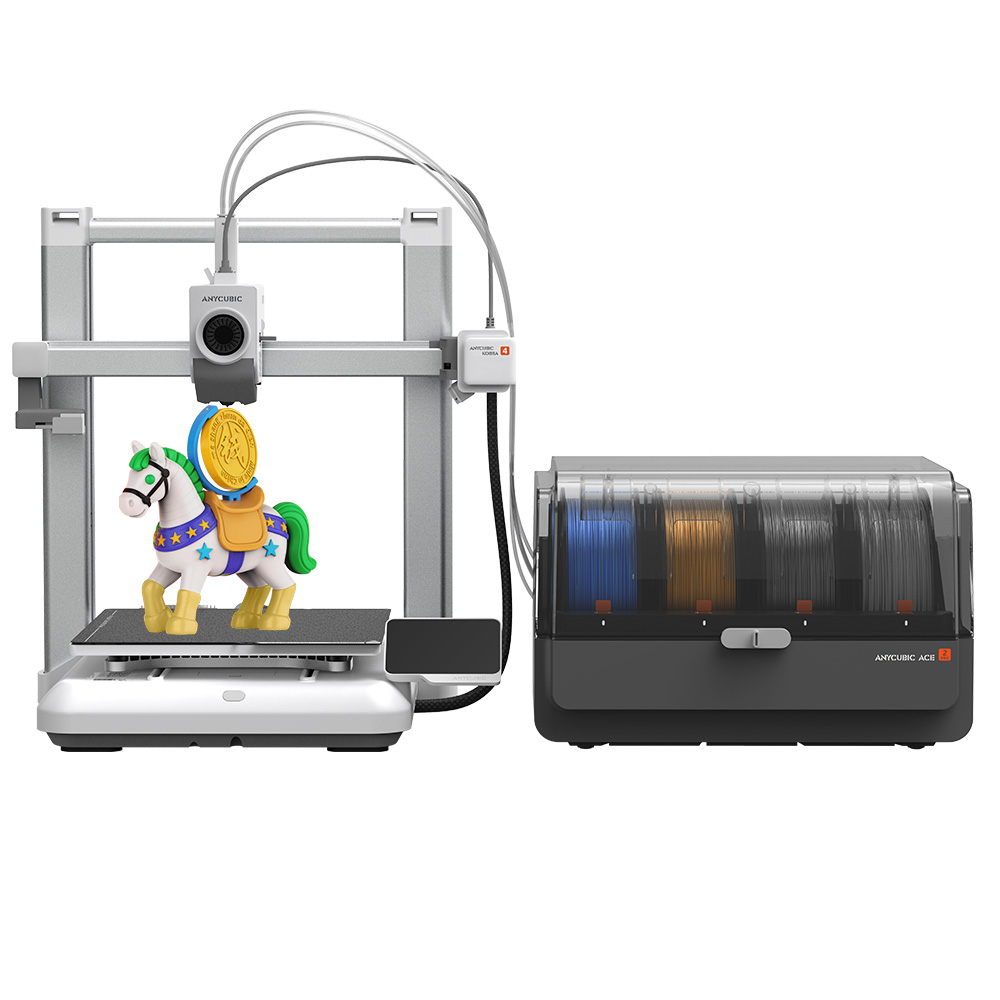
Why This Fits Their Persona: Designed around rigid metal construction, LeviQ 3.0 automated 49-point bed levelling with precision below 0.02 mm, and active 65 degrees Celsius filament drying while printing, this model is tailored for immaculate surface quality.
Active heated drying directly eliminates the micro-porosity and light-scattering defects caused by damp filament, ensuring lithophanes achieve pure translucence and sharp contrast.
Exceptional mechanical calibration and built-in spool conditioning guarantee flawless first-layer adhesion and razor-sharp clarity on delicate photographic bas-reliefs.
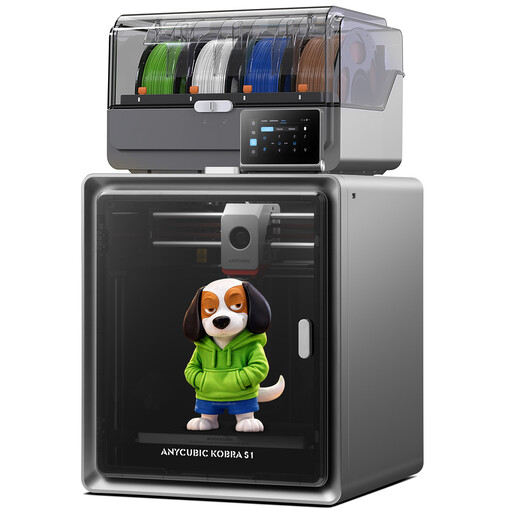
Why This Fits Their Persona: Featuring a fully enclosed CoreXY metal architecture, 16-colour multi-material capacity and ultra-quiet 44 dB operation, this printer fits effortlessly into German flats and shared domestic living spaces.
The fully enclosed CoreXY motion system keeps the print bed stationary along the Y axis, preventing the mechanical wobble and layer-shift banding that plague tall, thin lithophanes on open bed-slingers.
Combines rich 16-colour photographic palette support with enclosed thermal stability and whisper-quiet domestic operation at up to 600 mm/s.
Explore our complete catalogue of multi-material 3D printers, dedicated filament dryers, speciality photo-grade resins and replacement build plates to fine-tune your creative setup.
An enclosed CoreXY design is technically superior for vertical lithophanes because the build plate only moves downward along the Z axis, keeping the tall, delicate model completely still while printing. Traditional bed-slingers rapidly move the print bed back and forth along the Y axis, which can induce micro-wobble and horizontal layer lines at higher elevations on thin photo panels.
Polymers absorb ambient room humidity within hours of exposure. When extruded at high temperatures, this moisture turns into steam pockets that create surface micro-fissures, stringing and internal haziness. In back-lit lithophanes, these flaws scatter light unevenly, muddying fine contrast in wedding portraits and creating dull, milky patches where clear transitions should be.
For standard desk-standing frames and modest lightboxes, a medium 250 x 250 mm bed is sufficient. However, if your goal is to reproduce full portrait-oriented wall panels matching standard 30 x 40 cm or 40 x 50 cm photo dimensions in one continuous piece, a large-format platform offering 420 x 420 mm or more is essential to avoid cutting and gluing parts.