
Lieferung heute & morgen

Qualitätsgarantie

Willkommens-Angebote freischalten: KOSTENLOSE Lieferung | Bis zu 80 % RABATT | Kostenlose 30-Tage-JoyPlus-Testphase
App herunterladen
A large outdoor planter can structure a balcony, define a terrace or add greenery to an entrance area. However, your choice should not be based solely on colour and shape. Dimensions, stability, water drainage and the material’s suitability for the intended environment are all key considerations.
A weather-resistant surface says little about whether a planter will remain suitable in frost, wet conditions and changing temperatures over the long term. Look for specific details such as UV resistance, water resistance or a stated temperature range. For example, the Beliani MYRA is specified as being temperature-resistant from -20 °C to 40 °C, as well as UV- and water-resistant.
For models without specific weather-resistance information, you should choose the location more carefully. A covered balcony has different requirements from an exposed terrace.
A tall planter can appear much larger than its actual interior because of a frame, wide rim or distinctive shape. As well as checking the height, width and depth, you should therefore also check the capacity in litres. For larger plants, it is also important to find out whether an inner pot is required and how much room remains for the root ball and growing medium.
A rectangular planter can work well as a room divider, but it needs a sufficiently wide and level surface.
Waterlogging can damage plants and become particularly problematic in freezing temperatures. A planter for balconies and terraces should therefore have a suitable way for water to drain away, or be used with a suitable inner pot.
The weight also changes considerably once the planter has been filled with plants and compost. A lightweight planter is easier to move, but may be less stable in windy conditions. A heavier model provides greater stability, but should only be placed where the surface has sufficient load-bearing capacity. Balconies are also subject to the requirements of the relevant building and landlord.
Measure the available area, including space for movement and plant care. A tall planter around 55 to 60 cm high is suitable for creating noticeable greenery without necessarily requiring floor-to-ceiling plants. On a narrow balcony, compact square or round shapes are often more practical.
For a terrace or entrance area, several identical planters can look more modern than a mixture of different sizes. A black planter or grey planter will often complement neutral façades and metal furniture. A beige planter can be combined with wood, natural stone and light-coloured walls.
Material details should be as specific as possible. According to the product information, the Trosa models from Premier Housewares are made from 100% iron and require assembly. They should be cleaned with a damp cloth; abrasive cleaners should not be used.
According to the product description, the Beliani MYRA is made from a clay fibre mixture with magnesium chloride and glass fibre. It is specified as being UV-, water- and weather-resistant. For indoor use, an inner pot or suitable lining is recommended.
The Beliani ABDERA is described as featuring a material combination of stone, polyresin and glass fibre. The surface may vary slightly from one model to another. Such variations should not automatically be considered a defect if they are expressly mentioned in the product description.
Check whether the large plant pot already has drainage holes. The MYRA has two openings in the base; an inner pot is also required. The ABDERA has a pre-formed opening that can be drilled out if required. A plug for sealing it is included.
With a planter intended for both indoor and outdoor use, the drainage system should be adapted to the location. Indoors, escaping water and moisture can damage floors. Outdoors, excess water should be able to drain away in a controlled manner wherever possible.
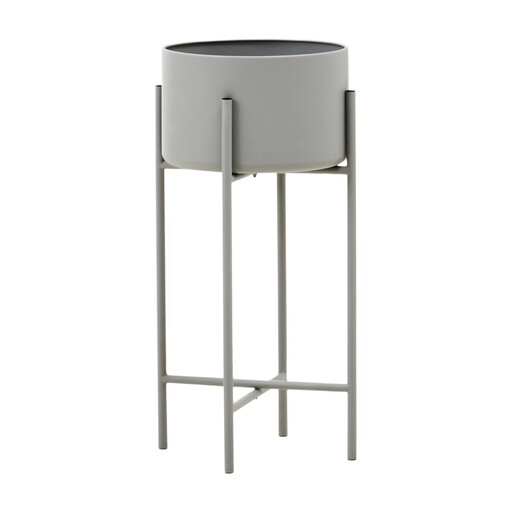
Why this product suits the profile: Measuring 55 × 28 × 28 cm, it provides a clearly defined, compact footprint for a balcony, terrace or sheltered entrance area. The grey design can be combined with a range of planters and furniture.
The product details specify the dimensions, material and care instructions. Before planting, you should nevertheless check how drainage is managed in the inner pot.
Iron construction, four cross-connected legs, grey finish and a weight of 9 kg according to the product information.
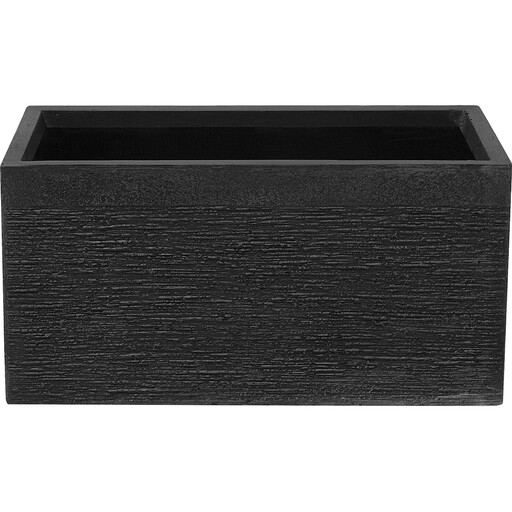
Why this product suits the profile: The rectangular shape, measuring 60 cm wide, can be used as a room divider in a living area or as a planted privacy screen on the terrace. According to the product information, it has a capacity of 42 litres.
UV, water and temperature resistance are specified clearly. The note that an inner pot is required helps protect indoor areas from escaping water.
Black rectangular design, two drainage holes, 42-litre capacity and stated resistance to wind and weather.

Why this product suits the profile: Standing 58 cm high with a 31 × 31 cm footprint, this round beige planter is suitable for narrow spaces, living areas, covered terraces and entrance areas.
Depending on how it is used, the drainage opening can be drilled out or sealed with the supplied plug. This allows the drainage to be adapted for indoor or outdoor use.
Stone-polyresin-glass fibre mixture, UV- and moisture-resistant properties and a capacity of 31 litres according to the product information.
We have put together a complete, regularly updated list of products that fully meet these strict selection criteria and the safety regulations applicable in the EU.
Place every decorative planter on a level, stable surface. For models with legs, all feet should rest fully on the ground. A planter with legs adds height and creates a lightweight look, but it requires particularly careful positioning.
For containers without an integrated plant insert, use a water-permeable liner or a suitable inner pot. Before placing it inside, check that water can drain away in a controlled manner. In strong winds, tall plants can increase the area exposed to the wind; a sheltered location may therefore be necessary.
Depending on the material, care usually involves nothing more than a soft, damp cloth. Abrasive cleaners can damage surfaces. During the winter months, a dry, sheltered location is still recommended for many weather-resistant planters if the manufacturer’s instructions suggest this.
That depends on the plant, root ball and available space. First measure the area where the planter will stand, then choose a container with enough internal space for the roots to grow. On balconies, you should also take the weight and load-bearing capacity into account.
Look for drainage holes or use a suitable inner pot. A drainage layer alone is not a substitute for an effective drainage system. Indoors, the planter should also be protected against escaping water.
This depends on the material, manufacturer’s instructions, location and weather conditions. Specific temperature ranges, such as those given for the MYRA model, make it easier to assess suitability. Even in very severe frost and wet conditions, however, a sheltered location is advisable. Regularly empty any standing water and avoid placing the container on a permanently wet surface.