
Lieferung heute & morgen

Qualitätsgarantie

Willkommens-Angebote freischalten: KOSTENLOSE Lieferung | Bis zu 80 % RABATT | Kostenlose 30-Tage-JoyPlus-Testphase
App herunterladen
A large plant pot for indoors and outdoors needs to hold plants securely, complement your interior style, and cope with moisture, UV radiation or temperature changes depending on where it’s placed. In practice, however, several common buying decisions lead to unnecessary costs: a pot that looks generous in product images but offers little interior space for the plant; a decorative container with no suitable drainage; or a model advertised as “weatherproof” that isn’t adequately protected for winter.
This buying guide helps you objectively compare material, dimensions, stability and drainage. The selection that follows matches different models to suitable user profiles.
Tall or wide external dimensions don’t automatically mean there’s plenty of room for soil. A thick rim, an elevated base or an integrated insert can significantly reduce the usable volume. For large houseplants, you should therefore check not just the height of the container but also the internal width and internal depth.
Waterlogging often occurs when excess water can’t drain away. Particularly with a plant pot for indoor plants, a drainage hole isn’t always present or desirable, as water can reach floors and furniture. One possible solution is a suitable inner pot with a drip tray. For the patio or garden, drainage openings are usually practical, provided the surface underneath is protected.
With an indoor outdoor plant pot, you should consider claims about UV resistance, water resistance and temperature range separately. A material may tolerate moisture but suffer damage in frost. Ceramic and stoneware should not be left exposed to permanently freezing water outdoors unless the manufacturer states they are suitable.
A large ceramic pot or a stoneware container offers a smooth surface and a decorative look. Ceramic is suitable for living spaces but can be damaged by knocks. When choosing, therefore, wall thickness, weight and a secure placement spot all matter.
Models made from iron or with an iron frame often look lighter and can allow an elevated display as a plant pot with legs. The frame should stand stably and be protected from prolonged moisture unless specific outdoor approval is given.
Blends of stone, polyresin, fibreglass or clay fibres can be interesting for outdoor areas. What’s crucial are the manufacturer’s specific details on UV resistance, water resistance and temperature range. Without this data, no general statement about lifespan can be made.
A floor-standing plant pot should sit on a level, load-bearing surface. With tall models, the centre of gravity can shift significantly upwards due to a large plant and damp soil. For balconies, entrance areas and patios, therefore, check:
A lightweight pot is easier to move around but may need additional securing outdoors. With a narrow, tall plant pot, you also need to consider the combination of container height and plant height.
Drainage holes should suit both the plant and the location. The plant pot for the patio needs a way to drain excess water, while in the living room a waterproof inner pot can protect the floor. On some models, an opening can be drilled as needed or sealed with a plug. Before drilling, check the manufacturer’s instructions so the material isn’t damaged.
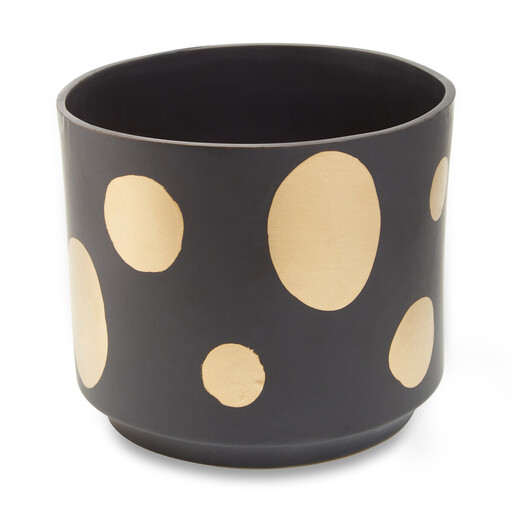
Why this product fits the profile: This model, made from 100% stoneware, is suitable for living spaces and decorative arrangements with houseplants. The stated dimensions are 17 × 18 × 18 cm, so the internal volume should be compared with your existing plant pot before buying.
The specific dimensions prevent the label “large” from being automatically equated with a large planting volume. The care instructions recommend a soft cloth and no abrasive cleaners.
Stoneware, smooth surface and a pre-assembled container. The format can be practical for artificial plants or smaller plant arrangements.
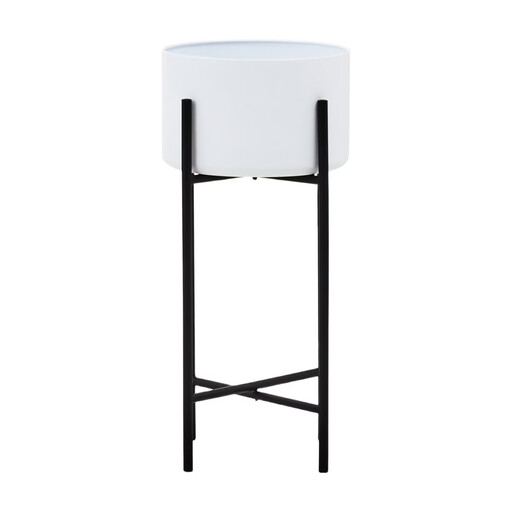
Why this product fits the profile: This 55 cm tall plant pot with a crossed four-leg frame is suitable for an elevated display in an entrance area, living room or on a sheltered patio.
The design makes the stand height and available placement area clearly visible. Since the frame needs assembly and is made of iron, the location should be protected from prolonged moisture.
Height of 55 cm, crossed four-leg frame and white-black contrast design. The container is delivered disassembled and requires assembly.
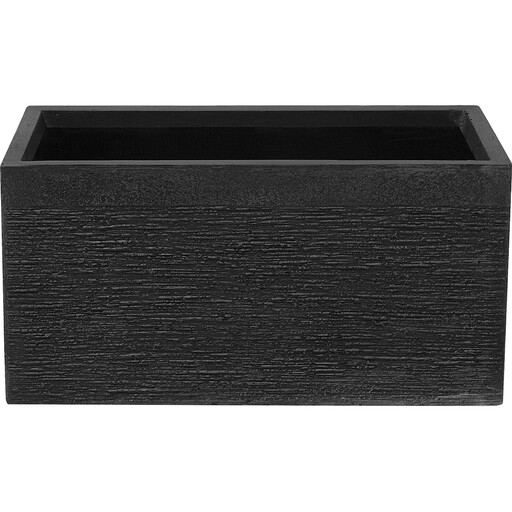
Why this product fits the profile: The oblong shape can be used as a room divider indoors or as a planted privacy screen on the patio. The stated volume is 42 litres.
Two bottom openings support water drainage. According to the product details, the material is UV and water resistant and designed for temperatures from −20 °C to 40 °C; an inner liner or foil is recommended.
Oblong rectangular shape, 42 litre volume, no assembly required and stated suitability for indoor and outdoor areas.

Why this product fits the profile: The slim, round shape works well as a decorative plant pot for a hallway, living room or sheltered outdoor area. The stated volume is 31 litres.
The bottom opening is pre-formed and can be drilled out if needed; a plug is included. This allows the drainage to be adapted for indoor or outdoor use.
Stone, polyresin and fibreglass blend, 58 cm height, UV and moisture resistant material specifications, and no assembly required.
We’ve put together a complete, regularly updated list of products that fully meet these strict selection criteria and the safety regulations in force in the EU.
Before filling, measure the location and check its load-bearing capacity. On delicate floors, use saucers or waterproof liners to protect against moisture. Even with a weatherproof plant pot, it’s still advisable not to leave water standing permanently in the container. Tall models should be placed in a wind-sheltered spot outdoors. For winter, covers or a dry indoor space can be sensible if the product details don’t specify permanent frost resistance.
For houseplants, the existing root ball is also crucial. An excessively large pot stores more moisture and can make care more difficult. The inner pot should sit stably in the container and have a suitable diameter.
For outdoor use, specific details on UV resistance, water resistance and temperature range are important. Additionally, the pot should have suitable drainage and sit on a level, stable surface. In frost, follow the manufacturer’s recommendation.
No. A decorative outer pot for indoors can be used without a drainage opening if it contains a suitable inner pot with drainage. For directly planted pots outdoors, controlled water drainage is usually more practical.
Durability depends on the material, workmanship, location and care. UV radiation, frost, waterlogging, knocks and heavy weight can all affect the lifespan. Regular checks for cracks, rust, deformation and blocked drainage openings help to identify damage early.