
Lieferung heute & morgen

Qualitätsgarantie

Willkommens-Angebote freischalten: KOSTENLOSE Lieferung | Bis zu 80 % RABATT | Kostenlose 30-Tage-JoyPlus-Testphase
App herunterladen
Large planters for indoors and outdoors can define an entrance, act as a privacy screen on the patio, or make a clear statement in the living room. At first glance, the choice seems straightforward, but a few details are often only mentioned in passing in product descriptions. These include drainage, the actual weight, winter storage, and whether an inner pot is needed.
If you choose purely by colour and shape, you might end up with a container that isn't stable in its intended spot, can't drain excess water, or is difficult to move. The following criteria will help you interpret marketing claims objectively and select a planter that suits your needs.
A planter may be listed as suitable for both areas, yet still require different preparations. For indoor use, a sealed container or a waterproof inner pot is essential to prevent moisture from damaging floors and furniture. Outdoors, however, excess water needs to be able to drain away.
So check whether the planter has a drainage hole, whether a hole needs to be drilled first, and whether a plug is included. A drainage hole alone doesn't replace a saucer or mat on a balcony, patio or indoor floor.
External measurements such as 60 × 29 × 30 cm don't automatically describe the usable soil capacity. Reinforcements, double walls or a high rim can reduce the internal volume. So look for the volume in litres and check whether an inner pot is required.
For larger plants, footprint and stability also matter. A tall planter with a narrow base can look decorative, but it needs a level surface and shouldn't be loaded unevenly.
UV resistance, moisture resistance and temperature ratings are useful product data. However, even a weather-resistant planter shouldn't be left permanently exposed to extreme conditions if the manufacturer recommends winter storage. Water inside the container can also be problematic in frost.
For an outdoor planter, you should therefore check:
A rectangular planter makes efficient use of a narrow patio, balcony edge or walkway. It also works well as a room divider when you want a long, linear boundary. A round planter, on the other hand, can be positioned harmoniously from multiple angles and often suits single specimen plants or entrance areas.
The height should complement both the plant and its surroundings. A tall planter can lift plants visually, but it mustn't obstruct doors, walkways or windows. For artificial plants, a stable construction with the right insertion depth is often sufficient, while real plants need more attention to drainage and soil volume.
A black planter creates contrast and blends into modern interiors, metal furniture or dark window frames. A beige planter offers a lighter, more understated look and can be combined with wood, natural stone and warm wall colours. A grey planter is versatile for concrete surfaces, minimalist spaces and neutral patios.
Alongside colour, the surface finish matters: textured materials can show slight variations in pattern and colour distribution. For products with mineral components, this isn't necessarily a flaw – it can be part of the character. If you expect a perfectly uniform appearance, read the product description carefully.
Material blends such as stone, polyresin, clay fibres, magnesium chloride or fibreglass can offer different properties. What matters are the manufacturer's specific details on weight, UV resistance, moisture and temperature range.
For real plants indoors, a removable insert or liner is recommended if the manufacturer provides one. Outdoors, the drainage hole should remain clear. For cleaning the products featured here, a soft, damp cloth is sufficient; abrasive cleaners can damage the surface.

Why this product suits the profile: This round planter with 31 litres of capacity combines a slim silhouette with a light, neutral colour. It works well as a decorative planter for living spaces, entrance areas or sheltered outdoor spots.
The opening is pre-formed and can be drilled if needed. A supplied plug allows it to be used as a sealed container indoors.
31 litres capacity, 58 cm height, material made from stone, polyresin and fibreglass, and can be used with or without a drainage opening.
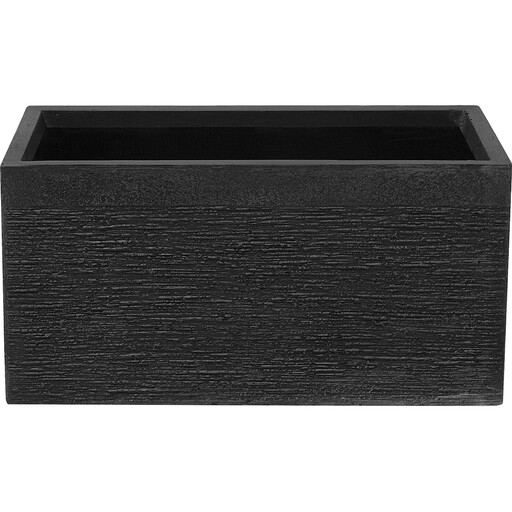
Why this product suits the profile: The long, rectangular shape is designed for modern rooms, patios and narrow spaces. With 42 litres of capacity, the planter can be used as a room divider or planted boundary.
Two small drainage holes are already in place. The product details also mention UV resistance and a temperature range of -20 °C to 40 °C.
60 cm width, 42 litres capacity, clay fibre-magnesium chloride-fibreglass blend, and suitable for both indoor and outdoor use.
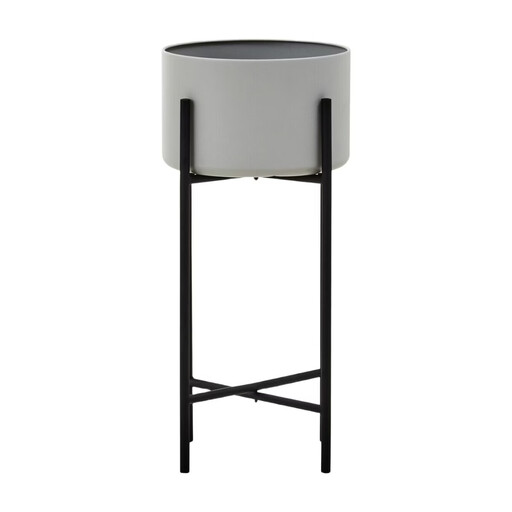
Why this product suits the profile: This 55 cm tall model with a grey planter and black iron frame is designed for artificial flowers and decorative indoor display.
The product description clearly states it is intended for artificial flowers. This removes the question of regular watering and drainage for this use.
55 cm height, 28 × 28 cm base, grey container, black iron frame and wipe-clean surface; assembly required.
Before filling, make sure the location is level and can bear the weight. An empty planter can already weigh several kilograms; soil, water and the plant will increase the load significantly. On balconies, check the permitted load capacity. It's best to prepare a filled planter in its final position.
For real plants, a drainage layer alone isn't always enough to prevent waterlogging. What matters more is that the drainage hole isn't blocked and that the container sits on small spacers or a suitable base. For a planter intended for artificial flowers, a dry filler or a suitable insert is sufficient, as long as the structure remains stable.
We've put together a full, regularly updated list of products that meet these strict selection criteria and all applicable EU safety regulations.
Use a waterproof inner pot, a liner, or a model with a sealable opening if the product allows it. Also place a waterproof mat or saucer underneath the container. After watering, check whether water has collected in the outer pot.
The lifespan depends on the material, location, frost, UV exposure and care. Details such as UV resistance or a temperature range provide technical guidance, but aren't a guarantee for every location. Before winter, make sure drainage holes are clear; if the manufacturer recommends it, store the planter in a dry, sheltered place.
The planter itself incurs no ongoing energy costs. For real plants, you'll have expenses for soil, fertiliser, water and possibly replacement plants, depending on the type. A planter for artificial flowers, on the other hand, mainly needs occasional cleaning and involves no watering costs.