
Lieferung heute & morgen

Qualitätsgarantie

Willkommens-Angebote freischalten: KOSTENLOSE Lieferung | Bis zu 80 % RABATT | Kostenlose 30-Tage-JoyPlus-Testphase
App herunterladen
A large vase can serve as a flower container and a standalone home accessory in the living room, dining room, entrance area or office. The choice may initially seem straightforward, but product images and terms such as “high quality”, “luxurious” or “unbreakable” reveal little about everyday practicality on their own. What matters are clear, verifiable details about the material, dimensions, opening, base and care requirements.
A tall vase requires more than sufficient clearance above. Its diameter, base area and centre of gravity also determine whether it will stand securely on a sideboard. A large floor vase with a broad base may be unsuitable for a narrow console table, while a slim bottle shape may fit much better.
Before buying, measure the available space and check that the vase will not obstruct walkways, doors or frequently used table edges.
A wide opening can quickly look empty when used with individual branches. For long stems and a small number of flowers, a narrow opening is often more practical because it keeps the stems together. A wider opening, by contrast, can be useful for abundant bouquets of roses, lilies or hydrangeas.
For a large vase for flowers, the upper diameter should therefore be specified in addition to the height. With dried flowers, the shape of the stems is another important consideration.
Glass, ceramic, dolomite, porcelain and terracotta differ in weight, visual effect and care requirements. A glass vase makes the water and stems visible, but requires a secure position. A ceramic vase offers an opaque appearance and can be stable when it has a broad base. However, this does not automatically mean that it is impact-resistant or shatterproof.
Descriptions such as “thick-walled” or “unbreakable” should also be clearly substantiated in the relevant product specifications. Regardless of the material, place the vase on a level surface and keep it secure around children and pets.
As a practical guide:
This classification does not replace measuring the available space. A slim 40 cm vase may work well on a table, while a wide model of the same height can quickly overwhelm the area.
For fresh flowers, the vase must be watertight and easy to clean. Pay attention to information about the capacity, material and care requirements. Not every decorative vase is dishwasher-safe; for the models listed here, cleaning with a soft, damp cloth is generally recommended.
In larger vessels, water can significantly increase the overall weight. A weighted base and sufficiently wide footprint are therefore important for table arrangements with fresh flowers. With a lightweight vase, a moderate amount of water and a position away from draughts or frequent contact are advisable.
A modern vase with a ribbed or stepped surface can make an impression even without flowers. A simple cylindrical shape, on the other hand, is easier to combine with a range of arrangements. In terms of colour, a black vase and a white vase usually create a clean, high-contrast look, while a gold vase or a black-and-gold finish adds a decorative accent.
For dried flowers, matt ceramic surfaces, bottle shapes and narrow openings are often particularly practical. Although a vase for dried flowers does not require water care, dust should still be removed regularly with a soft cloth.
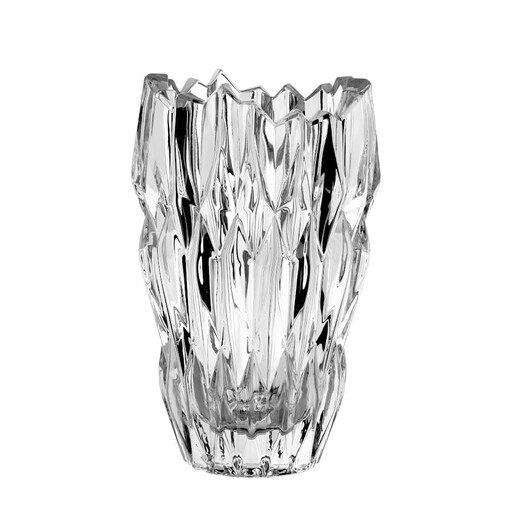
Why This Fits Their Persona: At 24.5 cm tall, this clear glass vase is suitable for tables, shelves or desks, and works equally well with individual roses and smaller bouquets.
The precise height and textured surface are specified, making it easier to compare the vase with the available space before purchase.
Clear glass appearance, geometric diamond pattern and, according to the product description, a thicker glass wall. Cleaning with water is recommended.
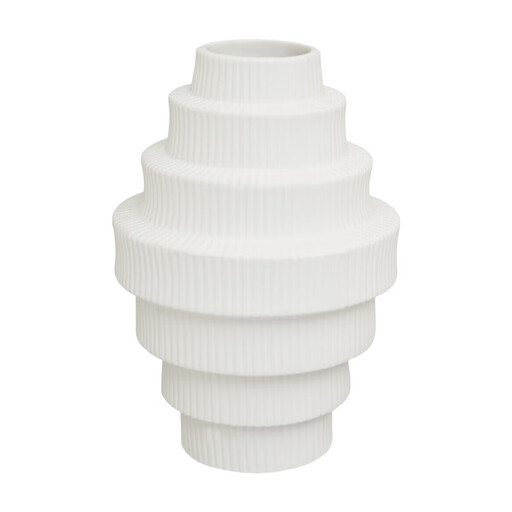
Why This Fits Their Persona: The white sculptural form complements minimalist and contemporary interiors, particularly when the vase is intended to remain a visible feature even without flowers.
The product specifications state a height of 26 cm, a width and depth of 18 cm, and dolomite as the material. Its actual size and care requirements can therefore be verified.
Ribbed, stepped surface; 2,700 ml capacity; care with a soft, damp cloth.
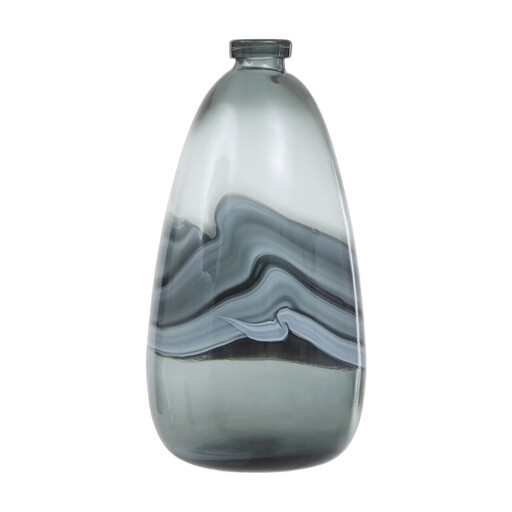
Why This Fits Their Persona: The 40 cm bottle shape with its narrow neck is designed for long stems and works well on a sideboard or a generous windowsill, for example.
The height and width are clearly specified. The narrow opening helps prevent individual long branches from looking loose and unstructured.
Glass with a grey gradient, 40 cm height, 20 cm diameter and, according to the product information, a 12,000 ml capacity.
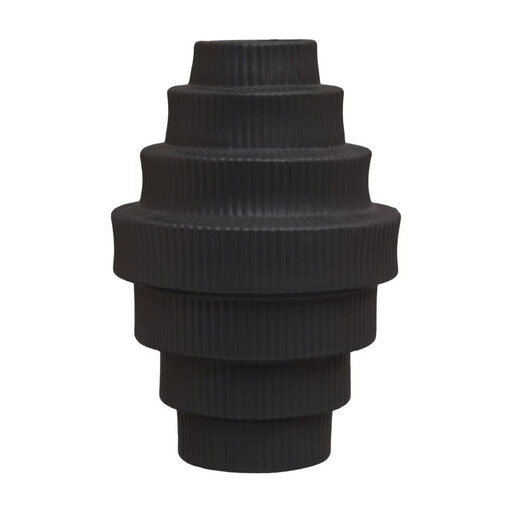
Why This Fits Their Persona: The black vase is aimed at buyers who want to create a crisp colour accent on a light sideboard or table.
The specification sheet lists dolomite, a height of 26 cm, and a width and depth of 18 cm. The care instructions advise against abrasive cleaners.
Stepped, ribbed design; black finish; fully assembled and intended to be cleaned with a soft, damp cloth.
For a vase used as a table decoration, the surface should be level, dry and sufficiently deep. With glass vases, a protective mat is advisable to help prevent scratches on delicate surfaces. Change the water regularly to minimise deposits. Do not overfill the vessel if the product specifications do not state a maximum load.
A decorative vase without flowers can be placed in an entrance area, on a bookcase or in the bedroom. With dried flowers, gentle dusting is usually sufficient. Ceramic and dolomite models should not be cleaned with hard sponges or abrasive products. For fragile materials, a position away from busy walkways is preferable.
Our category features an ever-changing selection of vases in different sizes and materials for a variety of decorative settings. Before buying, check the stated dimensions and care instructions for each product.
For tables and sideboards, around 24 to 35 cm is often a practical size. A vase measuring 40 cm or more is better suited to long branches, tall floral arrangements or a particularly spacious setting. Measure both the height and depth of the available surface beforehand.
It depends on how the vase will be used. Glass keeps the water and stems visible and works well with fresh flowers. Ceramic, dolomite or porcelain offer an opaque finish and can stand alone as decorative pieces. Regardless of the material, compare the base area, weight and care instructions.
Yes, provided the opening and height suit the arrangement. A narrow opening gathers long grasses and branches, while a wide opening can accommodate greater volume. If the vase is designed to hold water, also check whether the manufacturer approves its use with fresh flowers.