Households that eat nuts regularly
If you often use nuts for breakfast, baking, cooking or snacking, a larger pack could be a good choice. The key is being able to store the opened pack in a cool, dark place.


A large pack of nuts is best suited to households that get through their supplies regularly and can store opened nuts in a cool, dark place. If you only need nuts occasionally or often switch between varieties, smaller packs are worth considering too. For an organic shop, also check the product’s certification, ingredients and allergen information.
If you often use nuts for breakfast, baking, cooking or snacking, a larger pack could be a good choice. The key is being able to store the opened pack in a cool, dark place.
If you’re specifically looking for organic nuts, check the information on the product itself rather than judging by the brand name or pack size. Ingredients and allergen information should also factor into your decision.
If you rarely eat nuts or like trying different varieties, a smaller pack may suit you better. A resealable pack makes it easier to use, but it’s no substitute for proper storage.
First, work out how much you’re likely to use. Then check how the nuts are stored, their organic certification and how they’ve been prepared on the product page.
| What to consider | What to check | Who it matters most to |
|---|---|---|
| Pack size | Compare the pack size with how much of that type of nut you expect to use. | If you regularly use nuts in several dishes or as a snack, make sure you’ll get through the larger pack. This is a key consideration for around 34 % of consumers. |
| Storage | Check how the nuts have been prepared, whether the pack can be resealed and whether you have a cool, dark place to store it. | If a pack stays open for a while, I want the nuts to retain their quality until I’ve used them. Around 27 % of consumers prioritise suitable storage. |
| Labelling | Read the organic certification, ingredients and allergen information on the current pack. | If I’m specifically shopping for organic products or need to avoid certain ingredients, a general description of the range isn’t enough. Around 26 % of consumers prioritise this product information. |
| Preparation | Check whether the nuts are plain or roasted or salted. | I may need different nuts for a recipe than I would for a ready-to-eat snack. The intended use is the most important factor for around 13 % of consumers. |
If a bag stays open for a long time, the quality of the nuts may deteriorate. Pack size alone doesn’t tell you whether it’s right for how much you use.
Think about how often you use that type of nut and plan to store it in a cool, dark place before you buy.
Neither organic certification nor the description ‘plain’ replaces the allergen information for the individual product.
Read the ingredients and allergen information on the current pack. Don’t rely on details for another variety from the same brand.
Roasted or salted varieties may contain additional ingredients. EDEKA lists rapeseed oil and salt alongside cashews in its roasted and salted organic cashews.
For a recipe, choose nuts based on the ingredients you need. For snack varieties, compare the ingredients list and nutritional information.
Lidl describes Solevita as a brand for drinks and fruit juices, while Alesto is a brand for nuts, dried fruit and snacks.
Look for the specific nut product and check its organic certification rather than assuming it from the brand name.
An own-label option offering different types of nuts in a range of pack sizes.
An option for smaller quantities if you eat nuts occasionally or like to switch between varieties.
Lidl’s Alesto range includes plain nuts, dried fruit and seasoned snacks.
Two distinct ranges from ALDI SÜD. Check organic certification and pack size separately for each product.
An option to compare for plain nuts and kernels in several pack sizes.
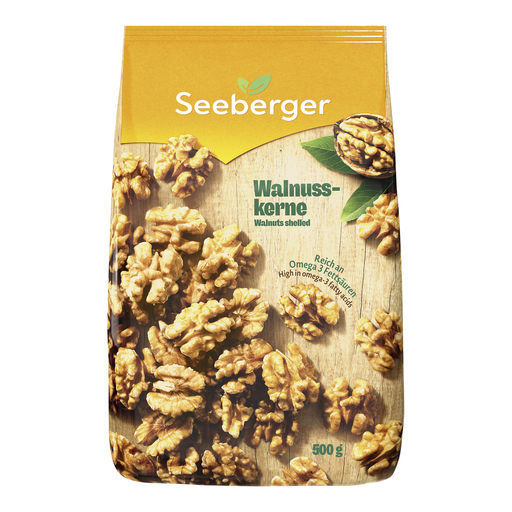
These two 500 g packs could suit you if you regularly use walnuts or almonds. If you specifically want to buy organic nuts, check the organic certification of each product before choosing.
 No image available
This 500 g pack could be a good choice if you regularly use walnut kernels and can store the opened pack properly.
If you’re specifically shopping for organic products or need to check allergen information, refer to the details on the current pack.
 No image available
This 500 g pack of whole almonds could suit you if you regularly enjoy them as a snack or use them in cooking.
If you’re shopping for organic products, check the certification and, if needed, the allergen information on the current pack.
The EU organic logo is mandatory on prepacked organic food from the EU, explains the Federal Ministry of Agriculture, Food and Regional Identity. Also check the product’s code for the organic control body and the stated origin of the ingredients. Different rules apply to the logo on unpackaged or imported organic goods.
A 500 g pack is a good fit if you regularly use that type of nut and can store the opened pack properly. If you only use nuts occasionally or often switch varieties, a smaller pack may be more practical.
Store nuts in a cool, dark place. For opened packs of shelled or chopped nuts, the Consumer Advice Centre recommends keeping them in a container in the fridge. Don’t eat nuts that have mould or pests, smell musty or rancid, or taste bitter.
No, these descriptions don’t replace the allergen labelling for the specific product. Allergens present in prepacked foods must be highlighted in the ingredients list. Also check any ‘may contain’ information on the current pack.