Creating text displays
If you mainly print clear black headings and short explanations, colour isn’t essential for conveying the information.


If you’ll mainly be printing black A4 headings and short texts, a mono laser printer should fit the bill. If colour helps distinguish content or images form part of your displays, consider a colour laser printer. You’ll also need to check the paper size and weight, along with the right feed or duplex path. In a small classroom, think about where the printer will go and how much room it needs. The German Environment Agency’s precautionary advice about separate rooms applies to high-volume printers.
If you mainly print clear black headings and short explanations, colour isn’t essential for conveying the information.
If you use colours or images to distinguish exhibition content, you’ll need a printer that supports colour printing.
If you want to print on thicker card, labels or smaller cut sheets, make sure the size, weight and paper path are compatible.
First, decide whether colour conveys information. Then check that your chosen materials are compatible with the paper path you plan to use.
| What matters | What to look for | Who it matters most to |
|---|---|---|
| Clear, readable displays | Check whether your designs need colour to convey information and whether A4 is the right size. | If I mainly need black headings and short texts, I don’t want to make colour printing a must-have. Around 33% of consumers put clear, readable displays without unnecessary colour printing first. |
| Colour and images | Compare your design with a black-and-white test print. For colour printing, check which toners are compatible with the complete model. | If colours guide the reader or images convey information, the print needs to reproduce those differences. Around 25% of consumers put informative use of colour first. |
| Card and labels | Check the size, weight, coating and paper path. Kyocera specifies 60–220 g/m² via the multi-purpose feeder, 60–163 g/m² from the cassette and 60–120 g/m² for duplex printing on the ECOSYS PA2101cwx. Canon specifies up to 200 g/m² for coated paper on the i-SENSYS LBP646Cdw. | If I want to print on thicker card or labels, the material needs to feed through the intended tray. Around 25% of consumers prioritise handling specialist paper. |
| Space and shared access | Check the space available, connections and accessibility. As a precaution, the German Environment Agency recommends placing high-volume printers in separate rooms. | If several people will use the printer in a small room, I need a practical location and easy access. Around 17% of consumers put printer placement and shared access first. |
Kyocera specifies different paper-weight ranges for the multi-purpose feeder, cassette and duplex unit on the ECOSYS PA2101cwx.
Check the datasheet for the paper type, size and weight supported by the paper path you intend to use.
According to HP, the HP Color LaserJet Pro 3202dw prints in colour but doesn’t scan or copy.
Decide separately whether you need colour printing, scanning or copying, and check the features of the complete model.
If you also need to scan or copy, you’ll need another solution for that.
Brother lists toner and drum units as separate components for the HL-L2445DW. HP warns that chips or circuitry from other manufacturers may affect the Color LaserJet Pro 3202dw.
Before comparing running costs, check the consumables and any relevant conditions for the complete model.
With Brother, you’ll need to factor in toner and a separate drum; colour printing also requires colour toners.
The model ranges mentioned here cover mono printing and multifunction needs.
The i-SENSYS LBP646Cdw is an A4 colour laser printer for colourful displays and a range of media.
The ECOSYS PA2101cwx is an A4 colour model where choosing the right paper path matters when printing on thicker materials.
The Color LaserJet Pro 3202dw is an A4 colour laser option for printing when you don’t need scanning.
This selection includes mono laser printers for mainly text-based displays, plus a colour laser option if colour helps distinguish information. Some models also scan and copy.
 No image available
For mainly black A4 exhibition text. As a multifunction printer, it’s a good option if you’d also like to scan or copy.
Features listed in the product name: Wi-Fi, ADF and 22 ppm.
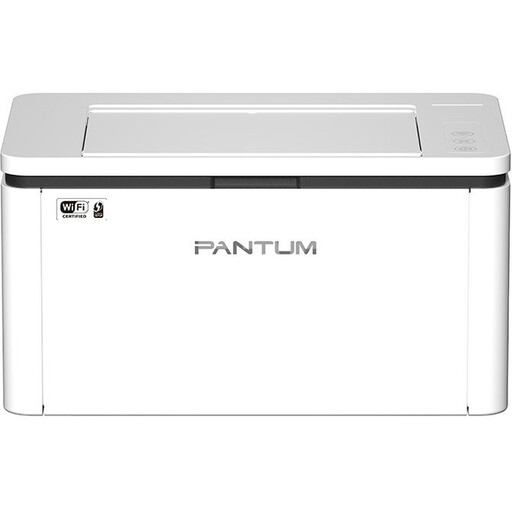 No image available
A good option for mainly black A4 text if you’re looking for a mono laser printer.
Features listed in the product name: 22 ppm, Wi-Fi and Bluetooth.
 No image available
For mainly black A4 displays. The multifunction version is a good fit if you’d also like to scan or copy.
Features listed in the product name: 22 ppm, dual-band Wi-Fi and Ethernet.
 No image available
For exhibition text where colour helps distinguish information, and you’d also like to scan or copy.
Features listed in the product name: automatic duplex printing, touchscreen, Wi-Fi, Ethernet and USB.
Don’t assume so based only on the maximum paper weight listed. Kyocera specifies 60–220 g/m² for the multi-purpose feeder on the ECOSYS PA2101cwx, but 60–120 g/m² for duplex printing. Check that your card is suitable for the paper path you intend to use.
Only if you want to digitise or copy your drafts. Brother lists scanning and copying for the DCP-L2620DW; the HL-L2445DW is a printer only.
Check which toner cartridges the complete model needs and whether it uses a separate drum. Brother lists separate toner and drum units for the HL-L2445DW. For colour printing, you’ll also need to factor in the required colour toners.
As a precaution, the German Environment Agency recommends placing high-volume printers in separate rooms and suggests the Blue Angel ecolabel as a guide to low-emission laser printers. The advice about separate rooms applies to high-volume printers. When choosing a printer, also check whether the specific model meets the criteria that matter to you.
No. The German Environment Agency points out that waste electrical equipment in Germany must be collected separately and not disposed of with household waste. The appropriate return route for a particular school printer depends, among other things, on how it is classified and where it can be returned.