People who print sheet music
If you mainly print staves and musical symbols, look for clear results and pay attention to the page layout. The MuseScore Studio Handbook explains how the spacing between stave lines determines the size of the staff.


For printing mainly black staves, an A4 monochrome laser printer is a sensible starting point. The MuseScore Studio Handbook explains that the spacing between stave lines determines the size of the staff, so check the layout and margins, and print a test page too. If several people will be using the printer, make sure its connections work with their devices. Duplex printing, scanning and colour are only deciding factors if your workflow calls for them.
If you mainly print staves and musical symbols, look for clear results and pay attention to the page layout. The MuseScore Studio Handbook explains how the spacing between stave lines determines the size of the staff.
If several people print from different devices, the right network connections are essential. Brother Germany lists LAN and Wi-Fi for the HL-L2445DW, while Canon Germany specifies secure printing for the i-SENSYS LBP246dw II.
If you regularly print multi-page scores or want to digitise annotated sheets, compare duplex printing, paper handling and consumables. Steinberg Documentation explains the settings for double-sided printing, while Brother Germany lists printing, scanning and copying for the DCP-L2660DW.
For a shared desk, there’s more to consider than the printer’s specifications. Check the source file, network access and the features you’ll actually use.
| What matters | What to check before buying | Who will find this particularly important |
|---|---|---|
| Legible notes and a complete layout | Check that the paper size, scaling and margins match the file and printer driver, then print a real sheet of music as a test. The MuseScore Studio Handbook explains why staff spacing matters. | If I want to read the staves clearly, I’ll check the layout and printout first. Around 33% of consumers prioritise legible notes and a complete page layout. |
| Shared network access | Check whether Wi-Fi or Ethernet is compatible with your devices and existing network. If needed, confirm that secure printing is supported by the exact model. | If several people will be printing, I want all the devices we plan to use to be able to connect to the printer. Around 27% of consumers prioritise suitable network connections. |
| Multi-page scores and consumables | Check for automatic duplex printing, paper handling and compatible toner or drum units for the exact model variant. For double-sided pages, set the binding edge in the printing software. | For longer scores, I want to plan for paper replenishment and double-sided printing, and take compatible consumables into account. Around 20% of consumers prioritise multi-page scores and consumables. |
| Space and a quieter working environment | Compare the printer’s dimensions with the space available and consider how noisy it is while printing. On some models, a slower mode can reduce noise. | If the printer is right next to a shared desk, I’ll consider its footprint and how noisy it is in use. Around 13% of consumers prioritise a quiet printer that fits their space. |
| Digitising printed sheet music | Check the scanning function and document feeder separately from duplex printing. Double-sided printing doesn’t automatically mean the printer can scan both sides. | If I need digital copies of sheets with handwritten annotations, I’ll check the scanning process separately. Around 7% of consumers prioritise digitising printed sheet music for later use. |
The size of musical symbols also depends on page settings and staff spacing, and printers may have a non-printable margin. For example, Canon Germany lists a 5 mm margin on each side for the i-SENSYS LBP246dw II.
Print a real sheet of music on the paper you plan to use, then check the layout, scaling and margins before printing several scores.
Incorrect scaling or cropped margins can mean you need to print extra test pages.
Duplex printing applies to the paper output. It doesn’t mean that a multifunction printer can automatically scan both sides of a sheet.
If you want to digitise annotated sheet music, check the scanning method and document feeder on the specific multifunction model. Steinberg Documentation describes duplex printing as a printing function.
Depending on the scanning method, digitising sheets may involve extra manual work.
The Brother HL-L2400DW has separate toner and drum units. HP notes that a dynamic security feature may block cartridges without an HP chip on the LaserJet Pro 3002dw. This manufacturer information applies to this specific model only.
Before buying, check the consumables and cartridge requirements for the full model number.
For the HL-L2400DW, remember to budget for toner and the separate drum unit. With a colour printer, you’ll also need to consider the relevant colour consumables.
The German Social Accident Insurance (DGUV) reports that the cited studies did not find relevant quantities of dust or gases. It also points out that test conditions and the materials used can affect comparisons of emissions.
Check the space available and the printer’s noise while in use, and follow the setup instructions in the manual. Don’t assume that general study results guarantee the same outcome for every toner and paper combination.
The models covered range from A4 monochrome printers to a monochrome multifunction printer.
The i-SENSYS LBP246dw II is a documented monochrome network printer, while the LBP646Cdw is aimed at people who need to print in colour.
The LaserJet Pro 3002dw is a monochrome laser printer with double-sided printing.
The ECOSYS PA3500x is an A4 monochrome option where paper handling and the printer’s dimensions may be important.
The B230 is a range of A4 monochrome printers for smaller workspaces, with mobile printing options.
The range includes everything from an A4 monochrome laser printer with manual duplex printing to a colour multifunction printer with Wi-Fi, Ethernet and automatic duplex printing. For printing mainly black staves, the monochrome model is an obvious choice. Colour or a multifunction printer is most useful if your workflow needs those features.
 No image available
If you need colour and a multifunction printer at a shared workstation, this model also offers Wi-Fi and Ethernet for network access.
Colour laser printing; automatic double-sided printing; Wi-Fi, Ethernet and USB; touchscreen; Wolf Pro Security.
 No image available
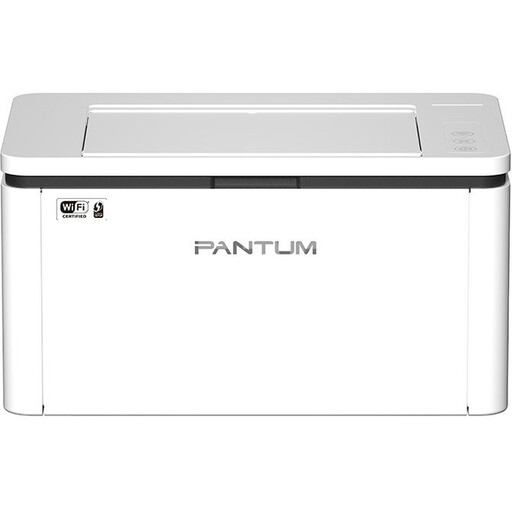
For printing black staves on A4 paper, if wireless printing is all you need and manually turning the pages for double-sided scores is acceptable.
A4 monochrome laser printing; Wi-Fi and Bluetooth; 22 ppm; manual duplex printing.
Make sure the page size and margins in the file match the paper you’re using and the printer driver settings. If the staves look too small, check the staff spacing in your notation software and print a test page before printing several scores.
Use automatic duplex printing only if your printer and paper support it. Test the binding edge and page order with a few sheets first. Steinberg Documentation explains the settings for binding on the long or short edge, as well as manual duplex printing where applicable.
Check the replacement toner for the full model number and, if it’s a separate component, the compatible drum too. Brother Germany lists toner and drum as separate units for the HL-L2400DW. Stated page yields don’t guarantee a specific number of your own sheet music pages.
Not as a general rule. Section 53(4) of the German Copyright Act (UrhG) places specific limits on reproducing graphic representations of musical works and sets out certain exceptions. If the source material is protected, check whether you have permission or a specific exception applies. Printing on blank staves is not the same as copying a copyrighted musical work. The relevant authority is the Federal Ministry of Justice, which publishes the legislation.
Electrical and electronic equipment must not be put in household waste. The German Environment Agency lists options including municipal collection points and retailer take-back schemes. Check with your local collection point or retailer to find out how to return your printer.