What should you look for when choosing?
Start by checking that your pattern is legible at the size you plan to print. Then consider how many handouts you need, whether colour information is essential and whether you might need scanning or copying functions.
| What you need |
What to check before buying |
Who this matters most to |
| Legible knitting charts |
Print the original PDF at the intended A4 size, including the key, and check the symbols and greyscale details. |
Legibility is essential if small symbols, size information and pattern repeats need to be clear to everyone in the class. Around 36% of consumers put this first. |
| Multiple handouts |
Consider the number of sheets per session, paper capacity, duplex printing, and the yield and model compatibility of consumables. |
If you regularly print for several participants, you’ll want to plan for paper refills and choose consumables suited to your actual print volume. Around 29% of consumers prioritise repeated class print runs and how easy they are to manage. |
| Colour information |
Check colour areas in a black-and-white test print. If the differences are unclear, factor in colour consumables and the space required. |
If a particular pattern uses colour to convey important differences, a black-and-white print may lose information. Around 21% of consumers prioritise retaining this kind of colour information. |
| Paper originals |
Check whether you need scanning or copying, the size of your originals and whether you’re allowed to reproduce them. |
If you also need to digitise or copy paper notes or patterns, you’ll need more than a standard printer. Around 14% of consumers prioritise scanning and copying functions. |
Suitable laser printers at Joybuy
This selection includes mono laser printers and multifunction models, plus a colour option for knitting patterns used in the classroom.
 No image available
PANTUM BM2300AW A4 mono laser multifunction printer
For black-and-white handouts when you also need to work with paper originals.
A4 mono laser multifunction printer, 22 ppm, Wi-Fi and ADF.
Joybuy
 No image available
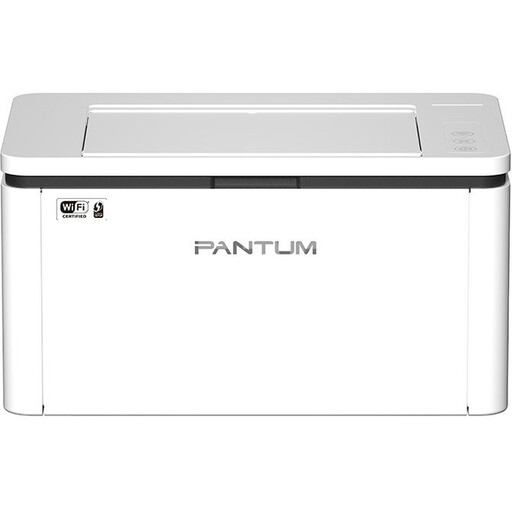
PANTUM BP2300W A4 mono laser printer
For black-and-white handouts when you don’t need a scanner.
A4 mono laser printer, 22 ppm, Wi-Fi and Bluetooth.
Joybuy
 No image available
PANTUM BM2300NW A4 mono laser multifunction printer
For black-and-white handouts and paper originals at a shared printing area.
A4 mono laser multifunction printer, 22 ppm, dual-band Wi-Fi and Ethernet.
Joybuy
 No image available
HP Color LaserJet Pro MFP 3302sdwg
For patterns with important colour information when you also need to work with paper originals.
Colour multifunction laser printer with automatic two-sided printing, Wi-Fi, Ethernet and USB.
Joybuy
Frequently asked questions
Do I always need to print knitting patterns in colour?
No. What matters is whether the knitting chart, key, size information and any colour codes remain clear in a black-and-white test print. If important differences are lost, colour printing is useful for that pattern.
How should I set up the printer for multiple class handouts?
Start by printing an original page at the intended size and checking that it’s legible. Use duplex printing only if the page order and layout work well. According to Brother Germany, the Brother HL-L2400DW supports automatic A4 duplex printing.
What should I know about toner and the drum?
Check the figures for the specific model and distinguish between starter toner, replacement toner and, where applicable, a separate drum. Brother Germany gives the HL-L2400DW starter toner a yield of 700 pages and lists up to 3,000 pages for available replacement toner; this doesn’t guarantee the actual yield for your patterns.
Can I copy purchased knitting patterns for everyone in the class?
Not as a blanket rule. Section 60a of the German Copyright Act (UrhG) allows certain uses to illustrate teaching at educational institutions for non-commercial purposes, subject to the conditions and limits set out in the Act. A small knitting class doesn’t automatically meet these requirements. Check the type of class and the licence for the pattern, or obtain the appropriate permission.
Does a laser printer in a small classroom need the Blue Angel eco-label?
The available official guidance doesn’t establish a general requirement for this purchase. The German Environment Agency recommends choosing low-emission devices and lists the Blue Angel as a useful guide. Its recommendation to place high-volume printers in separate rooms specifically relates to high-volume printers. Revised criteria for printing equipment were adopted in June 2026, so check which version of the criteria applies to a specific device.


