Late-night snackers planning ahead
If you regularly have a bar late at night, it’s not just about the number of bars in the pack. A smaller pack may make more sense if you want to try a flavour first or make sure you get through your stock in time.


If you regularly reach for a midnight snack, a protein bar multipack is only a good choice if you’re likely to get through all the bars. Compare the pack size and protein per bar. With a mixed box, also check the ingredients and allergens for every variety.
If you regularly have a bar late at night, it’s not just about the number of bars in the pack. A smaller pack may make more sense if you want to try a flavour first or make sure you get through your stock in time.
You’ll want to compare the stated protein content of the bar you’ll actually eat. Check the bar’s weight and its nutritional information per serving too.
If you have allergies or need to avoid certain ingredients, only buy a large pack once you’ve checked every variety. This is particularly important with mixed boxes containing different recipes.
First, decide how many bars you’re likely to get through. Then compare serving information and varieties. Check the ingredients, allergens and any ingredients you need to avoid before buying in bulk.
| Criteria | What to check | Especially important if |
|---|---|---|
| Pack size | Number of bars, weight of each bar and the pack’s best-before date. | I regularly snack at night and want a supply I can get through in time. Around 33% of consumers put choosing the right pack size first. |
| Protein and nutritional information | Protein and energy per bar, as well as the bar’s weight. Don’t confuse information per 100 g with information per serving. | I want to know what’s in each bar I choose for a sweet snack. Around 27% of consumers focus first on the stated values per serving. |
| Ingredients and allergens | Ingredients list and allergen information for every variety; check for sweeteners too if relevant. | I can only make use of a multipack if its varieties meet my ingredient requirements. This is the main consideration for around 20% of consumers. |
| Flavour and variety | Flavours included and how many of each are in the pack. | I don’t want to be left with a flavour I don’t like if I reach for the multipack often. Variety is the top priority for around 20% of consumers. |
Even a large number of bars won’t be much use if you don’t like the flavour or are unlikely to finish the pack before its best-before date.
Check the number of bars and the varieties included. If you haven’t tried a flavour before, you could start with a smaller pack.
This claim doesn’t automatically mean the product is free from sweeteners. According to the consumer advice centre, consuming large amounts of polyols can have a laxative effect.
Read the ingredients list and warnings for the variety you’ve chosen, especially if you plan to eat several bars.
The Barebells Mix Box contains different varieties, and their ingredients and nutritional information may vary.
Before buying, check the labelling for every variety for any allergens and ingredients relevant to you.
A figure per 100 g doesn’t tell you directly how much protein is in an individual bar. Different bar weights affect the comparison per serving.
Compare protein and energy per bar alongside its weight.
dm’s own brand offers protein bars in individual sizes of around 40 to 45 g. An individual bar may be a good choice if you want to try a flavour before buying a larger pack.
Rossmann’s own brand offers a Peanutbutter protein bar in a pack of three, with each bar weighing 30 g.
According to Barebells, its Mix Box contains twelve protein bars in four flavours.
ESN offers Designer Bar protein bars and tasting box options. The manufacturer states that each Designer Bar contains up to 15 g of protein.
The range we researched includes 40 g Protein+ Crisp bars and 48 g Soft-Core bars.
This selection includes protein bar multipacks with a single flavour. Compare the pack size and check the information for the specific variety of each bar.
 No image available
A multipack of Caramel Nut bars. The pack contains twelve bars, each weighing 50 g.
Contains peanuts, milk and soya; may also contain other nuts. If you have allergies, check the labelling on the specific pack.
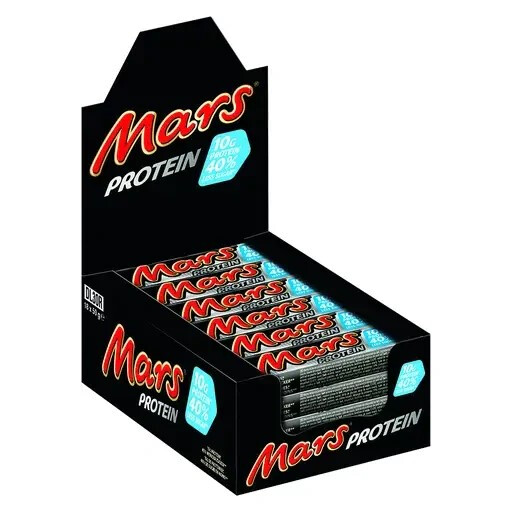 No image available
A larger supply of one variety. The box contains 18 bars, each weighing 50 g.
The product information lists milk, soya, egg and ingredients containing gluten. Check the allergen information before buying.
 No image available
A multipack of Cookies & Cream bars. The pack contains twelve bars, each weighing 55 g.
Contains milk, soya and sweeteners; may contain traces of other allergens. The product description warns that excessive consumption may have a laxative effect.
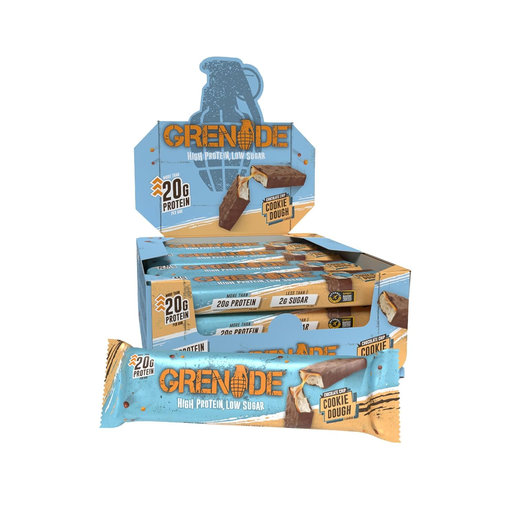 No image available
A multipack of Choc Chip Cookie Dough bars. The pack contains twelve bars, each weighing 60 g.
Contains milk, soya and polyols; other allergens may be present as traces. According to the product description, excessive consumption may have a laxative effect.
 No image available
A multipack of Crunchy Cookie Flavour bars. The pack contains twelve bars, each weighing 45 g. For comparing servings, the protein content per bar is what matters.
The product information lists maltitol and sucralose, as well as several allergens, including milk, soya and cereals containing gluten. Check the specific product labelling; according to the product description, excessive consumption may have a laxative effect.
Yes. Relevant allergens must be labelled on food sold online in Germany too, as explained by Lebensmittelklarheit and the Federal Ministry of Agriculture, Food and Home Affairs. If you’re buying a mixed box, check the information for every variety, as the ingredients may differ.
No. ‘No added sugar’ doesn’t automatically mean that a product contains no sweeteners or polyols. Check the ingredients list and warnings. The consumer advice centre notes that consuming large amounts of polyols can have a laxative effect.
It depends on the specific variety and serving size. Compare the protein content per bar with its weight, rather than relying on a figure per 100 g alone.
Choose a pack size based on how many bars you’re likely to eat, and check the best-before date and storage instructions for the specific pack. If you haven’t tried a variety before, a smaller pack can make choosing easier.