Latte with minimal fuss
You want to make a milky coffee after your shop without having to adjust the espresso and milk foam separately. Compare the automatic recipes and the cleaning routine for the milk system.


If you want to keep preparation to a minimum, consider a bean-to-cup machine with an automatic milk system or a capsule machine with a milk function. A portafilter machine is better suited to you if you want to make the espresso and milk foam yourself. Philips describes automatic latte recipes for the EP3347/90, while Nespresso’s Lattissima One offers milk recipes at the touch of a button. Whichever option you choose, consider the cleaning routine and the consumables you’ll need for the way you use it.
You want to make a milky coffee after your shop without having to adjust the espresso and milk foam separately. Compare the automatic recipes and the cleaning routine for the milk system.
You want to choose the beans and prepare the espresso and milk foam yourself, and you’re happy to put in a few extra steps.
You only make a latte now and then and want to choose capsules or beans, the accessories you need and the care routine to suit how you use the machine.
A good fit if: You want to make coffee from beans and milk-based drinks with as few manual steps as possible. Philips describes these features for the EP3347/90.
The trade-off: The milk system still needs looking after. Philips says this model has two parts and no hose; that doesn’t mean it’s maintenance-free.
A good fit if: You want to make the espresso and milk foam yourself. De’Longhi describes the EC685.M as having a manual milk system, while the Sage SES875 has a built-in grinder.
The trade-off: Grinding, dosing and frothing all involve extra steps. With the EC685.M, you should also check whether you’ll need a separate grinder.
A good fit if: You’d like to make a latte now and then using set recipes. Nespresso says the Lattissima One makes milk-based drinks at the touch of a button.
The trade-off: The milk container and compatible Original capsules are part of using the machine, so factor them into your care and consumables plans.
| Priority | What to check before buying | Who is it most relevant to? |
|---|---|---|
| Fewer preparation steps | Check whether the exact model makes your preferred latte automatically and how to clean the milk container or milk system. | If I want a latte quickly after a trip to the shops, I don’t want to have to froth the milk separately. Around 33% of consumers prioritise having fewer preparation steps. |
| Making it yourself | Compare the steam wand, grinder and what’s included, using the full model number. | If making the drink is part of the enjoyment for me, I want to control the espresso and milk foam and I’m happy to put in a few extra steps. Around 25% of consumers put making it themselves first. |
| Milk system care | Compare the cleaning steps for the exact milk system and follow the manufacturer’s descaling guidance. | When I make milk-based drinks after shopping, I want to know which parts need cleaning after use. Around 25% of consumers prioritise a straightforward milk-system care routine. |
| Consumables and accessories | Compare capsules or beans, a grinder if needed, and care products over the same period of use and for the same number of drinks. | If I only drink a latte occasionally, I want to choose consumables and any necessary accessories to suit how much I actually use the machine. Around 17% of consumers put these considerations first. |
Even a milk system that works at the touch of a button needs care in line with the instructions. Stiftung Warentest highlights the importance of regularly cleaning bean-to-cup machines, especially the milk system.
Compare the cleaning steps for the exact model alongside the drinks it can make.
Care takes time, and depending on the machine, you may also need care products.
Portafilter, bean-to-cup and capsule machines use different coffee formats and may need different accessories.
Include capsules or beans, a grinder if required, and care products in your comparison over the same period of use.
A separate grinder and care products may take up extra space and add to the ongoing maintenance.
The EC685.M EX:4 and the ECKG6821.M bundle are not the same version. The bundle description lists a separate coffee grinder alongside an EC685.M.
Check the full model number and what’s included before comparing different versions.
A different set of included accessories may need extra storage space.
Philips describes the EP3347/90 bean-to-cup machine as having a grinder, automatic milk recipes and LatteGo. It’s worth considering if you want milk-based drinks with minimal preparation.
The Dedica Style EC685.M is a slim portafilter machine with a manually operated milk system, designed for those who want to froth the milk themselves.
Sage describes the Barista Express SES875 as having a built-in grinder and manual milk frothing.
The Lattissima One combines Original capsules with a milk container and milk recipes at the touch of a button, making it an option for occasional use.
The Joybuy options below range from bean-to-cup and capsule machines to portafilter and espresso models with milk functions. For the specific mains-powered appliance, check its labelling and accompanying documents; a CE mark is not an independent quality mark.
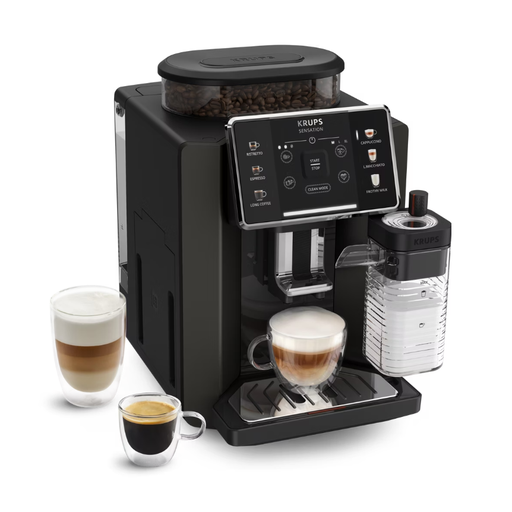 No image available
An option if you want to make milk-based drinks with minimal manual preparation; caring for the milk container is still part of using the machine.
Bean-to-cup machine, described as black in the product name.
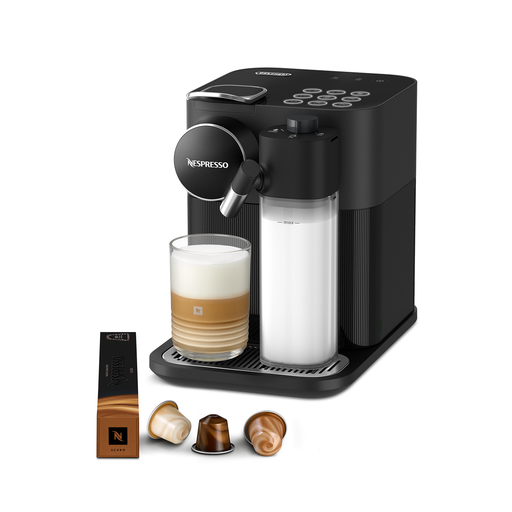 No image available
A good fit if you’re looking for a capsule machine with automatic milk preparation and set milk recipes; remember to factor in cleaning the milk system.
Original capsule machine with an automatic milk system and a range of milk recipes; the product name specifies one-touch operation and a black finish.
 No image available
An option if you want to adjust your coffee from beans and milk foam to suit your taste; making espresso involves a few extra steps.
The product name specifies a built-in conical burr grinder, automatic microfoam and a touchscreen display; finished in stainless steel.
Making espresso involves grinding, dosing, tamping and locking in the portafilter.
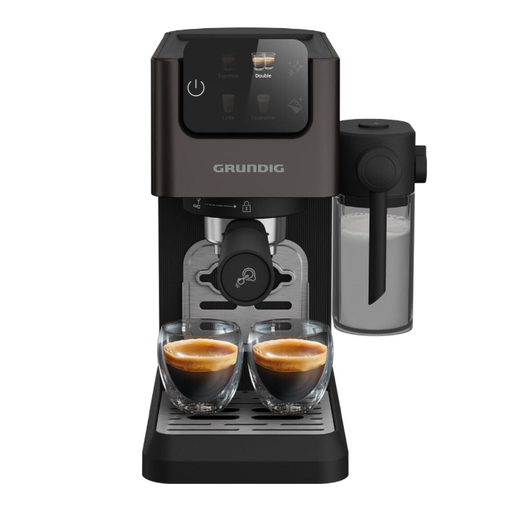 No image available
An option if you’re considering a portafilter machine with a built-in milk function; coffee grounds and a few extra steps are needed to make the coffee.
Semi-automatic espresso machine with a built-in milk container; the product name specifies 1.628 W and 20 bar pump pressure, in dark Inox and black.
Rinse the parts of the milk container after making your drink.
 No image available
An option if you want to make coffee from beans and milk foam with adjustable settings; factor in the steps involved in using the portafilter and caring for the machine.
3-in-1 coffee machine with grinder and milk frother; the product name specifies four frothing settings and a silver finish.
Making coffee involves a portafilter and jug, among other things; regular cleaning of the milk system and descaling are part of the care routine.
No. A portafilter machine with a steam wand lets you froth milk manually, and the Nespresso Lattissima One also offers milk recipes. The key question is whether you want to handle the preparation steps yourself.
Measure the space available and allow room to operate the machine and store its accessories. De’Longhi lists a width of 15 cm for the EC685.M; Nespresso gives the Lattissima One’s dimensions as 15,4 × 25,6 × 32,4 cm.
No. Stiftung Warentest emphasises the importance of regularly cleaning bean-to-cup machines, especially the milk system. Follow the instructions for your chosen machine. De’Longhi says that how often you need to descale the Dedica depends, among other things, on the hardness of your water.
If goods are faulty, you have statutory rights against the seller. The Federal Ministry of Justice generally describes a two-year period from the date of purchase; a manufacturer’s warranty is separate, and your specific rights depend on the fault and the applicable legal requirements.
Check the labelling, model and manufacturer details, and instructions and warnings for the specific appliance. The Federal Network Agency explains that the manufacturer uses the CE mark to declare compliance under its own responsibility; it is not an independent quality mark.