Speaking alone in a reverberant room
If you’re speaking alone, you’ll want to clip the lavalier close to your voice while avoiding friction against your clothing.


For a travel diary recorded in an untreated room, a lavalier mic clipped close to your mouth and connected to a compatible input is a good place to start. RØDE generally recommends positioning it on your chest, around 20–30 cm from your mouth. If you move around while talking or record with someone else, a wireless kit with a compatible receiver and the right number of transmitters may suit your setup better, but you’ll also need to consider battery life and connection reliability.
If you’re speaking alone, you’ll want to clip the lavalier close to your voice while avoiding friction against your clothing.
If you switch between a smartphone, camera and recorder, you’ll need to match the connection, receiver and kit version to each device.
If you move around while recording or occasionally capture a conversation between two people, wireless connectivity, the number of transmitters and battery life are important things to consider.
A good fit if: You mostly record alone in one place and your device has the right microphone input and supplies the power it needs.
The trade-off: You won’t need to charge a transmitter, but you’ll need to keep an eye on the cable, contact with your clothing and connection compatibility.
A good fit if: You want to move around while speaking or your recording device isn’t right next to you.
The trade-off: Greater freedom to move means charging the transmitter and receiver, and checking the connection where you’ll be recording.
A good fit if: You regularly record two voices and choose a kit with two transmitters and a compatible receiver.
The trade-off: You’ll need to clip on and charge the extra transmitter. On-board recording is a separate feature, so check that it’s included in the specific kit you’re considering.
The figures refer to consumers choosing a lavalier mic for travel diaries in an untreated room; each person is assigned to the purchase consideration that matters most to them.
| Consideration | What to check before buying | Who it matters most to |
|---|---|---|
| Clear speech | Check the clip and pop shield; make a short test recording while wearing the clothes you plan to record in. | When I’m speaking alone in a reverberant room, I want to capture my voice clearly without my clothes rubbing against the mic. Around 33% of consumers put speech clarity first. |
| Compatible connection | Check the microphone input, plug, power requirements and any included receiver or adapter. | If I want to use the same microphone with a smartphone, camera or recorder, the signal path needs to work with each device. Around 27% of consumers say device compatibility is their main consideration when buying. |
| Freedom to move | Check whether you need wireless recording and the conditions under which battery life and range are specified. | If I want to move around while speaking, a cable to the recording device may get in the way; with a wireless kit, I’ll also need to charge the transmitter and receiver. Around 20% of consumers prioritise freedom to move. |
| Two voices or recording backup | Check the number of transmitters and whether on-board recording is explicitly included as separate features. | If I often speak with someone else or need an additional on-board recording, I want to make sure these features are confirmed for the specific kit. Around 20% of consumers say recording conversations or having a backup is their main consideration. |
An omnidirectional capsule or advertised noise reduction won’t automatically soundproof a room. RØDE says placing the mic close to you can help capture your voice, but clothing noise may still be audible.
Test the clip and your clothing with a short recording before starting a longer session.
A 3.5 mm TRS lavalier mic and a smartphone or camera receiver aren’t automatically interchangeable. With the RØDE Lavalier GO, you also need a compatible microphone input and the required plug-in power.
Before buying, check that your recording device, input, receiver and included cables all work together.
Depending on the equipment you already have, you may need a compatible adapter or a different kit version.
Manufacturers’ figures apply to the specific test conditions described. A range quoted for line of sight doesn’t tell you how stable the wireless connection will be in your particular room.
Check the transmitter and receiver battery life separately, and test the connection where you’ll be recording.
The Lavalier GO is a wired option for compatible 3.5 mm TRS microphone inputs and, according to RØDE, can also be used with compatible wireless transmitters.
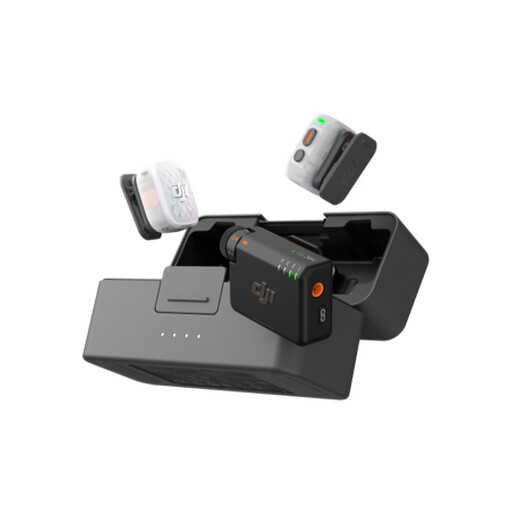
DJI Mic Mini is available in versions for one or two speakers; the right connection depends on the specific kit and recording device.
LARK M2S is designed for mobile recording; available combinations vary by receiver and connection accessories.
The Profile Wireless 2-Channel Set is worth considering if you need to record two speakers or want a kit that specifically includes on-board recording.
This selection includes wired lavalier microphones and wireless kits for recording one or two people. For each model, check that the connection and everything in the box are compatible with your recording device.
 No image available
With two transmitters, this kit is designed for recording two people.
Stated contents: 2 TX, 1 RX and Charging Case.
 No image available
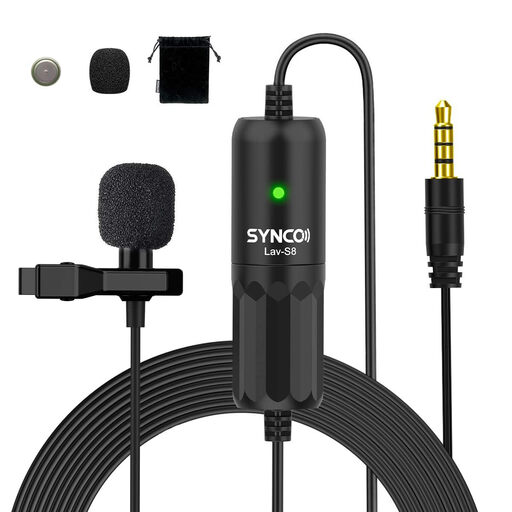
A wired option if your recording device has a compatible 3.5 mm connection.
The product details list an adapter kit, an omnidirectional capsule, a clip and a windscreen; the right signal path depends on the device you’re using.
 No image available
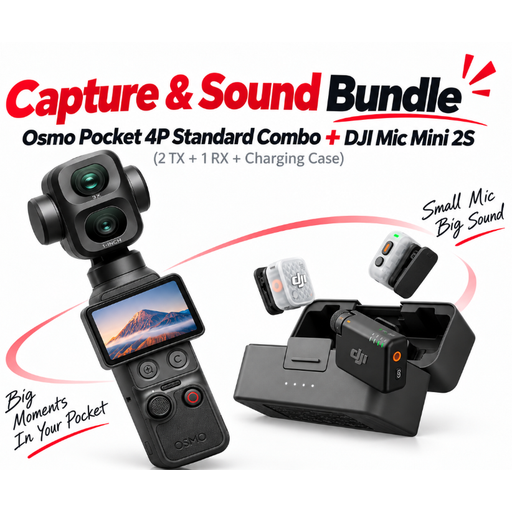
This camera and audio bundle is an option if you’re looking for the camera bundle named in the product title, rather than just a microphone kit.
The product details list two transmitters, one receiver, and accessories for connecting to a smartphone and camera.
 No image available
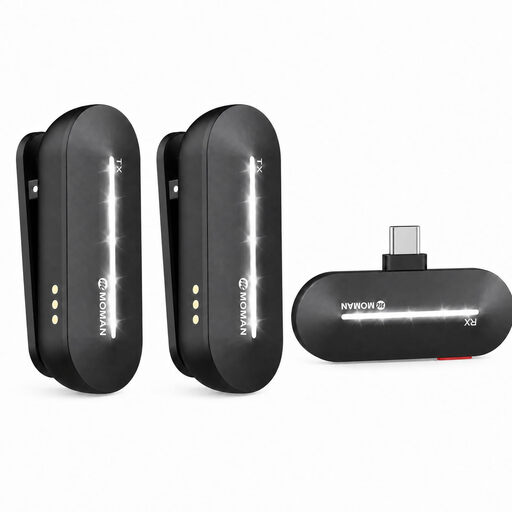
According to the product name, this kit is designed for a USB-C recording device and a wireless connection.
The product name specifies 2TX + 1RX; check that USB-C is compatible with your particular device.
 No image available
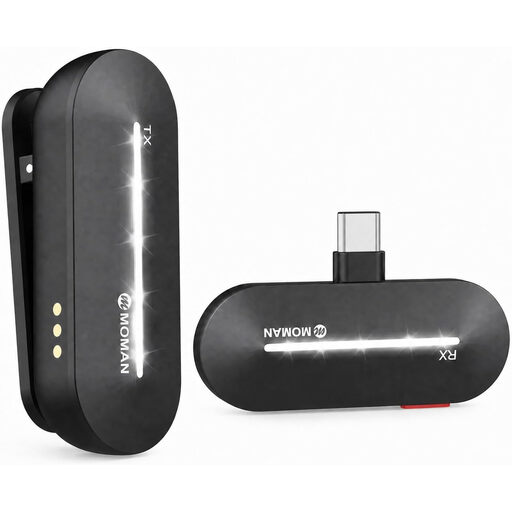
With one transmitter and one receiver, this kit is designed for a single speaker.
The product name specifies USB-C and a range of 150 m; according to the product description, the quoted range is for clear line of sight.
Clip the lavalier so the capsule is unobstructed and your clothing doesn’t rub against it. RØDE generally recommends positioning it on your chest, around 20–30 cm from your mouth. Listen to a test recording before you record for longer.
Not just because it has a 3.5 mm socket. RØDE specifies a suitable 3.5 mm TRS microphone input and the required plug-in power for the Lavalier GO. Check your smartphone’s input and whether you’ll need an adapter.
Charge the transmitter and receiver, and check their battery life separately. DJI quotes around 11.5 hours for the Mic Mini transmitter and 10.5 hours for the receiver, measured with noise cancellation switched off and an interference-free, short-range recording. These figures aren’t a guarantee for every setting or travel situation.
Don’t record without checking that you have the necessary authorisation: § 201 StGB covers the unauthorised recording of another person’s privately spoken words. This doesn’t mean you’re automatically prohibited from recording your own voice.
You can’t tell from the product name alone. In Notice 37/2026, the Federal Network Agency lists the permitted frequency bands and the technical and operational conditions for wireless microphones. Check the frequency and device specifications for the specific version against the relevant conditions; this doesn’t mean an unknown imported model is automatically approved.