Presenter recording from a fixed position
If you record your narration in one place, start by checking the microphone position and connector. A cable is all you need, as long as you can route it without pulling or rubbing against your clothing.


If you mainly speak from a fixed position, a wired lavalier with the right connector is a sensible place to start. For recordings where you need to move around, a wireless set may suit your workflow better. Keeping the microphone close and in a consistent position can reduce the room sound in your voice, but it won’t eliminate echo. Before you buy, check the input on your recording device. For wireless sets, also check the number of transmitters, the receiver connection and whether the transmitter can record independently.
If you record your narration in one place, start by checking the microphone position and connector. A cable is all you need, as long as you can route it without pulling or rubbing against your clothing.
If you walk while speaking or the camera position changes, wireless operation and a suitable receiver connection may matter more than a simple wired connection. Check how the set is attached and charged, too.
If you record narration during a shoot that would be difficult to repeat, a transmitter with independent recording can give you an additional file. Check whether the specific set offers this feature.
A good fit if: you mainly speak from a fixed position and can route the cable safely.
The trade-off: You’ll have less freedom to move. TRS and TRRS must match the input in question, so don’t assume they’re interchangeable without checking.
A good fit if: you move around while recording or change the camera position.
The trade-off: As well as the microphone and recording device, you’ll need to consider the transmitter, receiver, connection and battery charge.
First, decide whether you need to move around while narrating. Then compare the connector and signal path. If retakes would be difficult, also check whether the transmitter can record on its own.
| Buying priority | What to check before buying | Who it matters most to |
|---|---|---|
| Clear, consistent voice | Test the position, clip and pop shield with a trial recording in the actual speaking position. | If I want my voice to sound clear and consistent in an untreated room, I’ll check the microphone position without assuming it will eliminate echo. Around 33 % of consumers prioritise consistent, close-miked speech. |
| The right connection | Check the specific microphone input on your mobile phone, camera or recorder, and whether you need an adapter. | If I want to connect a lavalier directly to my recording device, I’ll check the connector and signal path before choosing a model. Around 27 % of consumers prioritise the right connection. |
| Freedom to move and number of voices | For a wireless set, check the number of transmitters, the receiver connection and a trial recording at the intended location. | If I change position while speaking or record two voices, I’ll check the wireless setup and the exact set configuration. Around 20 % of consumers focus on freedom to move or the number of voices. |
| Additional recording | Check whether a track is only sent to the receiver or whether a file is saved independently on the transmitter. | If a take would be difficult to repeat, I don’t want to mistake a track sent to the receiver for an additional, separately saved recording. Around 20 % of consumers prioritise this kind of backup. |
A noise reduction claim isn’t proof that a microphone will remove reflections in an untreated room. The microphone’s distance and position affect how directly it picks up your voice.
Test the position where you plan to speak and listen back to an unedited trial recording before recording a longer narration.
Allow time for a retake or to improve your recording space, if needed.
The RØDE smartLav+ has a TRRS connector, while the Lavalier GO has a 3.5 mm TRS connector. Both are standalone microphones, not complete wireless sets.
Compare the connector and what’s included with the input on your specific recorder or phone, and check whether you need an adapter.
DJI specifies the maximum range of the Mic Mini under open, interference-free conditions. This manufacturer’s figure doesn’t predict how the wireless connection will perform at your recording location.
Test the connection at the shoot location. If a take would be difficult to repeat, also check whether the specific set allows the transmitter to record independently.
In 2026, Germany’s Federal Network Agency (Bundesnetzagentur) published a general frequency allocation for wireless microphones under Vfg. 37/2026, revoking Vfg. 109/2025. The conditions of use depend on the device’s frequency band.
Before use, check the device’s actual frequencies against the relevant current allocation from the Federal Network Agency.
The range includes standalone lavalier microphones with TRRS or TRS connectors, as well as wireless sets.
Mic Mini is available in configurations for wireless solo or two-person recording.
The wired BY-M1 may be an option if you need to use one microphone with a compatible mobile phone or camera input.
The LARK MAX 2 is designed for wireless productions, with internal recording and possible multi-person configurations.
The MKE 2 is a compact lavalier microphone for a suitable wired input or compatible pocket transmitter system.
The product options below include wired lavalier microphones and wireless solutions for recording with a mobile phone or camera. Before buying, check that the connector and set configuration suit your recording device and workflow.
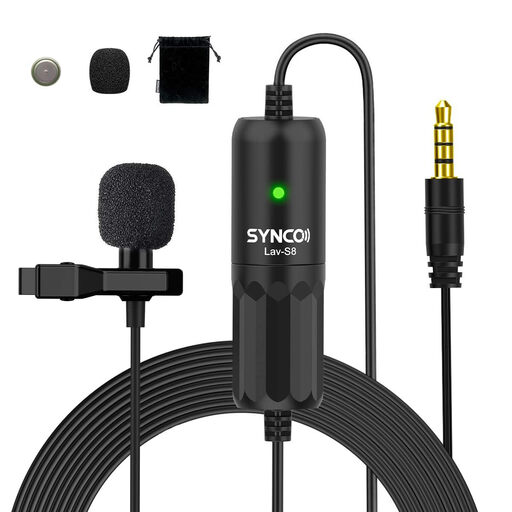 No image available
As a wired lavalier, it’s an option for a fixed speaking position, provided the intended recording connection is compatible with your device.
The product name lists mobile phones, PCs, laptops and cameras as compatible devices. Check the specific input and whether you need an adapter.
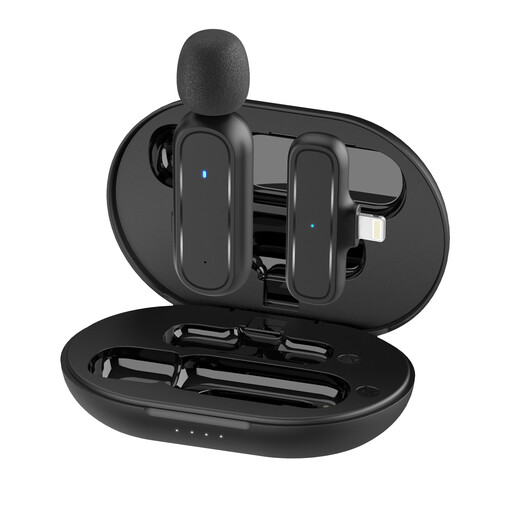 No image available
A wireless option for recording on the move if you’re using an iPhone or iPad with a compatible Lightning connector.
The product name lists one transmitter and one receiver, plus Lightning. Before use, check that this connection is compatible with your specific device and find out which frequency conditions apply.
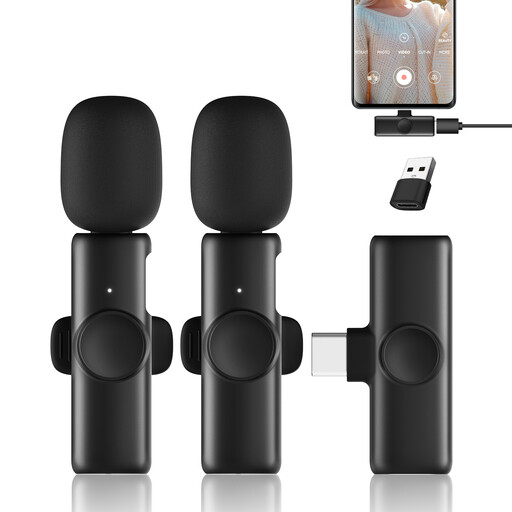 No image available
According to the product name, this wireless option is designed for USB-C Android phones and comes with two transmitters and one receiver.
Check that your recording device is compatible with the stated USB-C connection and find out which frequency conditions apply.
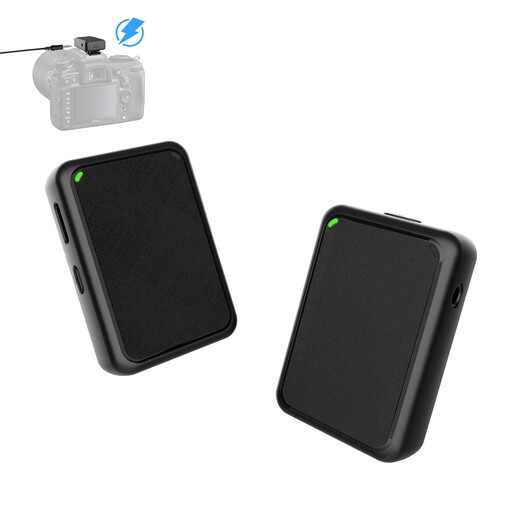 No image available
A wireless option for recording one voice if you want to move around while filming with a camera.
The product name lists one transmitter and one receiver. Check the camera connection and what you need to connect the set before choosing it. You’ll also need to follow the applicable frequency conditions when using it wirelessly.
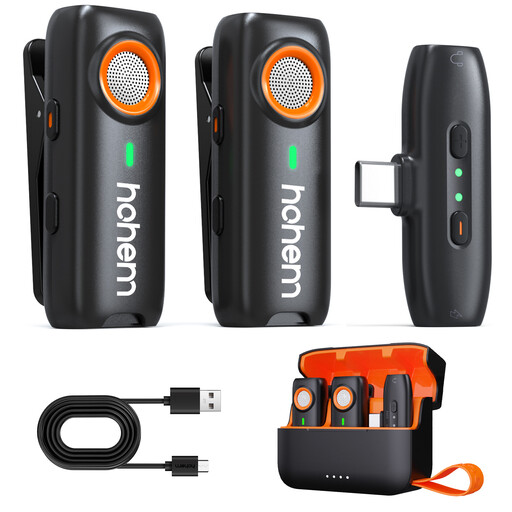 No image available
The local TF card recording described may be useful for takes that are difficult to repeat if you need an additional recording.
According to the product description, the TF card isn’t included. Before using it wirelessly, also check the device’s actual frequency and the conditions that apply.
Record a short voice sample in the intended position and listen for echo, plosives, clothing noise and changes in volume. Adjust the position and distance before recording a full take. A lavalier microphone on its own won’t fix poor room acoustics.
Not without checking the connector. RØDE specifies a TRRS connector for the smartLav+ and TRS for the Lavalier GO. For connecting the smartLav+ to the Wireless GO input, RØDE lists a TRRS-to-TRS adapter. Check the input, power requirements and any adapters needed for your recording device.
Charge the transmitter and receiver, check the set configuration and test the recording at the intended location. If the system offers independent recording on the transmitter, check that it’s enabled and how to transfer the saved file afterwards.
That depends on the specific device, its frequency band and the technical conditions in force. In 2026, Germany’s Federal Network Agency (Bundesnetzagentur) published a general frequency allocation for wireless microphones under Vfg. 37/2026 and revoked Vfg. 109/2025; Vfg. 91/2025 concerns frequencies for short-range devices. Before using the equipment, check which allocation applies to its actual frequencies rather than assuming that the term ‘wireless microphone’ means it’s authorised.