Recording with a fixed device
If you record flashcards in one place, the microphone connection needs to match your phone or computer. Sennheiser and RØDE offer different USB-C, TRS and TRRS connection options.


For mostly stationary audio flashcard recordings, a wired lavalier is usually the simpler place to start, provided its connection, power requirements and recording app are compatible with your device. USB-C, TRS and TRRS aren’t automatically compatible. Wireless is most useful if you want to move around or use onboard recording as an extra backup, but it does mean more charging and connection steps.
If you record flashcards in one place, the microphone connection needs to match your phone or computer. Sennheiser and RØDE offer different USB-C, TRS and TRRS connection options.
For short words and sentences, consistent microphone placement and minimal clothing noise matter. Shure points out that clothing can rub against the capsule or cable and cause handling noise.
If you’re making lots of short takes, a wired microphone can save you the extra charging and connection steps involved with a wireless system. With a wired setup, though, you’ll need to consider how to manage the cable at your recording spot.
Best for: Recording in one place, if your phone or computer supports USB-C audio microphones.
The trade-off: You won’t need a transmitter battery or receiver, but you will need to check cable management and make sure your device recognises the microphone.
Best for: Devices whose microphone input matches the TRS or TRRS plug on your chosen model.
The trade-off: RØDE’s smartLav+ has a TRRS plug, while the Lavalier GO has a TRS plug. Depending on the input, you’ll also need to check the power requirements or whether you need a suitable adapter.
Best for: Moving around while you speak or placing the recording device further away.
The trade-off: The transmitter, receiver and, in some cases, charging case add extra connection and charging steps.
| Priority | What to check before buying | Who it matters most to |
|---|---|---|
| Connection and compatibility | Check for USB-C audio support or a suitable TRS/TRRS input, the required power and compatibility with your recording app. | If I’m recording in one place with a phone or computer, the connection needs to work with both the device and the app. Around 36 % of consumers would make a suitable connection their top buying priority. |
| Clear speech | Keep the microphone position consistent and check that clothing doesn’t rub against the capsule or cable. Listen back to a test recording of typical words in the booth. | If short words need to be clear without much context, I look for consistent positioning and as little contact noise as possible. Around 29 % of consumers would put speech clarity first. |
| A simple recording workflow | Weigh up the cable length and how easily you can manage it against the extra charging and connection steps of a wireless set. With wireless, check both the transmitter and receiver. | If I’m recording lots of short takes back to back, I want to avoid having to keep unplugging or charging things. Around 21 % of consumers would prioritise a simple, repeatable workflow. |
| Freedom to move | Think about whether you’ll actually move away from the recording device. For wireless, check what’s included in the set, and if you want a backup, check that the specific version supports it. | If I need to move while speaking, a cable could get in the way; if I’m staying in one place, this benefit matters less. Around 14 % of consumers would make freedom of movement their top priority. |
A plug that fits physically doesn’t prove that the microphone will work with your recording device. RØDE specifies a TRRS-to-TRS adapter for connecting the smartLav+ to a Wireless GO II transmitter.
First check your specific device’s input, power requirements and recording app. Then choose your microphone and, if needed, an adapter.
The main difference from a wired microphone is the freedom to move. A stated wireless range doesn’t prove that it will improve voice recordings made while sitting in one place.
Choose wireless only if you need to move around or want an extra recording feature, and listen back to a test recording in the booth.
DJI lists the Mic Mini 2S in sets with different contents, as well as individual transmitters sold separately.
Check the full set name and make sure the receiver is compatible with your recording device.
The XS Lav USB-C is a wired option for voice recording with a compatible mobile device or computer.
The smartLav+ and Lavalier GO are wired lavalier ranges with different connection types.
The Mic Mini wireless range is worth considering if a cable gets in the way of your recording workflow.
The WL185m is a lavalier option for existing, compatible professional transmitter equipment.
This Joybuy selection includes wired 3.5 mm lavalier microphones and wireless sets for voice recording. Before buying, check that the connection on each product is compatible with your recording device.
 No image available
A wired option for recording in one place, if your device has a compatible 3.5 mm microphone input.
The product title lists smartphones, PCs, laptops and cameras; the product description also mentions a clip and windscreen.
You’ll need to consider cable management while recording.
 No image available
A wireless set for situations where you want to move while speaking or need an extra recording feature.
The product details list onboard 32-bit float recording and storage in the transmitter. Check that the feature is enabled when you record.
The transmitters, receiver and charging case mean extra charging and connection steps.
 No image available
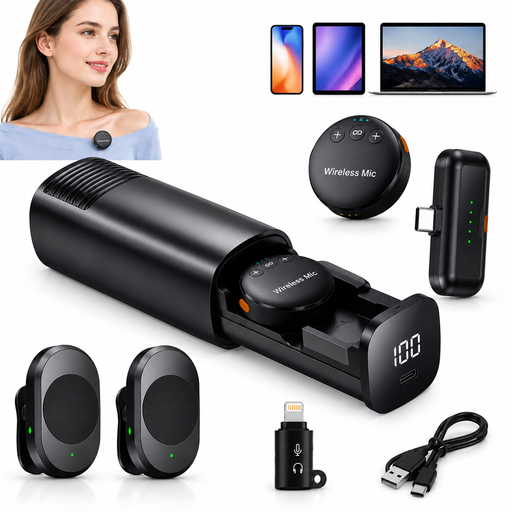
A wireless set for two speakers, provided the listed connections are compatible with the devices you’re using.
The product title lists two transmitters, one receiver, plus USB-C and Lightning.
Compared with a wired microphone, the transmitters, receiver and charging case mean extra charging and connection steps.
 No image available
A wireless set for compatible USB-C devices when you need freedom to move and want to use two transmitters.
The product details list real-time audio monitoring through the receiver.
The transmitters and receiver need to be charged and connected.
 No image available
A wireless option for one speaker using a compatible USB-C mobile device.
The product details list plug-and-play operation without Bluetooth pairing.
Compared with a wired microphone, the transmitter and receiver mean extra charging and connection steps.
Attach the microphone so that clothing doesn’t rub against the capsule or cable, and keep its position consistent between takes. Listen back to a recording of typical words, spoken in your usual way, in the booth. Shure’s recommended distance of 15–25 cm applies specifically to the CVL and shouldn’t automatically be assumed to apply to other models.
That depends on the model, charge level and recording time. DJI lists separate runtimes for the Mic Mini transmitter and receiver under specified test conditions, so check both components before a long recording session. Sennheiser doesn’t list a battery as included with the wired XS Lav USB-C.
Statutory rights generally apply against the seller and are separate from a voluntary guarantee. If a product is faulty, the relevant remedy is subsequent performance, meaning repair or replacement; your specific rights depend on the purchase and the fault. Verbraucherzentrale explains the difference.
No, there’s no blanket permission: Section 201 of the German Criminal Code covers the unauthorised recording of another person’s privately spoken words. If other people might be audible, check that you have permission to record them first; recording your own spoken flashcards is a different situation. The wording of the law on Gesetze im Internet is authoritative.
No, there’s no blanket answer. In its notice 37/2026, the Federal Network Agency lists permitted frequency bands and technical conditions, so check the frequencies and German conformity information for the specific model. Notice 37/2026 repeals the earlier notice 109/2025.