Focus on the storyteller
If you’re recording a sit-down conversation and want to capture the storyteller’s voice clearly, consider the microphone position, contact with clothing and noises from the table.


For a sit-down oral history interview where the person telling the story is the main focus, a wired lavalier microphone may be suitable, provided the connection and cable routing are right. If you also need to hear the questions clearly, check the options for positioning two microphones and how the specific device records the voices. A separate recorder or local recordings on the transmitters give you extra files and control. Before recording, also check that you’re entitled to do so.
If you’re recording a sit-down conversation and want to capture the storyteller’s voice clearly, consider the microphone position, contact with clothing and noises from the table.
If the questions and follow-up conversation matter too, check whether you can position two microphones and whether both voices will be recorded on the channels you want. The University of Leicester’s East Midlands Oral History Archive recommends considering two microphones if the interviewee’s voice is too quiet.
If a conversation would be difficult to repeat, you’ll want to be able to check levels, recording time and local files beforehand, rather than relying on a wireless connection alone.
A good fit if: you’re sitting close to the recording device and mainly want to record the storyteller.
Things to consider: The cable may get in the way on the table or catch on clothing; a single microphone won’t automatically make the second voice equally clear.
A good fit if: you want to record the storyteller and interviewer, each with their own microphone position.
Things to consider: Check everything included in the box, the receiver connection and how the audio tracks are recorded. More transmitters alone don’t tell you whether separate or local recordings are made.
A good fit if: you also want to record the storyteller’s voice locally.
Things to consider: You’ll need to check and transfer the files, and you’ll need a separate recording solution for the second voice.
| Consideration | What should you look for when buying? | Who is this important for? |
|---|---|---|
| Clear recording of the storyteller | Check how it attaches to the lapel and the distance from the mouth; listen to a test recording to check for clothing noise. | If I mainly want to capture the storyteller clearly, I’ll pay attention to positioning and contact with clothing. Around 31 % of consumers put their own voice first. |
| Two clear voices | Check that both people have a usable microphone position and how the audio tracks will be recorded. | If my questions matter too, I want to capture both voices using separate microphone positions. Around 31 % of consumers prioritise this consideration. |
| Connection and cable routing | Check the specific input, the microphone power required and the cable length needed. | If I need to connect the microphone to my recording device and route the cable safely around the table, I’ll check both in advance. Around 15 % of consumers prioritise the connection and cable routing. |
| Control over longer recordings | Listen to a test recording and check local recording, storage, battery level and file transfer. | If a long conversation can’t easily be repeated, I want to be able to check the recording and files. Around 23 % of consumers make this a priority. |
The number of transmitters doesn’t confirm that the package includes two separate clip-on microphones. RØDE specifically lists two Lavalier II microphones with the Wireless PRO; other sets may have different contents.
Compare the contents of the exact variant and check how each person will attach their microphone.
Depending on the package, you may need additional lavalier microphones or adapters.
The RØDE Lavalier GO has a TRS plug and, according to RØDE, requires a socket with 2.7 V plug-in power. Having a socket alone doesn’t confirm that these requirements are met.
Check the socket type and microphone power requirements for the exact recorder or smartphone model.
Clothing, paper, hard surfaces and background conversations can all be audible in the recording; a lavalier microphone won’t automatically eliminate these sounds.
Choose the quietest spot you can, attach the capsule so it doesn’t touch clothing, and listen to a test recording before the conversation.
The XS Lav USB-C is a wired option for one person, used with a recording device that has a compatible USB-C connection.
The Lavalier GO is a wired option for a compatible TRS microphone input; the Wireless PRO is a wireless system with different equipment.
With the Mic Mini, the specific package variant matters if you want to record both people in a conversation.
According to Deity, the V.Lav is a wired option if there’s a longer distance between your seat and the recording device.
The F2 is a compact recorder with a lavalier microphone for recording one voice locally.
The following Joybuy options are lavalier and wireless microphones for voice and interview recordings. Whether a set can record both people depends on the specific transmitter and connection configuration.
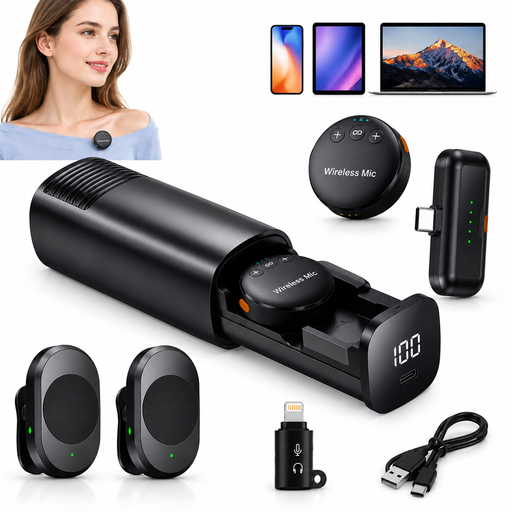 No image available
For a conversation between two people, provided both transmitters can be used with the recording device.
The product title specifies 2.4 GHz, plus USB-C and Lightning.
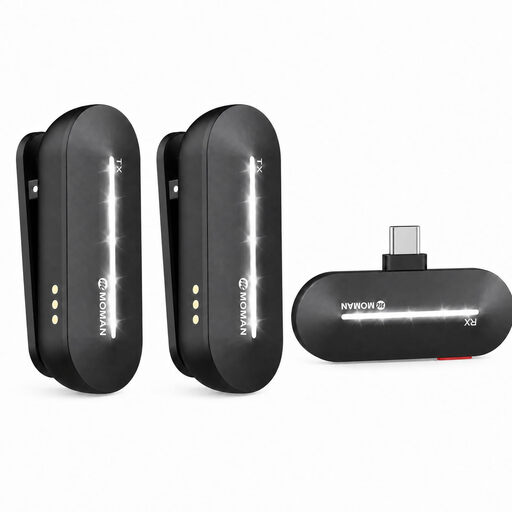 No image available
An option for an interview with two microphone positions, provided the recording device can use the USB-C receiver.
The product title specifies 2TX+1RX, USB-C and a stated range of 150 m.
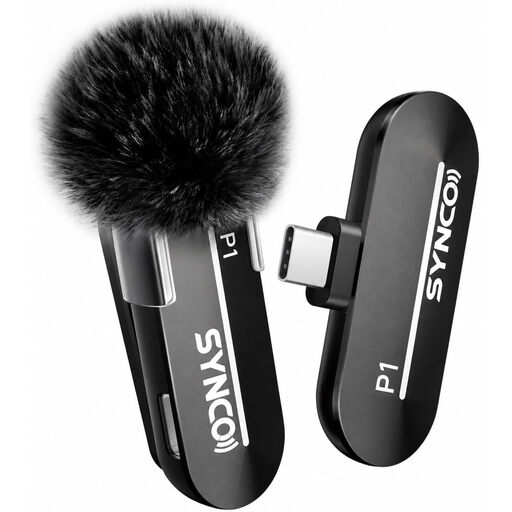 No image available
For voice recordings with a compatible USB-C device; choose a transmitter configuration that suits your needs, whether you want one or two microphone positions.
According to the product description, Android devices require OTG.
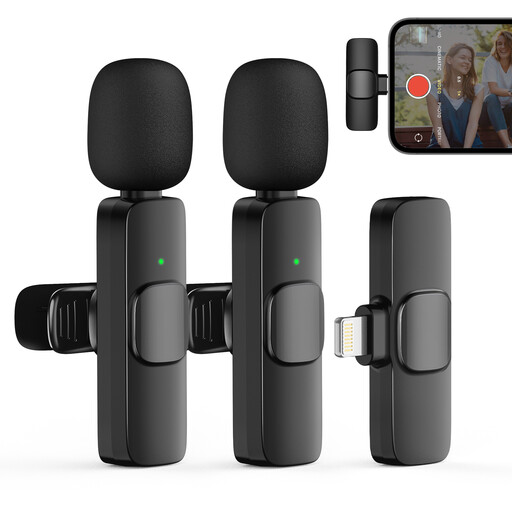 No image available
For an interview using two transmitters, provided the intended recording device is a compatible iPhone.
The product title specifies 2TX&1RX and compatibility with iPhone.
 No image available
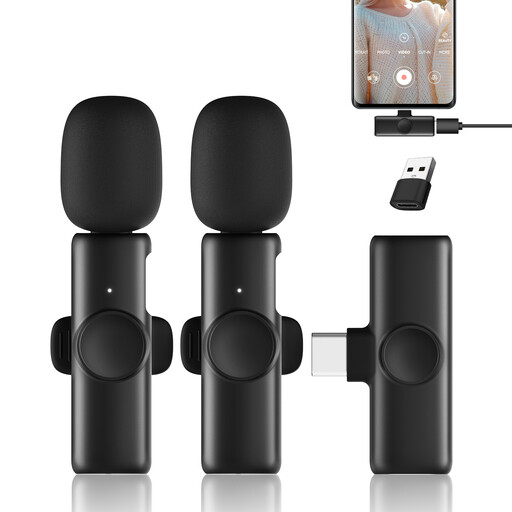
For an interview using two transmitters and a compatible USB-C Android device.
The product title specifies 2.4 GHz and 2TX&1RX.
If you mainly want to record the storyteller, a single lavalier microphone attached to them may be suitable. If the questions matter too, check both voices with a test recording; the University of Leicester’s East Midlands Oral History Archive recommends considering two microphones if the interviewee’s voice is too quiet.
Attach the lavalier around the lapel area, avoid contact with clothing and the cable, and listen to a test recording. If the capsule is too close to the mouth, the recording may distort; if it’s too far away, the voice may sound quiet.
Before recording, you must check that you’re entitled to do so. Section 201 of the German Criminal Code (StGB) concerns the unauthorised recording of another person’s words spoken in private; the Oral History Association recommends documenting the storyteller’s informed consent. Discuss storage and any planned publication separately.
No. The term “wireless microphone” alone doesn’t tell you whether its frequency and configuration are suitable for your intended use. In its 2026 allocation, the Bundesnetzagentur lists frequency bands and technical conditions for wireless microphones; check the details of the specific system against the current allocation.
If a product is faulty, statutory rights against the seller are separate from any voluntary manufacturer’s warranty. The Verbraucherzentrale recommends first asking the seller to put things right; for new goods, statutory rights can generally be asserted within two years of receipt.