What should you look for when buying?
First decide whether you need to record one or two voices and how much freedom of movement you need. Then check that the connection suits your recording setup.
| What you need |
What to check before buying |
Who should pay particular attention? |
| Clear speech despite fan noise |
Fan position, microphone placement and polar pattern; listen to a test recording with the fan running. |
If I want to record a workshop story clearly despite an audible fan, I’ll test the recording location and microphone position first. Speech intelligibility is the top priority for around 28% of consumers. |
| Two voices in a conversation |
How many microphones or transmitters are included, and whether the recording device can record both voices. |
If both questions and answers matter equally, I want to make sure both people are mic’d up appropriately. Recording two voices is the main concern for around 22% of consumers. |
| Freedom of movement |
Cable routing or how the recorder is attached; with a wireless system, test the connection to the receiver on location too. |
If the person speaking is working during the demonstration, I don’t want a cable to the recording device to get in the way. Around 17% of consumers put freedom of movement first. |
| The right connection |
The recording device and microphone input, including TRS or TRRS wiring and any adapters required. |
If I want to keep using my existing phone, camera or recorder, I’ll check the signal path in advance. Device compatibility is the top priority for around 17% of consumers. |
| Local backup recording |
Check whether the specific version has a recording function, along with its storage media, battery level and recording status. |
If a story would be difficult to repeat, I want to save it independently of the immediate connection to the recording device too. A local backup recording is the main concern for around 16% of consumers. |
Joybuy products for mobile lavalier recording
The following Joybuy options are wireless lavalier systems for mobile recording; products specifically listed as dual kits include two transmitters.
 No image available
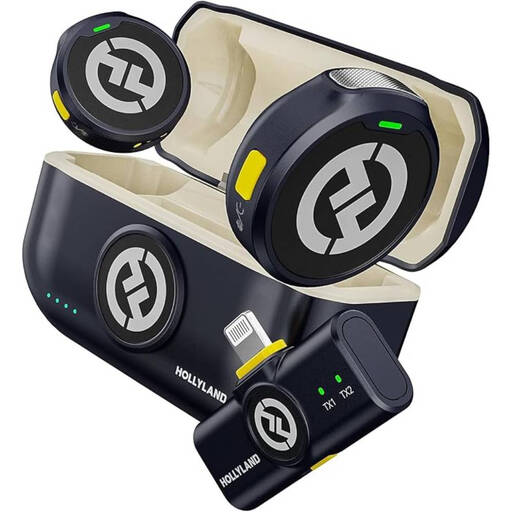
Lark M2 Wireless Lavalier Microphone System
For mobile interviews where the speaker moves around; test the system with your actual recording device and fan noise.
- Transmitter weight: 9 g
- 48 kHz/24-bit
- Stated transmission range: 300 m
View at Joybuy
 No image available
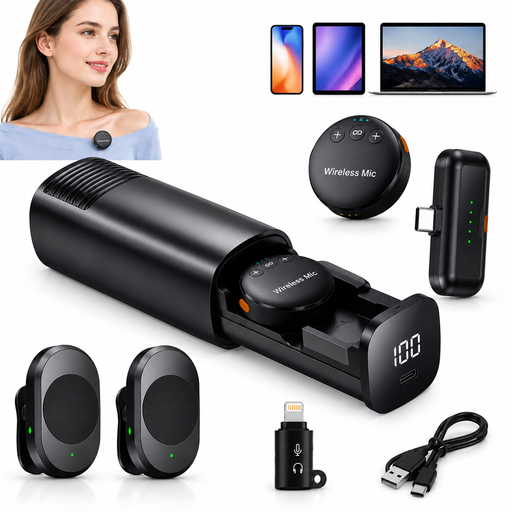
Wireless lavalier microphone kit with 2 transmitters, USB-C and Lightning
For interviews with two people wearing microphones, provided the receiver is compatible with your recording device.
- 2.4 GHz
- Stated range: up to 40 m
- Charging case: 500 mAh
- Connections: USB-C and Lightning
View at Joybuy
 No image available
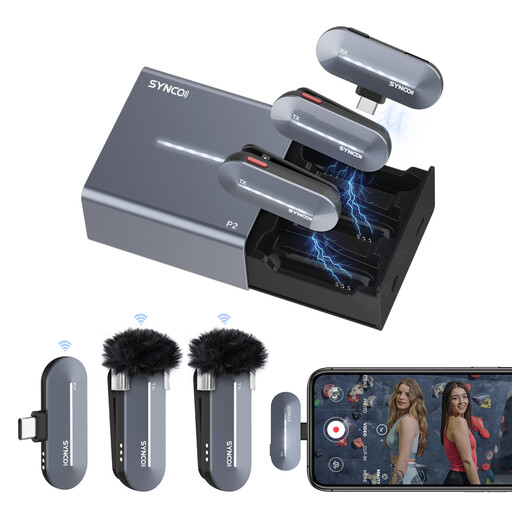
SYNCO P2ST dual lavalier microphone system with USB-C
This dual system is designed for two people wearing microphones; check that the USB-C receiver is compatible with your recording device.
- 2.4 GHz
- Two microphones
- Charging case
- USB-C receiver
View at Joybuy
 No image available
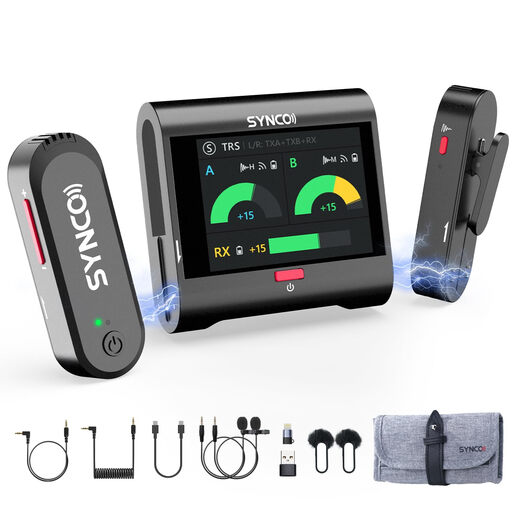
SYNCO G3PRO Wireless Lavalier Microphone System
For an interview with two people wearing microphones; test the connection to your recording device and speech clarity with the fan running beforehand.
- 2.4 GHz
- Two lavalier microphones
View at Joybuy
 No image available
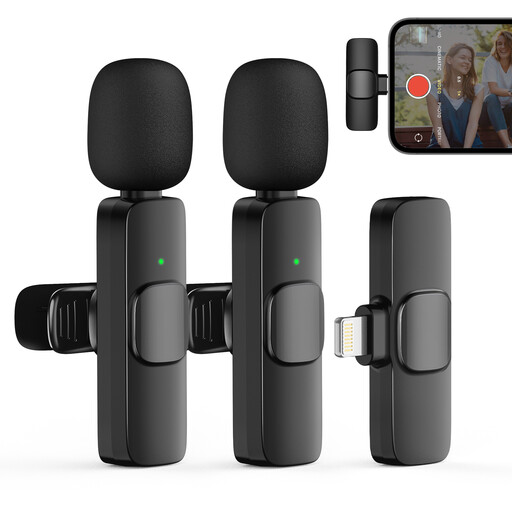
Moman CP1XA lavalier microphone for iPhone, 2TX and 1RX
For an interview with two people wearing microphones, when you’re using a compatible iPhone to record.
- Lightning connection
- Two transmitters and one receiver
- Listed as compatible with: iPhone 14, 13 and 12
View at Joybuy
Frequently asked questions
Can noise cancellation reliably remove the sound of a running fan?
No. You can’t infer any such guarantee from the manufacturer’s information. DJI advertises noise cancellation for the Mic 2; Shure points out that a microphone can’t simply separate speech from other audible sources. Make a test recording with the fan running, and first check the recording location and microphone position.
How should I test the microphone before the interview?
Attach it close to the person speaking, making sure their clothing doesn’t rub against the capsule, then listen to a test recording made under the actual recording conditions. If you’re using a body-worn recorder, also check its recording status, battery and memory card.
Is one lavalier microphone enough for an interview with two people?
A single microphone attached to the person speaking won’t necessarily pick up the person asking questions further away just as clearly. If both voices matter, consider a kit with two microphones or transmitters, and check that your recording device can record both voices appropriately.
Can I record a trade interview in Germany without asking first?
For a private conversation, recording another person’s spoken words without authorisation is a criminal offence under Section 201 of the German Criminal Code (StGB). Get the speaker’s permission before recording, and discuss any later publication separately. If personal data is processed, you’ll also need an appropriate legal basis under data protection law. Consent is one possible legal basis, but it isn’t the only one.
Can I use any wireless microphone in Germany without checking its frequency?
There’s no blanket answer. In Notice 37/2026, dated 15 April 2026, the Federal Network Agency (Bundesnetzagentur) specifies permitted frequency bands and technical and operational conditions for wireless microphones. Check the frequency and device version of the specific kit against the applicable requirements.


