If you’re staying in one place for your voiceover, a wired lavalier microphone could be a good fit, provided its connection and power requirements match your recording device. If you need to move around, a wireless set may be an option, as long as its receiver and transmitter suit your device and workflow. Either way, positioning the microphone close to you without it rubbing against your clothing, and making a test recording, can help. An untreated room with highly reflective surfaces may still be audible in your recording.
Which setup is right for you?
Recording in a reverberant room
If you’re recording in an untreated room, you can experiment with the microphone position and where you record. Placing it close to your voice can reduce the sound of your surroundings, but it won’t necessarily eliminate room reflections. RØDE recommends positioning the microphone close to the sound source and away from unwanted noise.
Voiceovers at your desk
If you’re speaking from a fixed position, first check that the connection, input type and, where necessary, microphone power are compatible with your computer or recorder. USB-C and 3.5 mm TRS are different connection types; RØDE specifies that the Lavalier GO needs a compatible TRS input with plug-in power.
Presenters on the move
If you move around while speaking, make sure the transmitter and receiver setup is right for your needs. For recordings that are difficult to repeat, internal recording may be useful, provided the specific model supports it and you check the saved file.
What should you look for when buying?
First, think about how you record and how much freedom to move you need. Then check that the connection, clip and any backup features suit your workflow.
| What matters to you |
What to check before buying |
Who should pay particular attention? |
| Clear speech in a reverberant room |
Position the microphone close to you, away from clothing, and make a test recording in the room you’ll actually use. |
If you want to record clear speech despite audible room reflections, speech clarity is your main concern. Around 33% of consumers put this first. |
| Connection to your recording device |
Check the input type, power requirements and any adapters against the exact microphone model. |
If you want to keep using your existing phone, computer or recorder, the microphone must be compatible with its input. Around 27% of consumers prioritise device compatibility. |
| Freedom to move |
Check the receiver type, number of transmitters and connection to your recording device. |
If you move around during a presentation, you won’t want to be tethered to one spot by an audio cable. Around 20% of consumers prioritise freedom to move. |
| Recording backup |
Check whether the specific model offers internal recording, how much storage it has and how to start recording. Then play back a test file. |
If an important take would be difficult to repeat, an additional recording on the transmitter may be useful. Around 13% of consumers prioritise this backup feature. |
| Easy setup and secure attachment |
Test the clip and cable routing with the clothes you’ll actually wear, then listen back to the recording. |
If a straightforward setup and secure attachment matter most to you, pay attention to the clip and cable routing. Around 7% of consumers prioritise an easy-to-manage setup. |
Common misconceptions when buying
-
Noise cancellation automatically removes room echo
An untreated room with highly reflective surfaces can still affect your recording. RØDE points out that microphone positioning won’t necessarily eliminate room reflections.
Start by speaking close to the microphone and keeping it clear of rubbing clothing. Make a short test recording in the room you’ll use and compare the audio with noise cancellation switched on and off.
-
A 3.5 mm socket automatically means microphone compatibility
The plug shape alone doesn’t confirm that the input is suitable for a microphone or provides the power it needs. RØDE specifies that the Lavalier GO needs a compatible TRS input with plug-in power; Sennheiser describes the ME 2 as suitable for certain Sennheiser bodypack transmitters.
Check the requirements of the exact microphone model against the input on your recording device before relying on the connection.
-
Every model in a wireless range records internally
Internal recording is specified for the DJI Mic Mini 2S, but not automatically for the DJI Mic Mini. The same goes for other product ranges: don’t assume a feature on one model is available on another.
Check the details for the exact model variant and, before an important take, make sure a recording has actually been saved and can be played back.
-
Wireless is always the better choice just because it lets you move around
A wireless setup needs a compatible transmitter and receiver configuration, and the devices need to be charged. For a fixed recording position, a compatible wired setup may mean less to manage in terms of connections and charging.
First work out how far you need to move, then check whether the receiver can connect to your recording device.
Wireless setups also involve charging the devices and checking the connection.
Key brands to consider
RØDE
The wired Lavalier GO is a TRS option for a compatible microphone input.
- According to RØDE, the Lavalier GO comes with an omnidirectional capsule, a clip and a pop filter.
- The microphone needs a compatible TRS input with plug-in power; this doesn’t mean it will work with every phone or computer.
Sennheiser
The XS Lav USB-C Mobile Kit is designed for wired recording with supported USB-C devices; Profile Wireless uses a different, wireless workflow.
- Sennheiser specifies a 2 m cable for the XS Lav USB-C and internal transmitter recording for Profile Wireless.
- What’s included varies between sets. The ME 2 is designed for certain Sennheiser bodypack transmitters, not every 3.5 mm input.
DJI
Mic Mini is a compact wireless option; Mic Mini 2S is a separate model range with internal recording for backup.
- DJI describes two levels of noise cancellation for Mic Mini and the option to pair two transmitters with one receiver.
- Internal recording is specified for Mic Mini 2S, but not automatically for Mic Mini. A manufacturer’s claims about reducing echo aren’t independent evidence that it will work in every room.
Shure
MoveMic One is designed for solo speakers and recording directly to a smartphone using supported MOTIV apps.
- Shure says a separate receiver is available for cameras or other apps.
- Check compatibility with your specific app and device; advertised sound quality isn’t the same as an independent comparison test.
Hollyland
LARK M2S is a wireless option for presenters; which receivers are included depends on the combo you choose.
- Hollyland lists the transmitter’s weight as 7 g and offers different combinations of camera and USB-C receivers.
- The features and receivers aren’t the same in every variant; the stated specifications don’t prove that echo reduction has been independently verified.
Joybuy products for voiceover recordings
This selection includes wired lavalier microphones for a fixed recording position and wireless sets for USB-C devices or when you need to move around. Before buying, check that the connection, receiver and set variant are compatible with your recording device.
 No image available
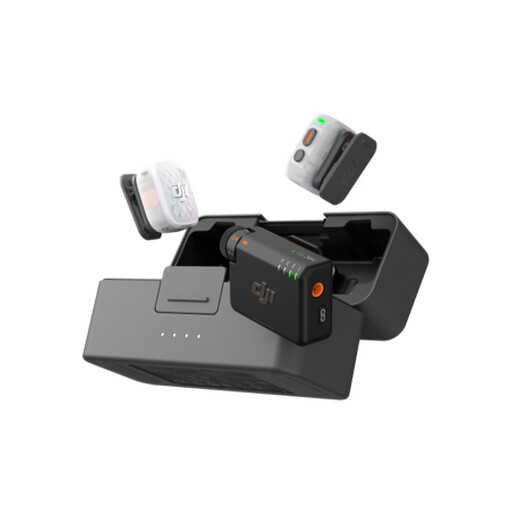
DJI Mic Mini 2S (2 TX + 1 RX + Charging Case)
For presentations where you want an additional recording on the transmitter; before use, check that recording has started and been saved.
Set with 2 transmitters, 1 receiver and a charging case; the product description specifies internal 32-bit float recording.
View at Joybuy
 No image available
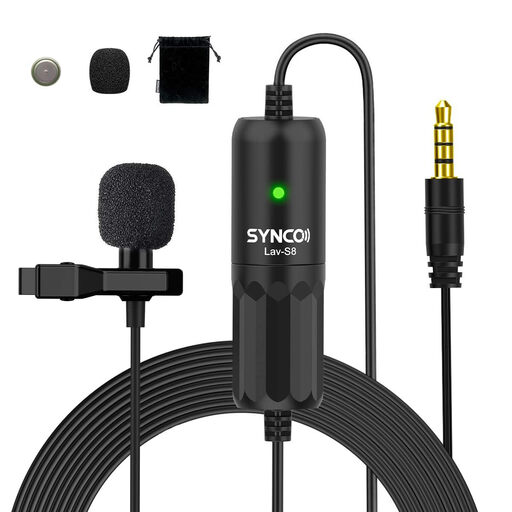
SYNCO S8 Lavalier Microphone
For a fixed recording position, provided the wired connection is compatible with your device.
The product description lists a 3.5 mm connection, a clothing clip and an adapter kit. Check that the required input matches your recording device.
View at Joybuy
 No image available
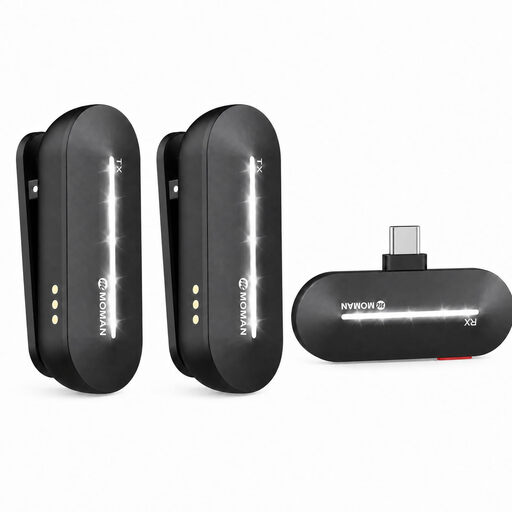
Moman M1CXT Wireless Lavalier Microphone, USB-C, 2TX+1RX
For recording with a compatible USB-C device when your workflow calls for two transmitters.
The product title lists 2 transmitters and 1 receiver; the product description says the set is designed for USB-C devices. Check compatibility with your specific device.
View at Joybuy
 No image available
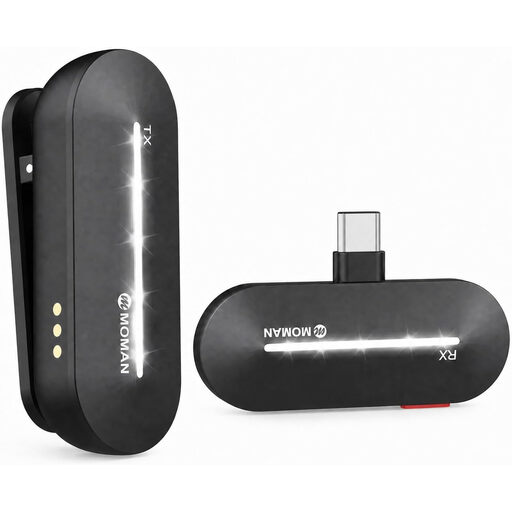
Moman M1CT Wireless Lavalier Microphone, USB-C, 1TX+1RX
For one person who moves around while recording with a compatible USB-C device.
The product title lists 1 transmitter and 1 receiver. The product description also mentions noise reduction modes; check your device’s connection.
View at Joybuy
 No image available
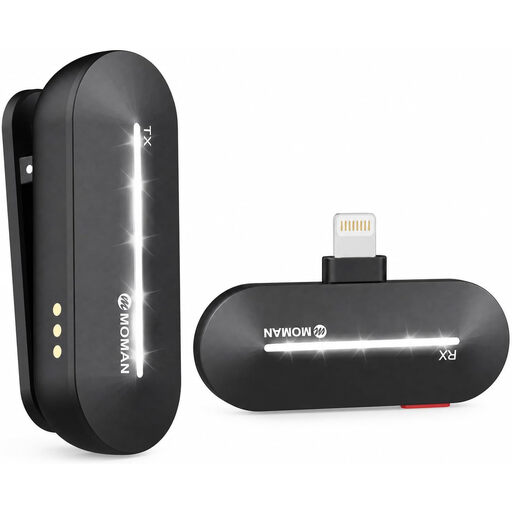
Moman M1CL Wireless Lavalier Microphone, 1TX+1RX
For mobile recording with one of the iPhone models listed in the product title, provided it connects to your specific device.
The product title lists iPhone 14/13/12/11/X, as well as 1 transmitter and 1 receiver. Check compatibility with your exact device.
View at Joybuy
Frequently asked questions
How should I position a lavalier microphone for a voiceover?
RØDE recommends starting with the microphone on your chest, around 20–30 cm from your mouth. Keep the capsule clear of clothing that might rub against it, and listen to a test recording while making your usual speaking movements. This distance is a manufacturer recommendation, not a fixed rule for every voice.
Does noise cancellation remove echo in a room?
No, you shouldn’t rely on it to do that. RØDE points out that an untreated room with highly reflective surfaces can affect a recording, even when noise reduction is used. Compare a short take with processing switched on and off.
How can I tell whether a lavalier microphone is compatible with my device?
Check the specific microphone connection and, if needed, its power requirements against the input on your recording device. A 3.5 mm socket alone doesn’t confirm compatibility; RØDE specifies that the Lavalier GO needs a compatible TRS input with plug-in power.
Does every model in a wireless microphone range record internally?
No, recording features depend on the exact model. DJI specifies internal recording for Mic Mini 2S; don’t assume this also applies to Mic Mini. Before an important take, also check that the recording has actually been saved.
Can I record other people’s conversations in Germany while recording my voiceover?
Under § 201(1) of the German Criminal Code (StGB), it is a criminal offence to record another person’s non-public spoken words without their permission. Take care not to accidentally record other people’s private conversations.


