What should you look for when buying?
For audio drama recordings in an untreated room, start by checking microphone placement and attachment. Then choose wired or wireless to suit movement, the number of speakers and your recording device.
Wired lavalier
A good fit if: one person is speaking close to the recording device and the microphone’s electrical connection is compatible with its input.
Consider: The cable limits how far you can move, and having the same plug doesn’t guarantee compatibility.
Wireless set with one transmitter
A good fit if: one speaker needs freedom to move, and the receiver and output are compatible with your recording device.
Consider: As well as the connection, you’ll need to account for battery life, the wireless link and applicable frequency regulations.
Wireless set with two transmitters
A good fit if: two characters speak at the same time and you want to record both voices close-miked.
Consider: Check how your recording device receives both signals and whether it can record them separately for editing.
Directional lavalier
A good fit if: you can position it to suit the polar pattern of the specific capsule and listen to a test recording in the room.
Consider: A directional polar pattern won’t reliably remove all reflections or background noise, so placement still matters.
The information below is for consumers choosing a lavalier for audio drama recordings in an untreated room; each row represents the main buying priority.
| Priority |
What to check when buying |
Who is it especially relevant to? |
| Clear voice and room reverberation |
Position the capsule close to the voice; listen to a test recording made in the clothes you plan to wear. |
If I’m recording quiet dialogue, I want to capture the voice up close and check for clothing noise in the test recording. Around 33% of consumers prioritise a clear voice despite room reverberation and possible rustling. |
| Simultaneous dialogue and editing |
Check the number of transmitters and recording channels; find out how the device stores the signals. |
If two characters are speaking at once, I need enough close-miking microphones and a recording setup that suits the planned edit. Around 27% of consumers prioritise simultaneous dialogue and how it is recorded. |
| Connection to the recording device |
Check the exact microphone variant against the input; allow for any power requirements. |
If I want to keep using an existing recorder or transmitter, the specific connection needs to be compatible. Around 20% of consumers focus primarily on compatibility between the microphone and recording device. |
| Freedom to move while performing |
Check whether the cable restricts your movements; test the wireless connection where you plan to record. |
If I want to move around during a scene, the attachment needs to stay secure and the connection needs to work with my recording setup. Around 20% of consumers prioritise freedom of movement over a simple wired setup. |
Joybuy products
The Joybuy products below include wired lavalier microphones and wireless sets with one or two transmitters. Before recording, check that the connection and signal path are compatible with your device.
 Image unavailable
DJI Mic Mini 2S (2 TX + 1 RX + Charging Case)
Wireless set with two transmitters for dialogue between two characters speaking at once; check how your recording device receives both signals.
View at Joybuy
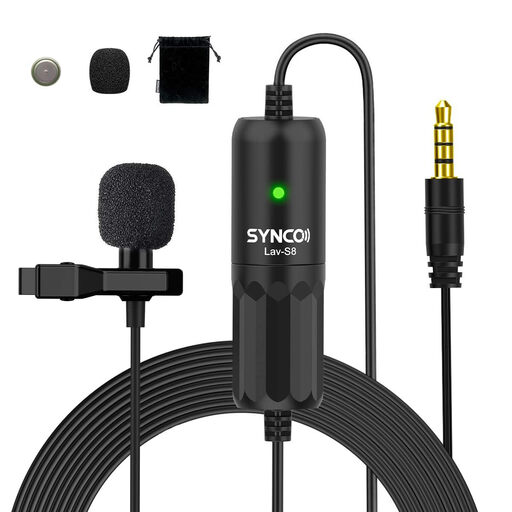 Image unavailable
SYNCO S8 Lavalier Microphone for Smartphones, PCs, Laptops and Cameras
The product title lists smartphones, PCs, laptops and cameras as compatible devices. Before buying, check that the specific connection is compatible with your recording device.
View at Joybuy
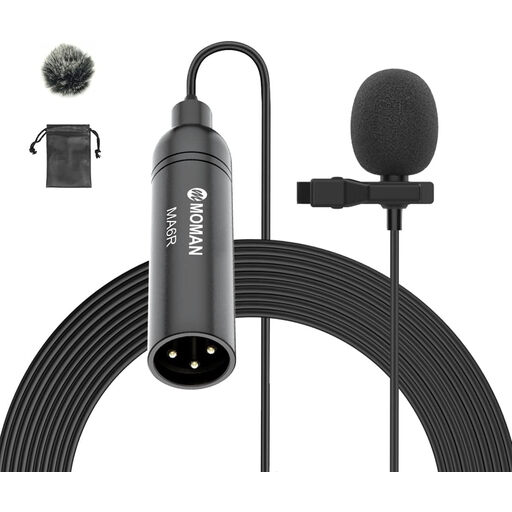 Image unavailable
Moman MA6 Lavalier Microphone, 6 m, 3.5 mm
The product title specifies a 6 m cable, a 3.5 mm connection and an omnidirectional polar pattern. Check that the connection is compatible with your recording device’s microphone input.
View at Joybuy
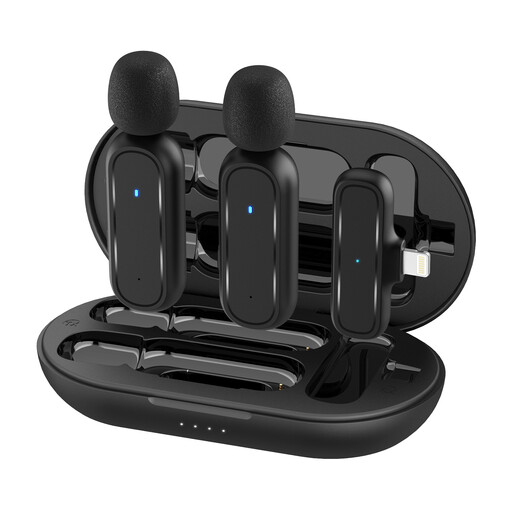 Image unavailable
Moman MC1(C) Wireless Lavalier Microphone (2.4 GHz, USB-C, 1TX + 1RX)
Wireless lavalier with one transmitter and one receiver for USB-C phones, according to the product title. Check that the receiver is compatible with the recording device you plan to use.
View at Joybuy
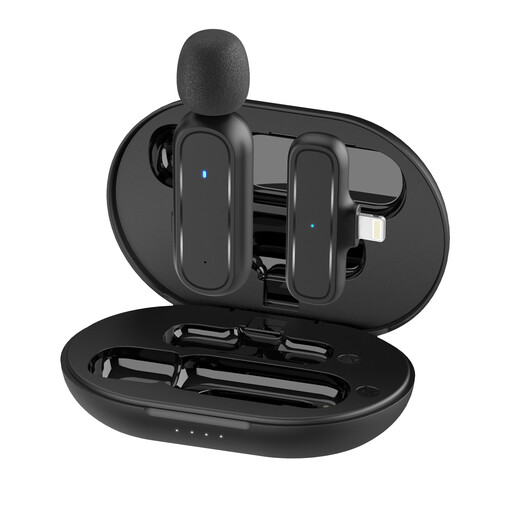 Image unavailable
Moman MC1(A) Wireless Lavalier Microphone (Lightning, 1TX + 1RX)
Wireless lavalier with one transmitter and one receiver; the product title lists iPhones and iPads with a Lightning connector as compatible devices. Check that it will connect to your recording setup.
View at Joybuy
Frequently asked questions
Can a lavalier remove reverberation in an untreated room?
No. Shure explains that a microphone can’t reliably distinguish the direct voice from reflected speech. Positioning it close to the voice can improve the level of the direct sound; check the result with a test recording in the actual room.
How can I avoid rustling while performing?
Attach the capsule and cable so that clothing rubs against them as little as possible, then listen to a test recording made in the clothes you’ll actually wear. RØDE recommends routing the cable to relieve strain; Shure specifically advises against using gaffer tape on the skin.
Is a set with one transmitter enough for two characters speaking at once?
To close-mike two separate speakers, you’ll need two microphones or transmitters, along with a compatible recording setup. DJI offers the Mic Mini with either one or two transmitters.
Can I use any wireless lavalier in Germany without checking it first?
No, you can’t tell from the product name alone. In its general allocation Vfg. 37/2026, dated 15 April 2026, the Federal Network Agency sets out frequency bands and their technical and operational conditions. Check the frequency band of the specific system against the current requirements. Among other things, Vfg. 37/2026 revokes the earlier Vfg. 109/2025.
What should I consider when recording identifiable people?
Processing personal data requires a legal basis under Article 6 of the GDPR. The Federal Commissioner for Data Protection and Freedom of Information explains that consent is one possible legal basis, but not the only one; the basis that applies to a particular audio drama production will depend on its circumstances.


