What should you look for when buying?
Start by deciding what matters most to you: speech details you can analyse, a suitable connection, a reliable recording process or capturing both voices.
Wired lavalier
Suitable if: the interviewee will mostly be sitting down and you can position the cable and recording device appropriately.
Trade-off: there’s no wireless transmitter to pair, but the cable and device input must be compatible.
Lavalier with a body-worn recorder
Suitable if: you want to record locally without relying on a live wireless connection.
Trade-off: a memory card, power, recording checks and file transfers all need to be part of your process.
Wireless set with clip-on transmitters
Suitable if: you want to connect a receiver to a camera or smartphone, or record two people using separate transmitters.
Trade-off: you’ll need to account for the number of transmitters, batteries, pairing and device-specific adapters when preparing.
The proportions below refer to consumers choosing a lavalier microphone for seated dialect interviews. They help you understand the different reasons for buying; the sources cited for these preferences don’t establish actual buyer proportions.
| Priority |
What to check when buying |
Who is it most relevant to? |
| Speech details and original recording |
Can the complete recording system save an uncompressed original file? Can you keep the original version and document any signal processing? |
If you plan to analyse dialect features later, keeping a traceable original recording is especially important. Around 36% of consumers who put speech details first are estimated to have this priority. |
| Connection and setup |
Check the exact microphone input and the power it requires. Test adapters, cable routing and the recording app before the interview. |
If you want to use your existing smartphone, camera or recorder, the connection should work without connection or power issues. Around 29% of consumers are estimated to prioritise this compatibility. |
| Recording reliability |
Test the fastening with the actual clothing and listen to a sample recording. Before you start, check the recording status, storage and power. |
A reliable process is especially important when you can’t repeat the conversation. Around 21% of consumers are estimated to prioritise capturing the complete recording. |
| Two separate voices |
Decide whether you need to record only the interviewee or both voices. If you need both, check the number of transmitters and how the channels are recorded. |
If you want to record the interviewer for later analysis too, your setup needs to capture both voices appropriately. Around 14% of consumers are estimated to have this as their main priority. |
Joybuy products for interviews
This Joybuy selection includes wired lavalier microphones and wireless sets for interview recording. Before buying, check your recording device’s connection and make sure the number of transmitters and the recording setup suit your needs.
 No image available
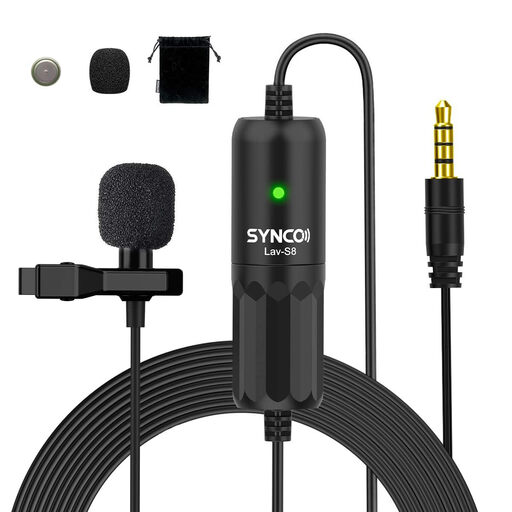
SYNCO S8 lavalier microphone for smartphone, PC, laptop and camera
Could be suitable for a seated interview if the connection and included adapter kit are compatible with your recording device.
The product details list a 3.5 mm connection and an adapter kit; check the specific connection before recording.
View at Joybuy
 No image available
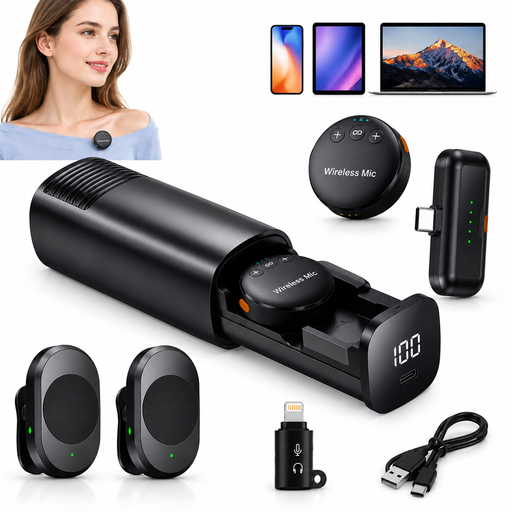
Wireless lavalier set with 2 transmitters, 2.4 GHz, USB-C and Lightning
The product name specifies two transmitters, which could make this an interesting option for an interview with two voices; check that the receiver connections suit your devices.
Listed in the product name: 2.4 GHz, USB-C and Lightning.
View at Joybuy
 No image available
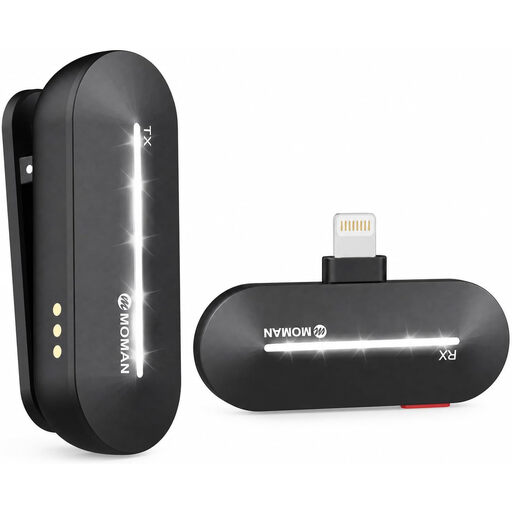
Moman M1CL wireless lavalier microphone for iPhone 14/13/12/11/X, 1TX+1RX
This set could work for an interview with one speaker if your iPhone is one of the models listed in the product name.
The product name specifies 1TX+1RX.
View at Joybuy
 No image available
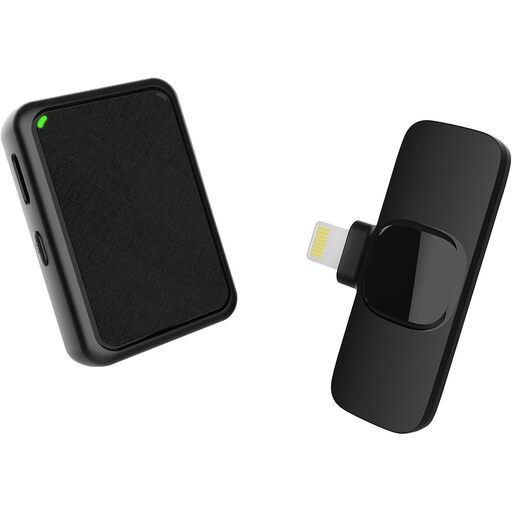
Moman MB1A clip-on microphone for iPhone 14/13/12, 1TX+1RX, Lightning
Could be an option for a one-person interview if you’re using an iPhone model listed in the product name and the appropriate Lightning connection.
The product name specifies 1TX+1RX.
View at Joybuy
 No image available
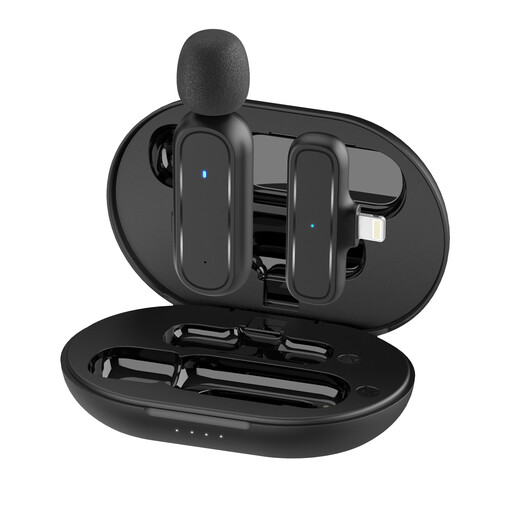
Moman MC1(A) wireless lavalier microphone for iPhone and iPad, Lightning, 1TX+1RX
The two-transmitter setup specified in the product name could be interesting for an interview with two voices; check compatibility with your device.
The product name specifies Lightning and 1TX+1RX.
View at Joybuy
Frequently asked questions
Where should I attach a lavalier microphone on someone who is sitting down?
Attach it so that clothing doesn’t touch the capsule, then listen to a test recording with the person wearing the actual clothes. As a general rule of thumb, RØDE recommends positioning it on the chest, around 20–30 cm from the mouth. This is the manufacturer’s recommendation, not a fixed measurement that applies to every microphone.
Is a 3.5 mm connection on my smartphone enough?
No. The plug diameter alone doesn’t prove compatibility. RØDE designed the Lavalier GO for a powered 3.5 mm TRS microphone input; Audio-Technica includes a microphone/headphone adapter with the ATR3350xiS. Check the connection on your specific phone and make sure the recording app actually uses the external microphone during a test recording.
Can I simply record a private dialect interview in Germany?
Making an unauthorised recording of another person’s non-public spoken words is an offence under § 201 StGB. Check that you’re authorised to record before you begin. The ability to make a recording doesn’t automatically give you the right to use or share it later; whether a particular conversation is non-public and which rules apply to a planned publication depend on the circumstances.
Is the same data protection consent always enough for storage and publication?
You can’t give a general answer without knowing the intended use. If processing personal data is based on consent, the Federal Commissioner for Data Protection and Freedom of Information describes consent for specific purposes as active, voluntary and informed, among other requirements. The Commissioner also explains that special data protection exemptions apply to journalistic and editorial press work; this doesn’t mean that every interview or publication is automatically authorised.
Can I use every wireless microphone sold abroad in Germany without further checks?
No, you can’t assume that it’s generally permitted. The Federal Network Agency publishes general frequency assignments that depend on the frequency and conditions; its decision 37/2026 sets out permitted frequency bands and technical conditions for the wireless microphones covered. Check the frequency range and applicable assignment for the specific system.


