For readings from a fixed position, a wired lavalier is an obvious choice, provided its connection, power supply and cable length suit your recording device. If you move around a lot while performing, a wireless system can eliminate the cable to your recording device, but you’ll need a complete system that works together and must observe the applicable radio regulations in Germany. Before making a longer recording, test it with both quiet and loud passages, and with the clothing and movements you plan to use.
Which lavalier is right for you?
Readers with a wide vocal range
If you switch between whispers and loud dialogue, record a test covering your full vocal range and position the microphone so that neither clothing nor cable rubs against it. RØDE and Shure offer advice on placement and avoiding handling noise.
People recording with equipment they already own
If you want to record directly to a computer, smartphone or recorder, first check the specific microphone input and the signal path you’ll need. Sennheiser, RØDE, Shure and Audio-Technica provide details of different USB-C and analogue connection options.
Readers who move around while performing
If you change position while reading or perform physically, test the cable routing and fastening with the clothing you plan to wear. Wireless can eliminate the cable to your recording device, but it adds another link to the signal path.
What should you look for when buying?
| What matters when buying |
What to check |
Who is it important to? |
| Clear vocals |
Listen to test recordings of quiet and loud passages; keep the capsule and cable clear of clothing that could rub against them. |
If I read roles with changing volume, I want to capture my voice clearly without fabric noise disrupting the scene. Around 34 % of consumers put vocal clarity and low noise first. |
| The right connection |
Check the plug type, microphone input, any power or adapter requirements, and the input selected in your recording software. |
If you want to record using a smartphone, computer or recorder you already own, you’ll need a signal path that’s compatible with it. Around 33 % of consumers prioritise compatibility with their device. |
| Freedom to move |
With a wired mic, check the cable’s reach and secure routing; with wireless, test the complete system and reception along your planned route. |
If I change position while reading or physically perform a role, I want to move without getting caught up in a cable. Around 20 % of consumers prioritise freedom of movement. |
| Easy to use |
Check the complete recording chain, power supply and any system components you’ll need before recording longer takes. |
If you want to record longer passages without interruption, a straightforward setup and suitable power supply are especially important. Around 13 % of consumers say ease of use is their most important buying consideration. |
Common buying pitfalls
-
Assuming the same plug size means the devices are compatible
TRS, TRRS and dual-mono are different connection types. A plug that fits the socket does not, by itself, prove that the microphone and recording device will work together.
Check the entire signal path from the specific microphone to your recording device, including any adapters, power requirements and software input.
-
Choosing wireless just for clearer vocals
A wireless system won’t stop the microphone capsule or cable rubbing against your clothing. A suitable wired microphone may be enough if you’re reading from a fixed position; if you’re moving, the microphone still needs to be secured properly.
Test the microphone with the clothing and movements you plan to use. Choose wireless based on how much you’ll actually move, and check that the transmitter, receiver and recording device work together.
-
Relying on old frequency regulations without checking
Different conditions apply to wireless microphones depending on the frequency band and technical specifications. Wireless use is not automatically interference-free or permitted without further checks.
For a specific wireless system, check its frequency band and technical details against the current general assignment published by the German Federal Network Agency (Bundesnetzagentur).
Key brands to consider
Sennheiser
According to Sennheiser, the XS Lav range includes USB-C and TRRS versions for different recording setups.
- Sennheiser lists a 2-m cable, a clip and a foam windscreen for the XS Lav USB-C.
- USB-C and 3.5-mm TRRS are not interchangeable. The manufacturer’s specifications do not establish a measured sound advantage for dramatic readings.
RØDE
According to RØDE, the Lavalier II is an analogue TRS option for a compatible recording setup or transmitter.
- RØDE lists a locking 3.5-mm TRS plug, a 1.2-m cable and mounting accessories.
- The shorter cable needs to reach between your reading position and recording device. The manufacturer’s sound descriptions are not an independent listening test.
Audio-Technica
According to Audio-Technica, the ATR3350x is designed for devices with a suitable 3.5-mm stereo input.
- The manufacturer lists a 3-m cable, a dual-mono plug, a switch and an LR44 battery.
- A 3.5-mm connection alone does not guarantee compatibility with every smartphone. If you’re moving, make sure the longer cable is routed securely.
Shure
According to Shure, the MVL is designed for compatible mobile devices with a 3.5-mm TRRS socket or a suitable CTIA adapter.
- Shure lists an omnidirectional pickup pattern, a clip and a windscreen.
- Its mobile-device focus does not guarantee direct compatibility with a TRS recorder input. Shure’s advice on handling noise is not a comparative test of the MVL.
Joybuy products for home studio readings
The selection below includes wired and wireless lavalier options for different recording devices and levels of movement. Before buying, check that the connection and complete recording chain are compatible with your device.
 No image available
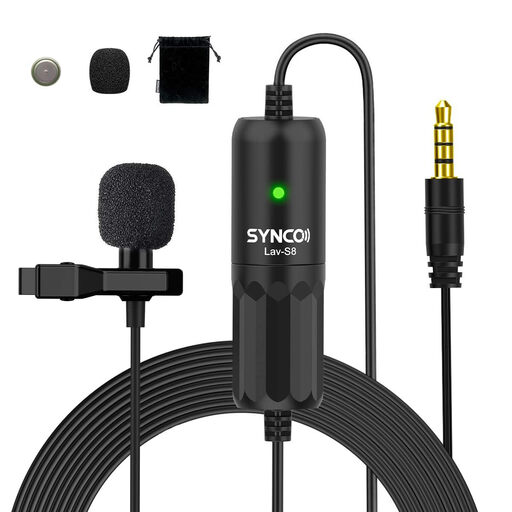
SYNCO S8 Lavalier microphone for smartphone, PC, laptop and camera
An option if you’re looking for a lavalier microphone for one of the recording setups listed. First, check the specific connection, plug wiring and whether you’ll need an adapter.
View at Joybuy
 No image available
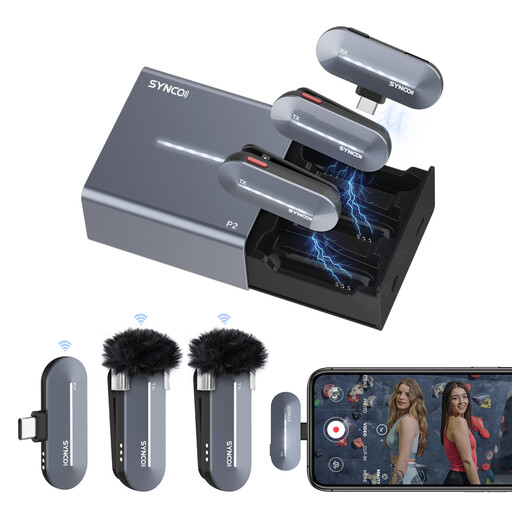
SYNCO P2ST Wireless Lavalier Microphone USB-C, Dual Mic 2.4GHz
A wireless option if you want to record using a USB-C receiver. The product name specifies two microphones, 2.4 GHz and a charging case; check that your device’s recording setup is compatible. Before using wireless, check the applicable technical requirements in Germany.
View at Joybuy
 No image available
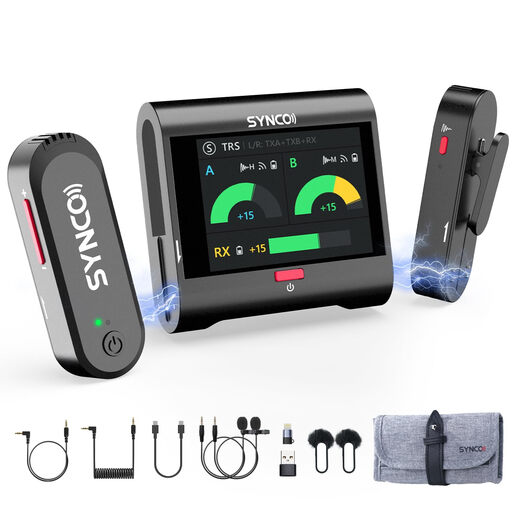
SYNCO G3PRO Wireless Lavalier Microphone System, 2.4GHz Dual Lapel Mics
This could be an option if you’re looking for a wireless system for a compatible smartphone, camera or computer recording setup. The product description lists several connection options; check that the output you need and the number of microphones suit your requirements. Before using wireless, check the applicable technical requirements in Germany.
View at Joybuy
 No image available
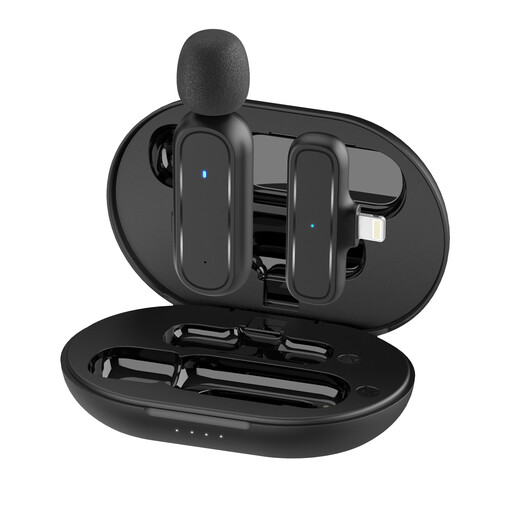
Moman MC1(A) Wireless Lavalier Microphone, Lightning, 1TX and 1RX
A wireless option for an iPhone or iPad with a compatible Lightning connection. The product name specifies one transmitter and one receiver. Before using wireless, check the applicable technical requirements in Germany.
View at Joybuy
 No image available
Moman MS1(C) Wireless Lavalier Microphone, USB-C, 2.4 GHz (1TX&1RX)
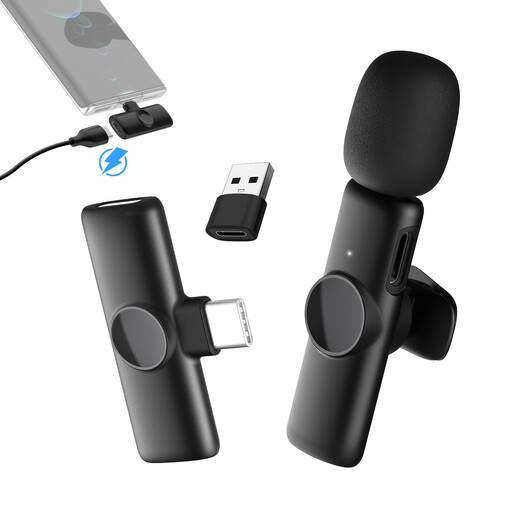
A wireless option for a mobile device with a compatible USB-C recording setup. The product name specifies 2.4 GHz and 1TX&1RX. Before buying, check your device’s specific connection and, before using wireless, the applicable technical requirements in Germany.
View at Joybuy
Frequently asked questions
How should I position a lavalier microphone for a dramatic reading?
As a starting point, RØDE recommends positioning the microphone on your chest, around 20–30 cm from your mouth. Keep the capsule clear of clothing that could rub against it, then test the sound with the clothing and movements you plan to use. This distance is a recommendation, not a requirement.
Is a socket of the same size enough for a 3.5-mm lavalier?
No. The plug type and recording setup also need to be compatible. Shure specifies TRRS for compatible mobile devices, RØDE uses TRS for the Lavalier II, and Audio-Technica specifies a dual-mono plug for the ATR3350x for use with suitable stereo inputs. Also check whether your device needs an adapter or power.
Do I need to register a wireless lavalier in Germany?
Not in every case. According to the German Federal Network Agency (Bundesnetzagentur), some generally assigned frequencies can be used without registration and free of charge, provided the relevant technical parameters are met; other uses may require an allocation. For a specific system, check its frequency band and technical details against the current applicable general assignment.
What if a microphone I bought online isn’t suitable?
For consumer contracts made online in Germany, the Verbraucherzentrale says you generally have a 14-day right of withdrawal, which you must notify the other party about. This right, which applies if you change your mind about the purchase, is separate from your statutory rights if the product is faulty and any voluntary guarantee.
Can I publish a reading of someone else’s text?
That depends on the specific work and the rights that apply to it. Among other things, German copyright law distinguishes between reproduction, public recitation and making a work available to the public. Check the rights for the text you’re using before publishing your recording. Choosing a microphone does not grant you the right to publish.


