For someone sitting down to tell a story, a wired lavalier is a straightforward choice, provided the connector is compatible with the recording device and a 2 m cable is long enough. If you need to move around or capture two speakers, a wireless set gives you more freedom; if you want a separate audio file, consider a lavalier with its own recorder. For long conversations, what matters is battery life per charge, not the total you can get by recharging in the case.
Which option suits you?
Family historian recording long interviews
If you want to record someone telling their story over an extended period, consider the recording time for a single take, the power supply and, where relevant, the option to save a separate audio file. Zoom quotes up to 15 hours for the F2 using two AAA batteries, and up to 14 hours for the F2-BT.
Recording a two-person conversation
If you want both questions and answers to be clearly audible, check that the set actually includes two microphones or transmitters and that the receiver is compatible with your recording device. RØDE describes the Wireless Micro as a smartphone set with two transmitters and a receiver that plugs directly into your phone.
Smartphone beginner
For a simple set-up, choose a connector and microphone position that suit your phone. Sennheiser offers different 3.5 mm TRRS and USB-C versions of the XS Lav; with the RØDE Wireless Micro, choose the USB-C or Lightning version that matches your smartphone.
What to look for when buying
Wired lavalier
A good fit if: One person will be telling their story mainly from a fixed position and the recording device has a compatible input.
Keep in mind: The 2 m cable limits where you can position yourself; recording takes place on the connected device, not on the microphone itself.
Wireless set
A good fit if: The people talking will be moving around, or two people each need to wear a microphone.
Keep in mind: Transmitter battery life and total battery life with the case are not the same. RØDE quotes 7 hours per transmitter charge and 21 hours including recharging in the case for the Wireless Micro.
Lavalier with its own recorder
A good fit if: You want a separate audio file that isn’t recorded directly by your smartphone or over a wireless connection.
Keep in mind: You’ll need to transfer the file afterwards and, if you’re recording video, you may also need to sync it with the footage.
| What matters |
What to check when buying |
Who it matters to |
| Recording without interruption |
Compare battery life per transmitter charge and the recording device’s power supply. If you’re using a recorder, check that the recording medium can handle the planned conversation length. |
If you want a conversation to run without a break to charge or change batteries, the battery life for a single take matters. Around 33% of consumers put uninterrupted recording first. |
| Two speakers |
Check how many transmitters are included in the specific set and whether the receiver works with your recording device. |
If you want to record questions and answers with two people wearing microphones, pay particular attention to what’s included in the set. Around 27% of consumers prioritise recording two speakers. |
| Connection and easy set-up |
Check that the recording device’s socket matches the exact microphone or receiver version; also check external audio input support. |
If you want a straightforward set-up with your own smartphone or computer, choosing the right connector is essential. Around 20% of consumers put device compatibility first. |
| Clear speech with clothing and background noise |
Test the clip, windscreen and attachment point with the clothes you’ll actually be wearing in a test recording. |
If you want to record voices while wearing your usual clothes, make sure the microphone has a clear position and speech is free from unwanted noise. Around 20% of consumers prioritise this. |
Common buying and recording mistakes
-
Confusing total battery life with the case for recording time in a single take
The RØDE Wireless Micro user guide quotes 7 hours per transmitter charge. The 21-hour figure includes two recharges in the case, so it doesn’t mean you can record a single take continuously for that long.
Compare the longest conversation you’re planning with battery life without recharging.
-
Checking only the product name, not the connector and set version
The Sennheiser XS Lav Mobile and XS Lav USB-C have different connectors. With wireless sets, the compatible receiver also depends on the specific version.
Check the recording device’s socket and the number of transmitters you need against the exact contents of the box.
-
Treating a portable recorder like a microphone that connects directly to your device
The Zoom F2 records a separate file to a microSD card and runs on AAA batteries. You’ll need to transfer the file afterwards and, if you’re recording video, you may also need to sync it with the footage.
Plan how you’ll back up the audio file and combine it with the video if you’re using both.
For a standalone recorder, you’ll need a memory card and batteries to hand. You’ll also need to allow time for transferring the file and, if necessary, syncing it with the video.
Key brands at a glance
Sennheiser
The XS Lav versions are designed for straightforward wired recording with a compatible recording device.
- Sennheiser specifies a 2 m cable for both the XS Lav Mobile and XS Lav USB-C; the Mobile has a 3.5 mm TRRS connector, while the other version uses USB-C.
- The cable limits your freedom of movement; neither version is a standalone recorder.
RØDE
The Wireless Micro is a wireless set for smartphone recording, with a receiver that plugs directly into your phone.
- RØDE describes two clip-on transmitters and its user guide quotes 7 hours per transmitter charge, or 21 hours including recharges in the case.
- The USB-C and Lightning versions have different connectors to choose from; total battery life with the case is not the same as continuous recording time for a single take.
Hollyland
The LARK M2S is a wireless option for conversations on the move; the right receiver depends on the set you choose.
- Hollyland quotes at least 9 hours for the transmitter and receiver with noise cancellation switched off, and 30 hours with the case for the Combo version.
- These figures apply under different conditions; 30 hours with the case does not mean 30 hours of uninterrupted recording.
Zoom
The F2 combines a lavalier with a standalone recorder to create a separate audio file.
- Zoom specifies microSD recording and up to 15 hours using two AAA batteries for the F2, or up to 14 hours for the F2-BT.
- You’ll need to transfer the separate file later and, if necessary, sync it with the video.
DJI
With the Mic 3, the contents of the set, number of transmitters and internal recording features all matter when choosing a system.
- DJI quotes 8 hours of transmitter battery life in a specific test set-up.
- According to DJI, maximum internal recording time depends on the recording format and file mode. It shouldn’t be confused with battery life or taken as a guaranteed recording time for a single take.
Joybuy products for voice recording
This selection includes wired lavalier microphones and wireless sets for recording speech with a smartphone, computer or camera.
 No image available
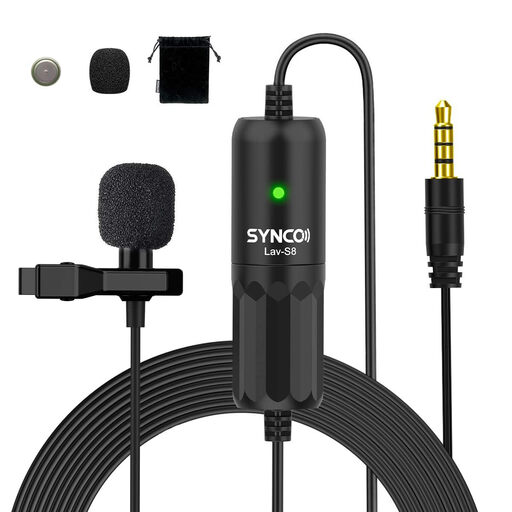
SYNCO S8 lavalier microphone
A wired option for recording speech, provided your recording device has a compatible 3.5 mm input.
The product description says it’s designed for smartphones, PCs, laptops and cameras; a clip and windscreen are also included.
View at Joybuy
 No image available
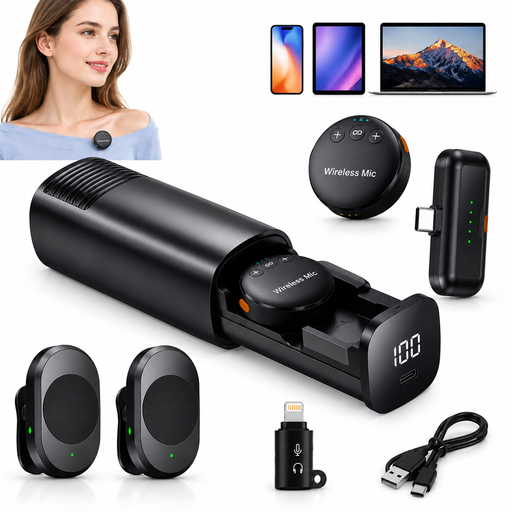
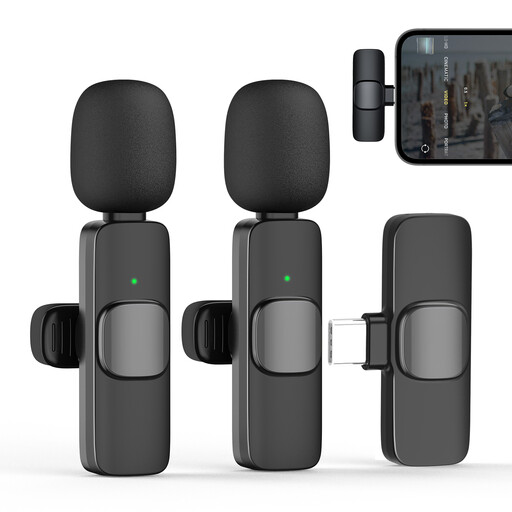
Wireless lavalier microphone set with 2 transmitters
For two-person conversations where both people need to wear a microphone, provided the receiver is compatible with your recording device.
The product details specify 2.4 GHz, DSP noise reduction, and USB-C and Lightning receivers.
Quoted battery life: up to 6 hours per transmitter; the quoted 18 hours includes recharging with the case.
View at Joybuy
 No image available
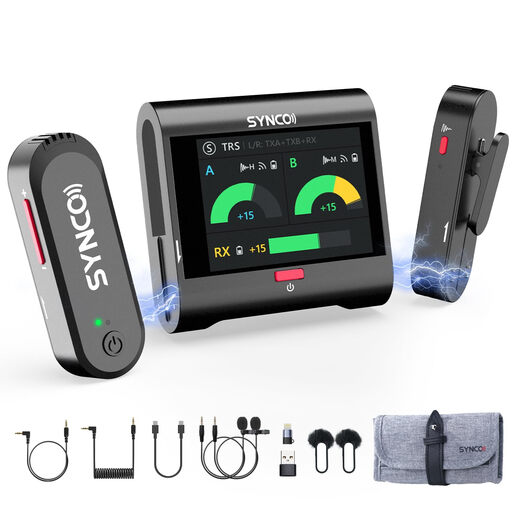
SYNCO G3PRO wireless lavalier microphone system
A wireless option for recording two people, provided the receiver’s connectors are compatible with your recording device.
The product details specify two transmitters and one receiver, along with TRS, TRRS and USB-C outputs.
View at Joybuy
 No image available
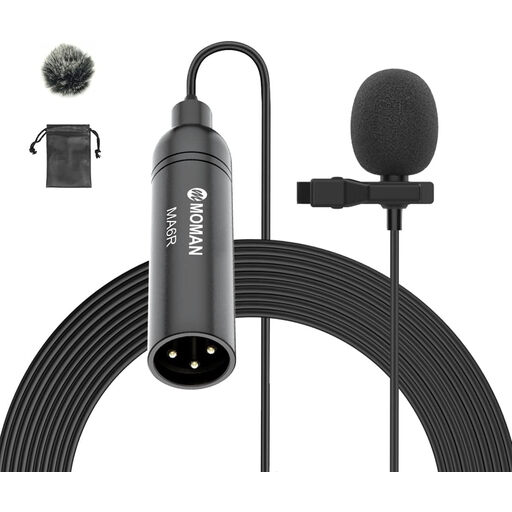
Moman MA6 lavalier microphone, 6 m
For recording speech and interviews, provided the 3.5 mm connector is compatible with your recording device.
The product details specify one transmitter and receiver, automatic pairing and a microphone that clips onto your clothing.
View at Joybuy
 No image available
Moman CP1X(C) wireless lavalier microphone, USB-C
For recording speech with a USB-C device, provided the receiver that plugs directly into it is compatible with your recording device.
The product description specifies automatic pairing and up to 5 hours of continuous recording per USB charge.
View at Joybuy
Frequently asked questions
Is the battery life with the charging case enough for an uninterrupted conversation?
No. RØDE’s user guide quotes 7 hours per transmitter charge for the Wireless Micro; the extra 14 hours require recharging in the case. For a single take, compare battery life without recharging with the planned length of your conversation.
How do I record two speakers using lavalier microphones?
Choose a set that actually includes two transmitters and check that its receiver works with your recording device. Before the conversation, test the microphone position for both people and listen back to the recording.
How should I attach the microphone before a long conversation?
Attach it close to your mouth and test the recording with the clothes you’ll actually be wearing. RØDE advises against covering the microphone with clothing or hair, and recommends making a loop in the cable of a wired lavalier to reduce strain.
Can I secretly record a private family conversation in Germany?
Section 201 of the German Criminal Code (StGB) makes it a criminal offence to record another person’s private spoken words without authorisation. So discuss the recording with everyone involved beforehand; the specific legal position may depend on the circumstances.
Can I publish a video of the conversation afterwards?
Section 22 of the German Art Copyright Act (KunstUrhG) generally requires the consent of the person shown before their image can be distributed or displayed publicly. Consent to the conversation should not automatically be taken as consent to publish it; this does not cover every possible statutory exception.


