Garden stories on the move
If you’re following someone as they tell a story among the flower beds, look for a secure attachment, suitable wind protection and plenty of freedom to move.


Choose according to the length of your conversation, the number of speakers and how freely you need to move. A wired lavalier is a good fit for a fixed recording spot, while a wireless set with two transmitters suits interviews for two on the move. For one person telling a story, consider a body-worn recorder without a continuous wireless connection. For long takes, check battery life and recording time separately. Outdoors, wind protection and a secure way to attach the microphone also matter. Before buying, check that it will connect to your recording device.
If you’re following someone as they tell a story among the flower beds, look for a secure attachment, suitable wind protection and plenty of freedom to move.
For an extended story, it’s important to have a power supply that can handle the planned take and a reliable recording setup.
If you want to record questions and answers at the same time, check whether the specific set includes two microphones or transmitters.
First decide whether you need freedom to move, one long continuous take, two separately mic’d voices or a simple, fixed setup.
A good fit if: One person is speaking in a fixed spot and you have a suitable microphone input.
Consider: The cable and, where needed, a microphone battery are part of the recording setup. The cable can get in the way when you’re walking.
A good fit if: Both people in the conversation wear their own microphone and move around during the interview.
Consider: The transmitters and receiver all need power. For long takes, check the battery life of every device you’ll need.
A good fit if: You want to record one person for a long time without relying on a continuous wireless connection.
Consider: The file is stored on the recorder first, so you’ll need to transfer it afterwards and, for video, may need to sync it.
| What matters | What to check before buying | Who is it important to? |
|---|---|---|
| Wind and movement | Suitable wind protection, plus a clip and position that keep clothing from covering the microphone. | When I’m recording among the flower beds, I want to capture clear speech despite the wind and movement. This is a priority for around 28% of consumers. |
| Long takes | Check the operating time of each device you need: Zoom specifies up to 15 hours for the F2 and up to 14 hours for the F2-BT with two AAA batteries. DJI specifies six hours for the Mic-2 receiver under the stated test conditions. Recording time is not the same as battery life. | If a story needs to run without charging or recording interruptions, the battery life must cover the planned take. Around 22% of consumers say their main concern is recording a long, uninterrupted take. |
| Two voices | For wireless sets, check the specific version and what’s included to confirm it comes with two transmitters and two microphones. | If I want to record questions and answers at the same time, with each person using their own microphone, I need a suitable two-person set. This is the main concern for around 22% of consumers. |
| Device connection | Check the microphone input, connection and device mode. The BOYA BY-M1 instructions distinguish between smartphone and camera use. | If you want to keep using your existing smartphone, camera or recorder, check that the connection is right for your device. Around 17% of consumers say compatibility with their recording device is their main concern. |
| Fixed recording spot | Consider the cable length and route. For the BOYA BY-M1, also check the power supply required by the specific version. | If I’m recording one person in a fixed spot, I want a straightforward setup without an unnecessary wireless connection. Around 11% of consumers say their main concern is simple, stationary recording. |
The storage capacity for a transmitter’s internal recording doesn’t tell you how long the transmitter and receiver will run together. RØDE describes the Wireless PRO’s over 40 hours as internal recording time per transmitter. DJI specifies six hours of operation for the Mic-2 receiver under the stated test conditions.
Compare the planned uninterrupted conversation time with the battery life of every device you’ll need. Treat a charging case separately if you can’t take a charging break between takes.
A single microphone worn by one person won’t automatically capture both people with a microphone each.
Check the exact set and what’s included before planning an interview for two.
Having the right type of plug doesn’t guarantee that the microphone, recording device and required power supply will work together. The BOYA BY-M1 has different settings for smartphones and cameras. Deity says the V.Lav’s connection adapts to most, but not all, 3.5-mm microphone inputs.
Check the input and power supply on your specific device, then make a short test recording before your conversation.
The Wireless PRO is a wireless option for recording two people with a microphone each at the same time.
The Mic 2 is a wireless option with local recording on the transmitter. For interviews for two, check the two-transmitter version.
The F2 and F2-BT pair a body-worn recorder with a lavalier microphone for one person telling a story.
The V.Lav is a wired lavalier for recording devices with a suitable 3.5-mm microphone input.
The BY-M1 is a wired lavalier for recording one person speaking with a compatible smartphone, recorder or camera.
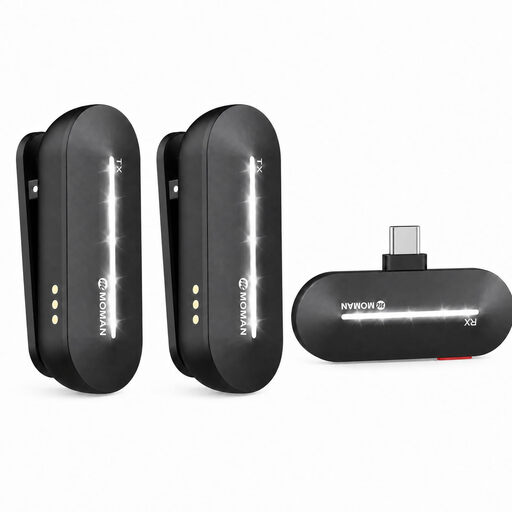
The Joybuy products below are wireless lavalier microphones for mobile recording. For wireless models, check the frequency specifications and the conditions that apply in Germany before buying.
 No image available
Could suit mobile outdoor recording if the specific connection matches your recording device.
Product details specify up to 10 hours of transmitter battery life and a furry windscreen.
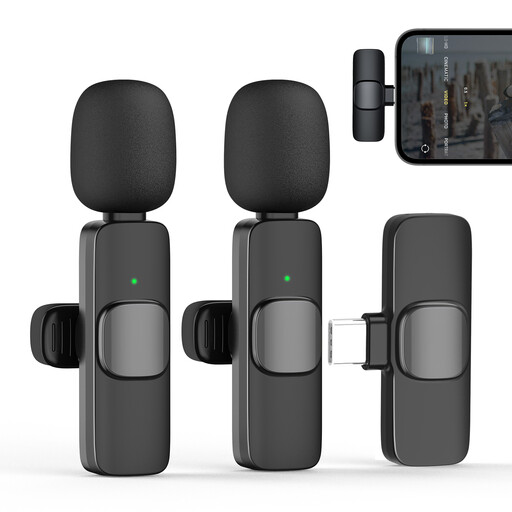 No image available
The specified version with two transmitters could suit an interview where both people need to wear their own microphone.
Product details specify USB-C and up to eight hours of battery life per transmitter. USB-C Android phones are listed as compatible devices.
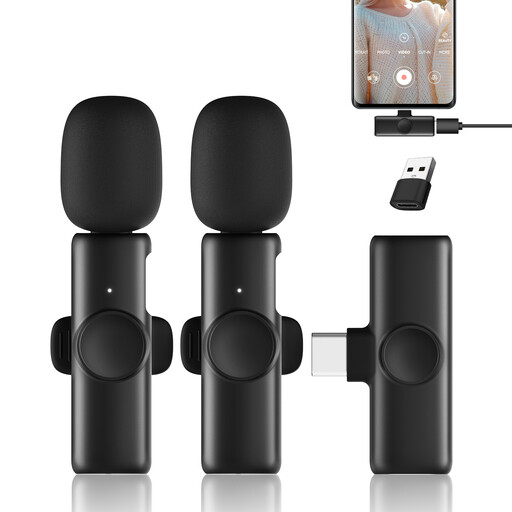 No image available
The two-transmitter version is designed for interviews for two. Your recording device must be compatible with the USB-C connection.
The product description specifies up to six hours of continuous battery life.
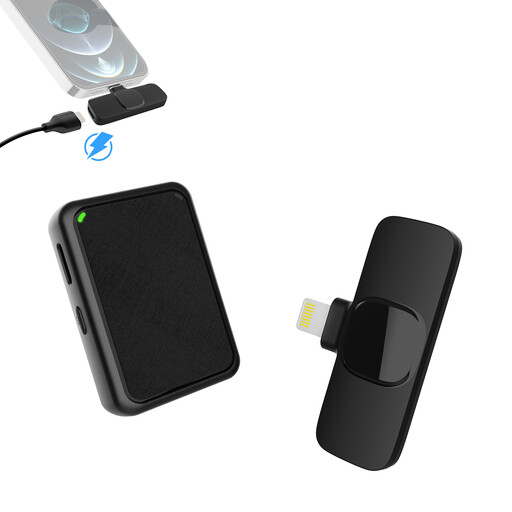 No image available
The specified version with two transmitters could suit an interview for two, provided your recording device supports a Lightning connection.
Product details specify up to 10 hours of transmitter battery life and a furry windscreen. Compatible devices include iPhone and iPad models.
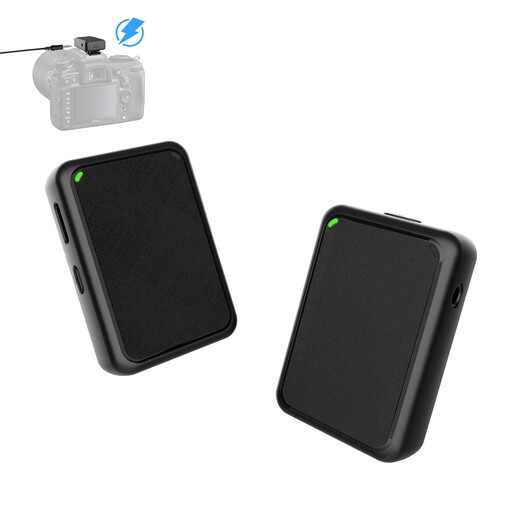 No image available
The specified version with one transmitter could suit recording a single person wearing a microphone.
The product description specifies a 3.5-mm camera connection, up to 10 hours of transmitter battery life and a furry windscreen.
No. Recording time and operating time are different things. Depending on the recording format, DJI specifies up to 14 or 11.2 hours of storage per Mic 2 transmitter, but six hours of operation for the receiver under the stated test conditions. RØDE describes the Wireless PRO’s over 40 hours as internal recording capacity per transmitter.
Attach the microphone so clothing doesn’t cover the capsule, use suitable wind protection and listen back to a short test recording before a long take. BOYA recommends recording and playing back a test in its instructions, while Shure advises avoiding touching or covering the microphone.
Check whether your chosen model needs compatible adapters or replacement batteries, and how to maintain its built-in battery. RØDE notes that the batteries in its Wireless products have a limited lifespan.
Under § 201 of the German Criminal Code (StGB), recording another person’s non-public spoken words on an audio device without authorisation is prohibited. Germany’s Federal Ministry of Justice and the Federal Office of Justice list this provision in the Criminal Code. Processing recordings containing personal data also requires an appropriate legal basis. The Federal Commissioner for Data Protection and Freedom of Information lists several possible grounds, including consent. Whether a particular conversation is non-public, and which rules apply to any later publication, depends on the circumstances.
No, you can’t assume that every set is automatically approved. In April 2026, the Federal Network Agency published a general allocation with technical and operational conditions that vary by frequency for wireless microphones. It explicitly replaces earlier allocations. Check the frequency specifications and applicable conditions for the specific model.