Teachers recording long solo takes
You record from a fixed position and want to monitor pronunciation and ensure your recordings are complete. So first, check the connection, microphone position and power supply.


For recording from a fixed position, a wired lavalier is a natural choice if its connection and power requirements match your recording device. It’s still important to test it with your usual clothing and the sounds you need to distinguish. If you move around while teaching, consider a wireless set or a lavalier with a body-worn recorder. With a wireless set, both the transmitter and receiver need to last; with a recorder, you’ll need a reliable process for checking and saving the file. No connection or storage specification can replace testing the complete recording setup.
You record from a fixed position and want to monitor pronunciation and ensure your recordings are complete. So first, check the connection, microphone position and power supply.
You change position during the lesson or demonstrate exercises in different places. Weigh the freedom to move against the wireless connection, set configuration and battery life of the devices you need.
You want to save a difficult-to-repeat take directly on a body-worn device. Remember to allow time afterwards to check the file and save it securely.
| What matters | What to check before buying | Who it matters to |
|---|---|---|
| Assessing sounds and unwanted noise | Secure the microphone and cable so they don’t rub against your clothing. Record and listen back to a test using the clothes you usually wear. | If I need to assess subtle differences between sounds, I also want to hear any potential rustling in the recorded file. Around 34% of consumers put checking sounds and unwanted noise first. |
| Recording complete, long takes | Check the recording setup, power supply and available storage before you start. Afterwards, make sure the test file has been saved. | For a long teaching session, I want to know that the recording will run from start to finish and that the file will be available afterwards. Around 33% of consumers prioritise a complete take they can check. |
| Connecting to your existing device | Check the specific input and the microphone’s power requirements. Make a recording and play it back on the device you plan to use. | If I want to keep using my existing phone, computer or recorder, I need a compatible signal path. Around 20% of consumers prioritise compatibility with their device. |
| Freedom to move while teaching | Check the range of movement, transmitter and receiver connections, and the actual recording conditions where you’ll be teaching. | If I want to move around while explaining something, the microphone cable shouldn’t tie me to one spot. Around 13% of consumers put freedom to move first. |
The 40+ hours of storage RØDE quotes for the Wireless PRO per transmitter refers to internal storage, not battery life. With wireless sets, you also need to consider the battery life of the transmitter and receiver separately.
Compare the specifications for the exact set configuration with your planned recording time, then check a test recording that has been saved.
The Sennheiser XS Lav USB-C has a USB-C connection. The RØDE Lavalier GO, on the other hand, needs a compatible TRS microphone input with plug-in power.
Check that both the connection and the power requirements match your recording device before choosing a microphone.
A wireless connection doesn’t automatically make a long take more reliable: batteries, the receiver and potential interference all affect the complete recording setup. With a body-worn recorder, you’ll need to check and save the local file afterwards.
Record a test in the place you plan to use it and play it back. With a wireless model, also check the frequency and the conditions for the specific device configuration.
The wired XS Lav USB-C is an option for recording from a fixed position, provided you have a compatible USB-C recording device.
The Lavalier GO is a wired microphone; the Wireless PRO is a separate wireless set with its own recording features.
The Mic Mini is worth considering as a wireless set if you want to move around while teaching. Check the exact set configuration when comparing options.
The Zoom F2 combines a lavalier with a body-worn recorder, making it an option if local recording suits your workflow.
The wired V.Lav is worth considering if you need a longer cable and a compatible 3.5-mm microphone input.
The Joybuy products below are wireless lavalier sets. Before choosing one, check that the receiver configuration is compatible with your recording device and whether you need one or two transmitters.
 No image available
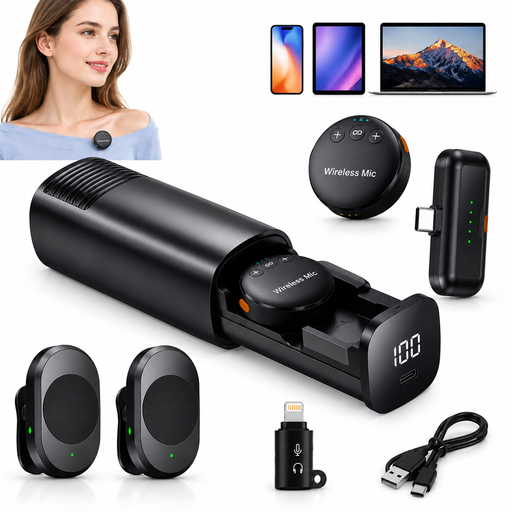
The two transmitters could be useful for a lesson with two people speaking. Check that the receiver is compatible with your recording device.
Listed in the product title: 2.4 GHz, two transmitters, USB-C and Lightning.
 No image available
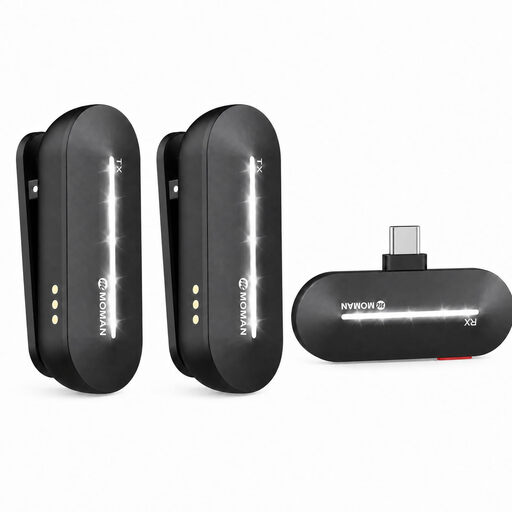
The version with two transmitters could suit recordings with two people speaking. Check that the USB-C receiver works with your specific device.
Listed in the product title: USB-C and 2TX+1RX.
 No image available
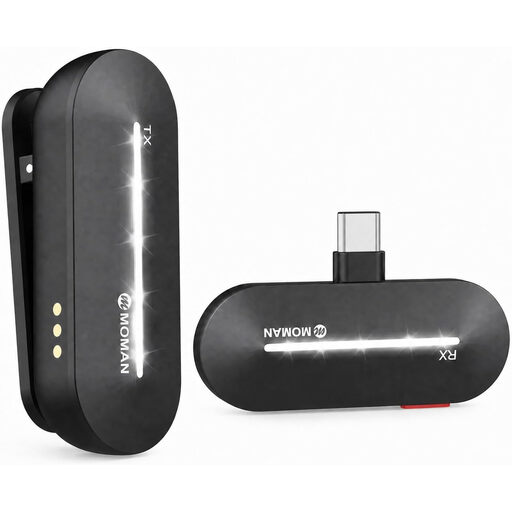
The version with one transmitter is designed for one person speaking. Check that your recording device can use the USB-C receiver.
Listed in the product title: USB-C and 1TX+1RX.
 No image available
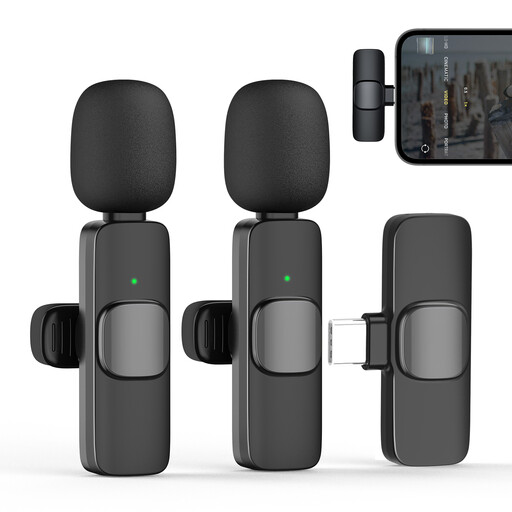
This version could suit a solo lesson, provided the Type-C receiver is compatible with your recording device.
Listed in the product title: Type-C, 2.4 GHz and 1TX&1RX.
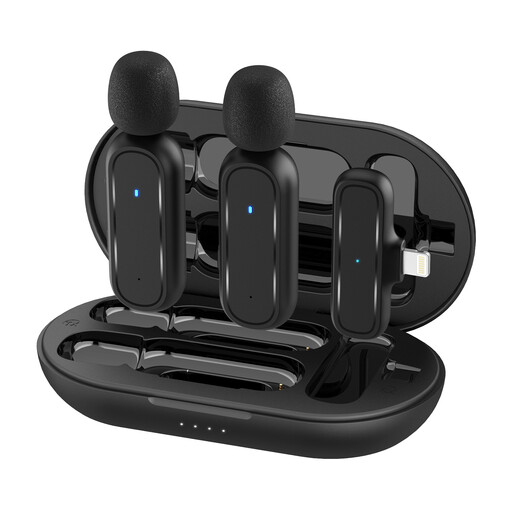 No image available
This version could suit one person speaking, provided the USB-C receiver is compatible with your recording device.
Listed in the product title: 2.4 GHz and 1TX&1RX.
Secure the capsule and cable so they don’t rub against your clothing, then listen to a test recording featuring the sounds your lesson needs to distinguish. Shure notes that clothing touching the capsule or cable can be a source of noise.
No. For the Wireless PRO, RØDE’s figure of 40+ hours refers to internal storage per transmitter, not its battery life. Check storage and power separately, and review a saved test file.
Check whether your setup needs compatible cables, adapters, batteries or storage media. When buying as a consumer in Germany, statutory rights relating to faulty goods are separate from a voluntary guarantee. Online purchases generally come with a right to cancel, usually within 14 days of receiving the goods and subject to legal exceptions. Rights relating to faulty goods should be considered separately.
There’s no single answer that applies to every model and frequency band. Germany’s Federal Network Agency lists the frequency bands permitted for wireless microphones, along with technical and operational conditions. Check the frequency band and technical specifications for your specific device configuration against the relevant authorisation.
Recording a lesson on your own is not the same as processing other people’s voices. If identifiable people are to be recorded or their voices published, establish the appropriate legal basis and specific purpose of use beforehand. Germany’s Federal Commissioner for Data Protection and Freedom of Information explains the requirements for valid consent. The appropriate legal basis depends on the circumstances.