What should you look for when choosing one?
For repeatable pronunciation recordings, the key considerations are a compatible device connection, a consistent microphone position and whether you move around while practising.
| Buying priority |
What to check before buying |
Who it matters to |
| Articulation in an echoey room |
Check the clip and microphone position; make a short test recording in the room where you practise. |
If I want to compare my pronunciation, I need a consistent position and a recording where the sounds are easy to assess. Around 36% of consumers prioritise articulation. |
| Compatible device connection |
Check your device model, the microphone input it supports and whether your recording app recognises it. |
If I want to keep using my existing smartphone, laptop or recorder, the input must actually be compatible with the microphone. Around 29% of consumers give device compatibility the highest priority. |
| Freedom of movement |
Check the receiver type and its connection to your recording device; the transmitter and receiver must be part of the same set. |
If I walk around or gesture while practising, I don’t want to be restricted by a cable. Around 14% of consumers say freedom of movement is their main priority. |
| Easy repeat recording |
Check the clip and, if needed, the windscreen; secure the cable so it stays still and do a quick sound check. |
If I practise regularly, I want to record with a setup that stays as consistent as possible and avoid distracting rustling. Around 21% of consumers prioritise a straightforward practice routine. |
Joybuy products for pronunciation practice
This Joybuy selection includes wired lavalier microphones and wireless clip-on systems. Check that the connection is right for your device and, for wireless models, choose the right receiver type.
 No image available
DJI Mic Mini 2S (2 TX + 1 RX + Charging Case)
For pronunciation practice on the move, if you can connect a compatible receiver. The listed set includes 2 TX, 1 RX and a charging case.
Buy at Joybuy
 No image available
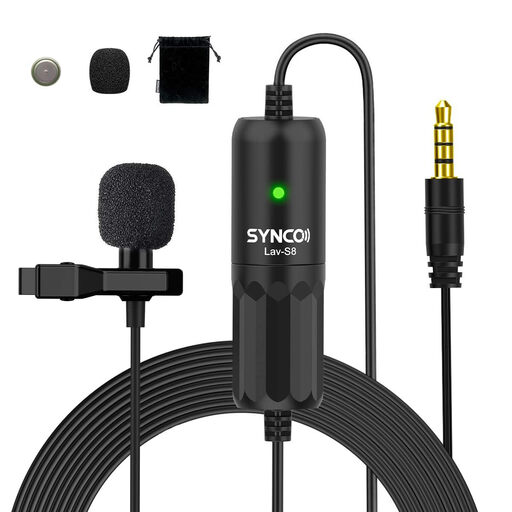
SYNCO S8 Lavalier Microphone for Smartphone, PC, Laptop and Camera
For stationary practice recordings, if your device supports a compatible 3.5 mm connection or a suitable adapter. Check the microphone input on your specific device before buying.
Buy at Joybuy
 No image available
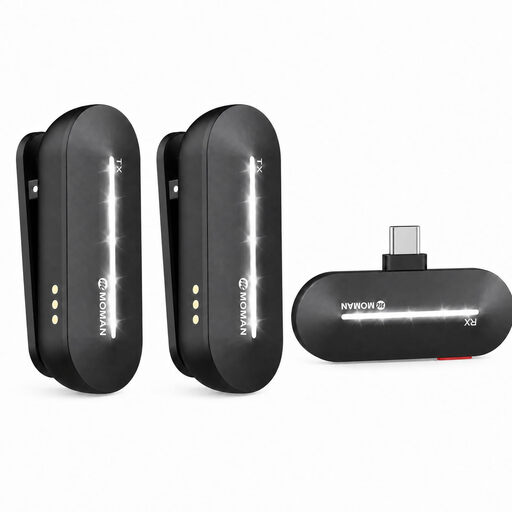
Moman M1CXT Wireless Lavalier Microphone, USB-C, 2TX+1RX
For practice recordings on the move with a compatible USB-C device. The product title specifies USB-C and 2TX+1RX.
Buy at Joybuy
 No image available
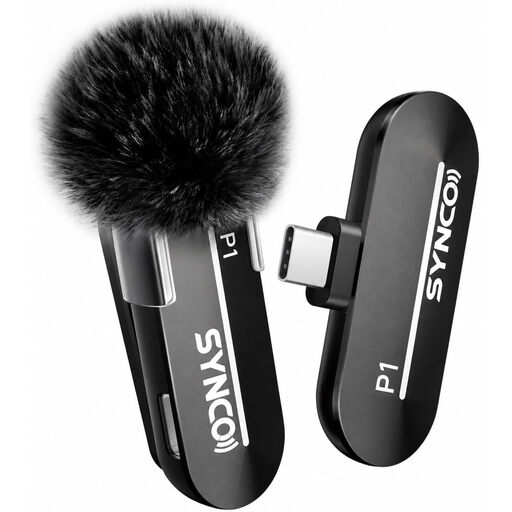
SYNCO P1XT USB-C Wireless Microphone
For mobile practice recordings with a compatible USB-C device. If you have an Android device with Type-C, check that it supports the required OTG function.
Buy at Joybuy
 No image available
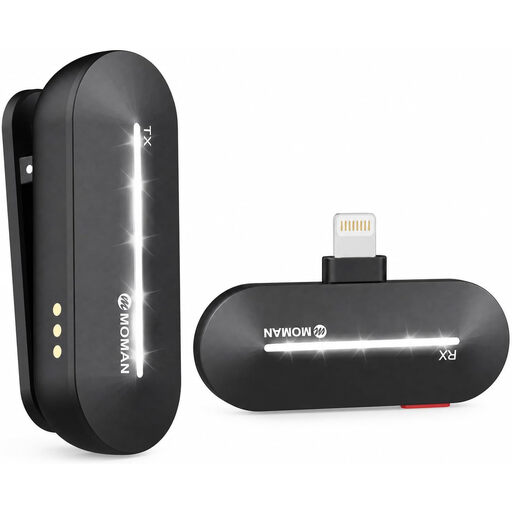
Moman M1CL Wireless Lavalier Microphone, iPhone 14/13/12/11/X, 1TX+1RX
For practice recordings on the move with a supported iPhone. The product title specifies 1TX+1RX and the iPhone 14/13/12/11/X models.
Buy at Joybuy
Frequently asked questions
How should I attach a lavalier microphone for comparable pronunciation practice recordings?
Attach it in the same place for each practice session, as far as possible, and avoid it rubbing against your clothes. Do a quick sound check before making a longer recording. RØDE highlights positioning and connection to the recording device as key considerations when using a lavalier microphone.
Can I connect any 3.5 mm clip-on microphone to any 3.5 mm input?
No, the plug diameter alone isn’t enough to determine compatibility. RØDE describes the smartLav+ as a TRRS microphone and the Lavalier GO as a TRS microphone; for the smartLav+ with the Wireless GO, the manufacturer specifies a TRRS-to-TRS adapter. Also check the requirements of your particular recording device.
Is noise cancellation always useful for pronunciation recordings?
There’s no one-size-fits-all answer. DJI specifies two levels of noise cancellation for the Mic Mini; you can check whether the processing works for your practice by comparing the same sentence with the feature switched on and off.
Can I record other people without their knowledge during my pronunciation practice?
Don’t record other people without first discussing it with them. Section 201 of the German Criminal Code (StGB) makes it a criminal offence, in particular, to record another person’s private spoken words without authorisation. Get the consent of everyone involved before recording them.
Can I use any wireless microphone on any frequency in Germany?
No. The Federal Network Agency specifies frequency bands for wireless microphones, each with technical and operational conditions. Its Order 37/2026 of April 2026 replaces, among other things, Order 109/2025. Check the details and conditions that apply to the specific wireless system.


