Interviewers with a fixed seat
If someone is telling their story in a quiet spot, you’ll need the right connector and a cable that reaches your recording device.


For a mostly seated interview, a wired lavalier microphone is often the simplest place to start, provided the connector and cable length suit your recording device. Wireless is a better fit when the interviewee is demonstrating their work. For a story that would be hard to retell, a standalone recorder may matter more than freedom of movement, but it does mean extra storage, power and file-management considerations. Before the interview, check the microphone position, make a test recording and confirm that you’re authorised to record.
If someone is telling their story in a quiet spot, you’ll need the right connector and a cable that reaches your recording device.
If a missed passage would be hard to repeat, remember to plan when to start recording, how to check it and how to back up the file afterwards.
If the interviewee is showing objects or explaining how they work, freedom of movement may matter more than keeping the cable setup as simple as possible.
A good fit if: The speaker is mostly seated and your smartphone, computer or recorder is within cable reach.
The trade-off: The connector must match the specific microphone input, and the cable length limits how far away you can sit.
A good fit if: The interviewee will stand up, demonstrate something or find a cable disruptive.
The trade-off: The transmitter and receiver must be compatible and charged. A range quoted for open, interference-free conditions doesn’t tell you what connection you’ll get in a workshop. DJI describes its range measurement for the Mic Mini as being taken under these test conditions.
A good fit if: You want to record a hard-to-repeat conversation without relying on a wireless connection or a nearby smartphone. Zoom describes the F2 as a recorder with a lavalier microphone.
The trade-off: You’ll need to plan for power and storage, then back up the files and, if necessary, synchronise them with video.
| Buying priority | What to check before buying | Who is this most important to? |
|---|---|---|
| Connection and simple setup | The recording device’s microphone input and the connector type required; whether the recording app recognises it. | If I want to record directly on my smartphone or computer, I need a compatible input and a straightforward signal path. Around 36% of consumers prioritise connection and simple setup. |
| Clear speech without clothing noise | How it attaches and how far it sits from the mouth; make a test recording with the actual clothing and movement. | If I want to record a clear voice, the microphone should sit close to the mouth without rubbing against clothing. Around 29% of consumers put clear, undisturbed speech first. |
| Keeping the recording safe | Start and hold functions, as well as available storage; power supply and file transfer. | If a story would be hard to repeat, I want to be able to check the recording and deliberately back up the file afterwards. Around 21% of consumers prioritise recording security. |
| Freedom of movement during demonstrations | Whether a transmitter and receiver are included; battery level and a wireless test at the recording location. | If the interviewee is showing objects, I want to avoid an inconvenient cable and test the wireless connection on location. Around 14% of consumers say freedom of movement matters most. |
The TRRS connector on the RØDE smartLav+ and the TRS connector on the RØDE Lavalier GO are designed for different connection types. A plug may fit physically without the recording device handling the microphone signal as required.
Check the required microphone input against the full connector type, and test the recording before the interview.
DJI’s range measurement for the Mic Mini is taken in an open, interference-free environment. It doesn’t tell you what range to expect in a specific indoor space.
Test the set at your planned recording location and check the transmitter, receiver and recording signal before you begin.
A recording format doesn’t replace starting the recorder or backing up the file afterwards. Features also differ between the DJI Mic Mini and Mic Mini 2S.
Check the exact model version, make a test recording and plan how you’ll transfer the file after the interview.
The XS Lav USB-C is a wired option for interviews with a compatible USB-C mobile device or computer.
The smartLav+ and Lavalier GO are designed for different types of 3.5 mm connection.
The V.Lav is a wired option for longer distances to the recording device.
The F2 pairs a lavalier microphone with a standalone recorder for interviews without a continuous connection to a camera or smartphone.
The Mic Mini is a wireless option for interviews involving movement; according to DJI, the Mic Mini 2S adds internal recording in the transmitter.
The Joybuy products below include wired lavalier microphones and wireless sets for interviews. Check that the connector suits your recording device and whether you need freedom of movement or local recording.
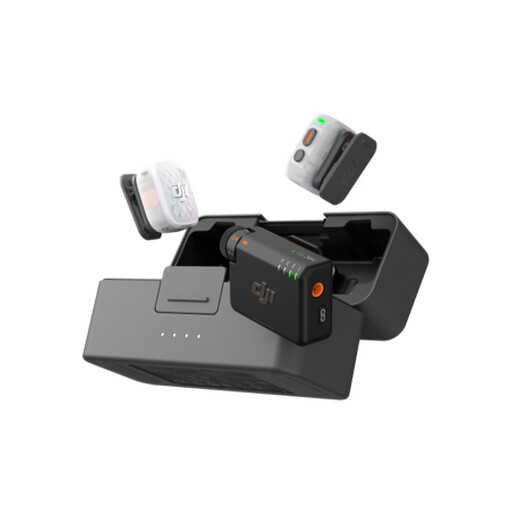 No image available
This wireless set is worth considering if the interviewee needs to move around or demonstrate something.
The product title lists two transmitters, one receiver and a charging case. The product description mentions internal 32-bit float recording and storage in the transmitter.
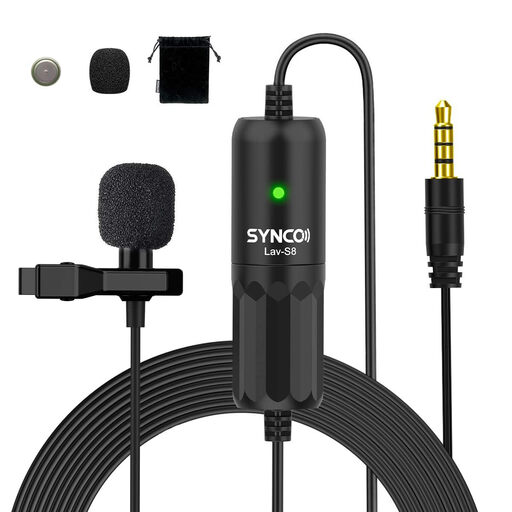 No image available
This wired model is worth considering for a seated interview with a compatible recording device within cable reach.
The product description lists a 3.5 mm connection with an adaptor set, a clip, a windscreen and omnidirectional recording.
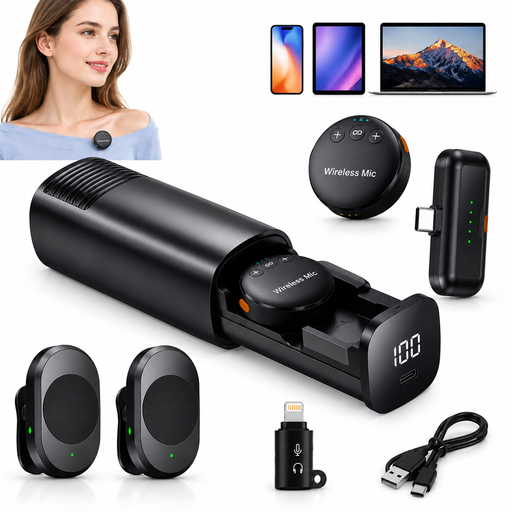 No image available
This wireless set is described as suitable for interviews that may involve movement, or conversations between two people.
The product title lists two transmitters, one receiver, and USB-C and Lightning connectors. The description mentions monitoring and a latency figure of under 20 ms.
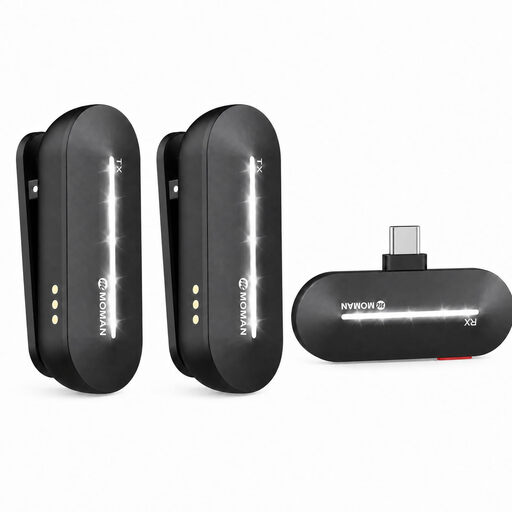 No image available
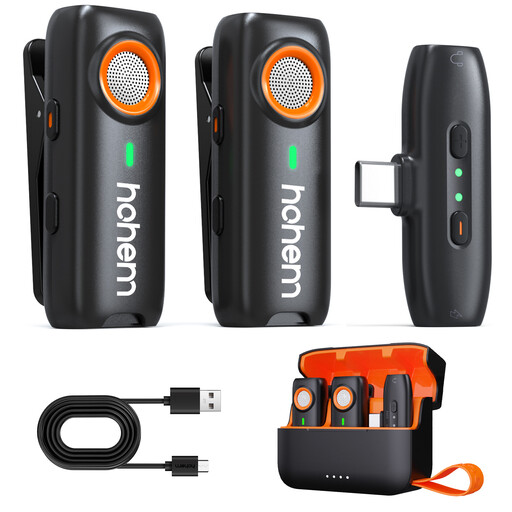
This set is worth considering if you’re using a USB-C recording device and the speaker needs to be able to move around.
The product title lists USB-C, two transmitters and one receiver. The product description mentions real-time audio monitoring.
 No image available
This wireless microphone is worth considering if the interview may involve movement and you need a local backup recording.
The product description lists three DSP modes and local recording to a TF card. The TF card isn’t included.
Attach it close to the mouth on a suitable edge of clothing, making sure the fabric doesn’t rub against it. RØDE gives 20–30 cm as a general rule of thumb; check the actual position with a short test recording.
Not as a general rule: for the RØDE smartLav+ with the Wireless GO II TX, RØDE specifically recommends a TRRS-to-TRS adaptor such as the SC3. Check the connection requirements for the transmitter or recorder you’re using.
Check whether you’ll need an adaptor, storage media or batteries. Deity specifies LR41 or AG3 batteries for the V.Lav; Zoom lists AAA batteries and a microSD card for the F2. Sennheiser lists a two-year warranty for the XS Lav USB-C; check the specific offer for the terms and how to make a claim.
No. Section 201 of the German Criminal Code (StGB) covers the unauthorised recording of another person’s private spoken words. Check that you’re authorised before you begin. The Oral History Association also recommends documenting the interviewee’s informed consent; this is professional guidance, not the wording of the law.
No. Discuss the recording and its later use separately. Processing personal data requires a lawful basis under Article 6 of the GDPR. If you rely on consent, it must be informed and freely given, among other requirements. For oral history projects, the Oral History Association recommends discussing retention, access and intended use in advance.