Collectors of long-form stories
You want to record a long dialect story directly from the speaker, with as few charging or wireless interruptions as possible.


For a long, uninterrupted take with one speaker, a lavalier microphone paired with a body-worn recorder is a good choice if you want to save the recording locally without relying on a wireless connection. For two voices or more movement, a set with two microphones may be more suitable. A single wired lavalier can work for one person, but you’ll need a compatible recording setup. Compare battery life with your planned recording time, and test the entire signal path with a trial recording beforehand.
You want to record a long dialect story directly from the speaker, with as few charging or wireless interruptions as possible.
If you want both questions and answers to be clearly audible, plan microphones, recording setups and channels for both people in the conversation.
If your recording location changes or people move during the conversation, make sure the fastening, connections and recording app all work with your chosen system.
A good fit if: One person speaks for a long time and you want to save the recording locally on their person.
What to consider: For two voices, you’ll need two suitable recording setups; you’ll then have to match up or synchronise the files. Zoom quotes up to 15 hours for the F2 with two AAA batteries, and up to 14 hours for the F2-BT.
A good fit if: Both people need to wear a microphone and move around, or if recording directly to the transmitters as well as transmitting wirelessly is important.
What to consider: The transmitters, receiver and, where applicable, recording device all need enough power. DJI quotes six hours of transmitter operation for the Mic 2 under certain test conditions; the advertised 18 hours with the charging case does not mean continuous operation.
A good fit if: You’re recording one seated person and already have a recorder with a compatible microphone input.
What to consider: The microphone is neither a recorder nor a complete wireless set. The RØDE Lavalier GO uses a 3.5 mm TRS connection and needs power from a compatible input.
A good fit if: You’re recording two people on the move and want to use a compatible Shure MOTIV app.
What to consider: Check the signal path separately if you’re using a camera or another recording app. Shure quotes eight hours per MoveMic microphone charge; the advertised 24 hours with the charging case requires recharging.
| What matters to you | What to check before buying | Who is it important to? |
|---|---|---|
| Long, uninterrupted take | Check the model-specific battery life, batteries or rechargeable batteries, and available recording time separately. | If you don’t want to pause a long story to recharge, uninterrupted recording is what matters to you. Around 36% of consumers put this need first. |
| Recording both voices | Check that the package includes two microphones or transmitters, and that the recording device supports the required channels. | If you want to keep both questions and answers, plan a suitable microphone setup for each person in the conversation. Around 29% of consumers prioritise recording both voices. |
| Making dialect speech clear | Test microphone positioning, contact with clothing and speech intelligibility in a playback recording. | If you want quiet or short dialect sounds to remain clear in the finished recording, pay particular attention to how the microphone is attached and check the sound with a test recording. Around 21% of consumers put this need first. |
| Connecting to a device you already own | Check the device model, input, power supply, receiver and required app for compatibility. | If you want to record with a camera, recorder or smartphone you already own, the signal path must be compatible. Around 14% of consumers prioritise compatibility with their device. |
The six hours of transmitter operation quoted for the DJI Mic 2 are based on certain test conditions. Up to 14 hours of internal 24-bit recording refers to storage capacity, not battery life on a single charge.
Check the battery life of every component you need for the exact model you’re considering, and compare it with your planned recording time.
A microphone on one person won’t automatically pick up the second voice. You’ll need another suitable microphone or recording setup for the other person.
Before buying, decide whether you also need to record the interviewer’s questions and interjections, then check that the package includes what you need.
Shure describes MoveMic Two as connecting directly to smartphones using MOTIV apps; the Receiver Kit adds a receiver for other recording setups.
Check the specific set with your smartphone, camera or recording app.
Tascam now lists the DR-10L Pro among its discontinued products.
If you’re considering a specific offer, check the condition, whether it includes the TM-10L microphone and what support you’ll need.
The F2 pairs an included lavalier with a body-worn recorder, making it an option for local recording of one voice.
The Lavalier GO is a single wired microphone; Wireless PRO is a wireless set with two Lavalier II microphones and recording to the transmitters.
The Mic 2 is also available as a two-transmitter version for interviews where both people wear a microphone.
MoveMic Two is designed for mobile recording with two wireless clip-on microphones; the Receiver Kit adds a receiver.
The DR-10L Pro combines a lavalier with a portable recorder, making it a relevant recording option for interviews.
The following Joybuy products are wireless lavalier sets for interviews with one or two people. Pay particular attention to the number of transmitters, connections and battery life.
 No image available
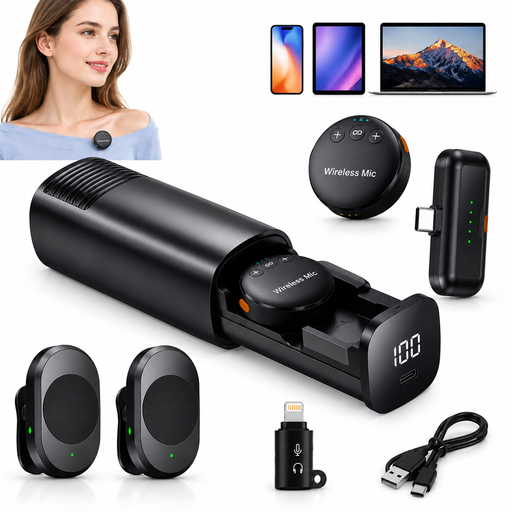
Suitable if both people need a transmitter and the connection is compatible with your recording device.
2 transmitters; 2.4 GHz; USB-C and Lightning; latency under 20 ms; quoted range up to 40 m; 500 mAh charging case. The description quotes up to 6 hours per transmitter; battery life with the case doesn’t guarantee an uninterrupted take.
 No image available
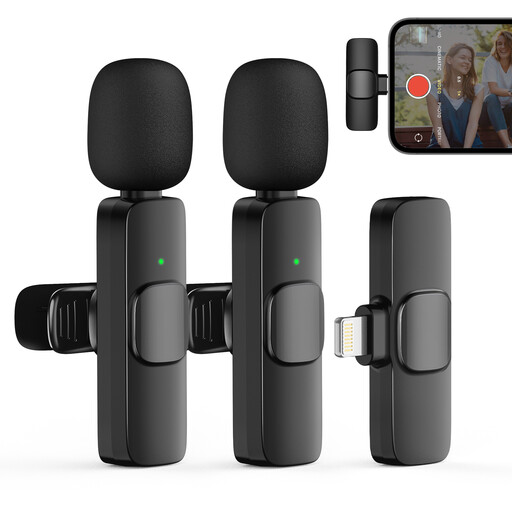
A possible option for interviews with two people if the Lightning receiver is compatible with the iPhone you’re using.
2 transmitters and 1 receiver; described as being for iPhone. The product description quotes up to 8 hours of continuous use.
 No image available
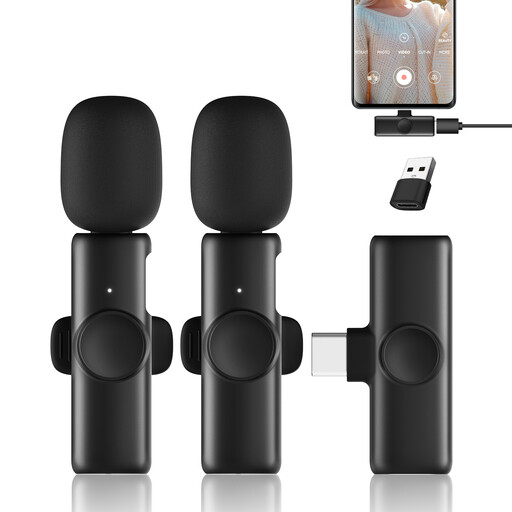
Worth considering for two people if you’re recording on a compatible USB-C Android smartphone.
2 transmitters and 1 receiver; 2.4 GHz. The description quotes up to 8 hours of battery life per transmitter.
 No image available
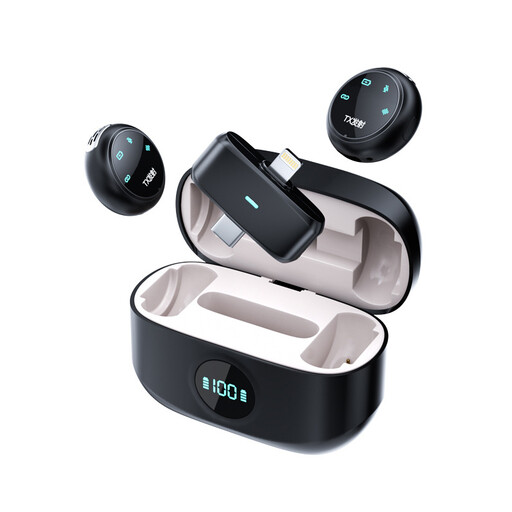
May suit two people who need to wear microphones at the same time, as long as the connections are compatible with the recording devices.
The title lists iOS and Type-C interfaces. The description quotes battery life of 3–6 hours.
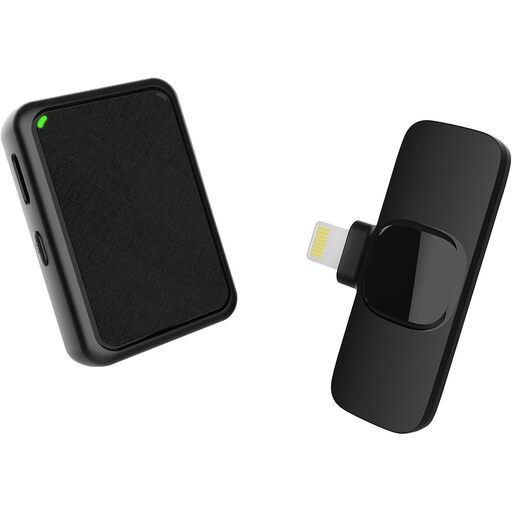 No image available
Described as being for recording one person on an iPhone; the included transmitter isn’t enough for two people to use microphones at the same time.
1 transmitter and 1 Lightning receiver; the product title lists iPhone 12, 13 and 14.
Not on its own: storage capacity and uninterrupted operating time are different limits. DJI quotes six hours of operation for the Mic 2 transmitter under the test conditions described; the 14 hours refers to internal 24-bit recording. Plan around the batteries for every component you need and the available storage.
Attach the microphone using its clip, route the cable so it doesn’t pull, and listen back to a test recording while making the kind of head and body movements you’d make in the interview. Zoom lists a clip and windscreen for the included LMF-2; RØDE lists a clip and pop shield for the Lavalier GO. Only a playback test will tell you whether your clothing is rubbing against the microphone.
Before reusing any storage media, check that the expected files from both people are there and can be played back. RØDE describes exporting the transmitter files from Wireless PRO by direct copy or using RØDE Central; this workflow applies to the model mentioned and isn’t an automatic backup.
No. Section 201 of the German Criminal Code makes it an offence to record another person’s non-public spoken words without authorisation. Make sure you have permission before recording; any later publication or processing is a separate matter that depends on the specific circumstances.
You can’t tell from the model name alone. The Bundesnetzagentur’s General Allocation Notice Vfg. 37/2026 sets out frequency bands and technical conditions for wireless microphones. If you’re considering a UHF version, check its actual frequency range against the relevant allocation.