What should you look for when buying?
First, decide whether one storyteller is enough or whether you want to record both people. Then make sure the connection and recording set-up work with the device you already have.
Wired lavalier for one voice
Best for: Recording one seated storyteller, with the cable able to reach the recording device.
The trade-off: A cable limits freedom of movement, so its length and route need to suit the seating arrangement.
Two-person wireless system
Best for: When both people need to wear a lavalier. DJI lists two transmitters and one receiver for one Mic Mini configuration; RØDE includes two Lavalier II microphones with the Wireless PRO.
The trade-off: Check the set configuration, receiver connection and signal routing. Having two transmitters doesn’t mean an app will record two separate tracks.
Lavalier with a local recorder
Best for: Recording someone’s voice directly on a recorder they wear. Zoom describes the F2 as a recorder supplied with the LMF-2 lavalier and 32-bit float recording.
The trade-off: You’ll need to transfer and label the file after the conversation. For two people, you’ll need two suitable recording set-ups.
| Priority |
What to check before buying |
Who is it important to? |
| One storyteller |
Check the clip, cable length and routing, and make a test recording with the intended clothing and seating position. |
If I’m mainly recording one seated storyteller, I want the microphone to sit discreetly and the cable to reach the device safely. Around 33% of consumers put recording a single storyteller first. |
| Two voices |
Check how many microphones or transmitters are included, the receiver connection and the track settings across the whole recording set-up. |
If I want to keep both the questions and answers, I need a recording set-up for each person and routing that captures both voices. Around 27% of consumers prioritise recording two voices. |
| Device compatibility |
Check the exact microphone input, any power requirements, adapters and whether the recording app you use recognises the microphone. |
If I want to use a phone, computer or recorder I already own, the microphone needs to work with that specific connection and app. Around 20% of consumers put device compatibility first. |
| Recording security |
Make and listen back to a test recording in advance. Check the recording status, power supply, storage and file transfer. |
If an interview would be difficult to repeat, I want to be able to check that recording has started and that the file has been saved. Around 20% of consumers put safeguarding the conversation first. |
Joybuy products for lavalier recording
This selection includes wired lavalier microphones and wireless interview systems for compatible device connections. Depending on the package, some may also be suitable for recording two people.
 No image available
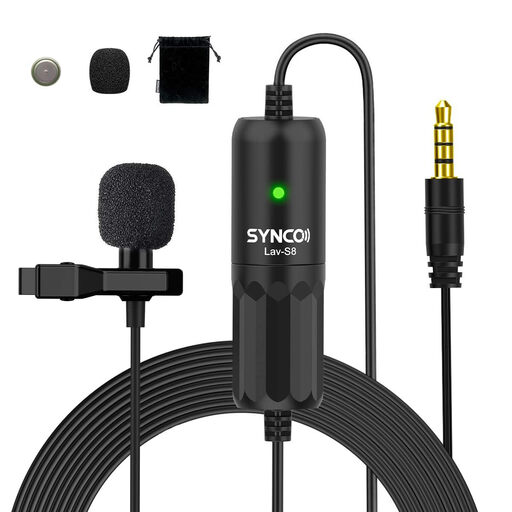
SYNCO S8 lavalier microphone for smartphones, PCs, laptops and cameras
It could suit a single storyteller if your recording device supports the right microphone input. Check the connection and app with a test file before you begin.
View at Joybuy
 No image available
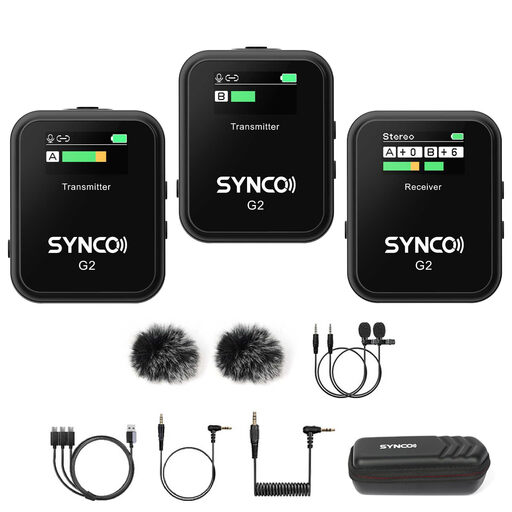
SYNCO G2(A2) wireless lavalier microphone, 2.4G dual channel
If two people will be speaking, check before you buy that the specific package includes both transmitters you need and a compatible receiver.
The product name specifies 2.4G and Dual Channel; also test how your recorder or app captures the signals.
View at Joybuy
 No image available
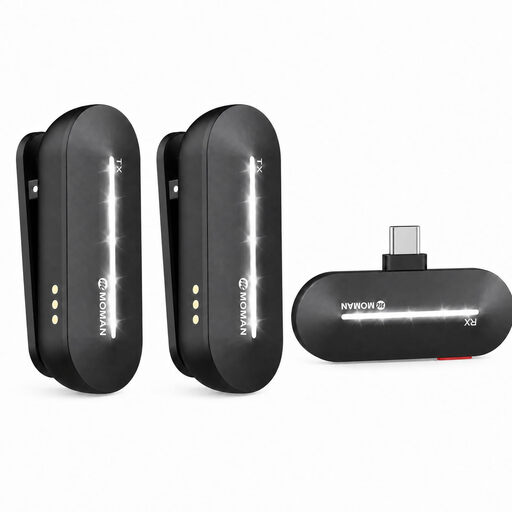
Moman M1CXT wireless lavalier microphone, USB-C, 2TX+1RX
The 2TX+1RX configuration stated in the product name could be useful for an interview with two people wearing microphones. Check that the USB-C receiver is compatible with your device and recording app before you begin.
Test that both voices are recorded as you want and can be monitored during the conversation.
View at Joybuy
 No image available
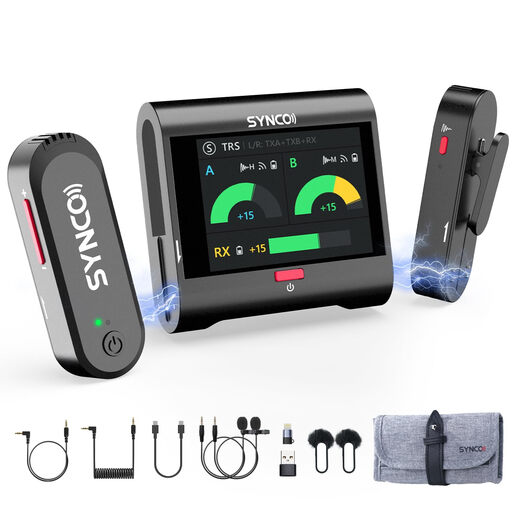
SYNCO G3PRO wireless lavalier microphone system, 2.4GHz dual lapel mics
For a two-person interview, check the actual number of transmitters and microphones included in the offer, and make sure the receiver connection works with your recorder.
The product name specifies 2.4GHz and Dual Lapel Mics; check that both voices are captured in a test recording.
View at Joybuy
 No image available
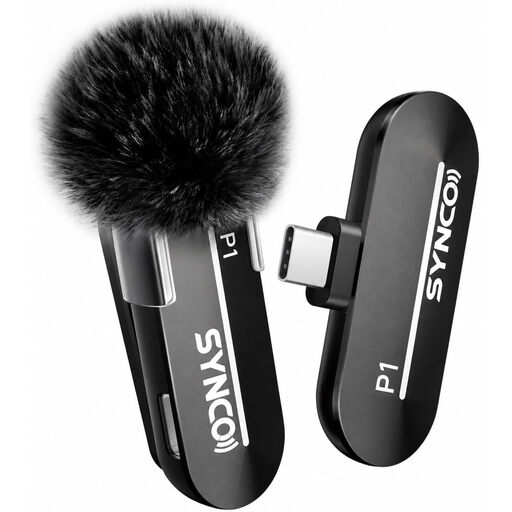
SYNCO P1XT USB-C wireless microphone
This system could suit a USB-C recording set-up if your device and recording app recognise the receiver.
Check the signal path before the conversation and listen back to a short test recording.
View at Joybuy
Frequently asked questions
Should I simply buy two of the same USB-C microphone to record both people in an interview?
Not without checking the whole recording set-up. Having two microphones doesn’t mean the device and software can record from both inputs at the same time. If both people need to wear a lavalier, choose a set specifically configured for two people and test the signal routing with a short recording.
How should I prepare a lavalier microphone before the conversation?
Position the clip and cable so the person can sit comfortably, then record a voice test using the same devices and settings. If you’re using a battery-powered BY-M1, check the correct operating mode and LR44 cell; with a Zoom F2, also check the recording status and storage.
What ongoing costs or service details should I check before buying?
For the specific version, check whether you’ll need an adapter, a second microphone, batteries or a memory card, and find out what warranty and replacement-part terms apply. BOYA lists an LR44 cell for the BY-M1, while Zoom specifies batteries and microSD storage for the F2; these details don’t give a general figure for ongoing costs.
Can I record a private oral history interview in Germany without the other person knowing?
Under Section 201(1)(1) of the German Criminal Code (StGB), recording another person’s non-public spoken words on an audio device without their permission is a criminal offence. So make sure you have permission before you start recording. Any later publication or release to an archive should be discussed separately; the Oral History Association recommends documenting informed consent and intended use.
Does consent under data protection law always have to be signed?
Not in every case: the German Data Protection Conference explains that valid consent under the GDPR must be freely given, specific and informed, but does not necessarily have to be in writing. That doesn’t settle whether, or on what legal basis, the GDPR applies to a particular private, academic or published project. Discuss the purpose and rights for any later use separately.


