Solo readers in a reverberant room
If your main aim is to record a clear, natural-sounding voice, test the microphone position before you begin. RØDE suggests starting with a lavalier around 20–30 cm from your mouth.


For a reading in a fixed position, a correctly connected and carefully secured wired lavalier is often the simplest place to start. Wireless is better suited to situations where you move around or read with someone else; a body-worn recorder is worth considering if you want to make a standalone recording. None of these options automatically gets rid of room echo, so microphone position and a test recording are still essential.
If your main aim is to record a clear, natural-sounding voice, test the microphone position before you begin. RØDE suggests starting with a lavalier around 20–30 cm from your mouth.
If you want to record directly on your smartphone, first check the socket, connector type and, if necessary, adapter against your specific device. RØDE and Shure describe different connection options for their lavalier models.
If you move around, read with someone else or want a backup of a take that would be difficult to repeat, compare wireless kits and portable recorders by checking exactly what is included and how they record. Zoom, Sennheiser and DJI offer different features and kit options.
| What you need | What to check when buying | Who will find this most important? |
|---|---|---|
| Clear voice recording | Secure the microphone close to your voice, record a quiet passage and one with emphasis, then listen back to the test. RØDE suggests around 20–30 cm as a starting point, not a guarantee for every room. | If I want every word in quiet verses to be clear in the recording, I’ll focus on testing the position and sound in the room. Around 33% of consumers put speech intelligibility first. |
| The right connection | Check which microphone input your recording device supports, whether it uses TRS or TRRS, and what power is required; allow for a suitable adapter if needed. | If I want to keep using my smartphone or existing recording device, the microphone connection needs to be compatible. Around 27% of consumers prioritise device compatibility. |
| Recording the entire reading | Check the exact model to see whether it records internally, which file format it uses, and whether the recording and storage are ready before you begin. | If a reading is difficult to repeat or the volume varies significantly, I want to secure an additional or standalone recording. Around 20% of consumers prioritise having a backup of their take. |
| Moving without unwanted noise | Secure the capsule and cable so they don’t rub against clothing; test movement and page-turning in a recording. If there is more than one reader, check the transmitters and recording channels are compatible. | If I move around while reading or record with someone else, I need freedom to move and as little clothing noise as possible. Around 20% of consumers prioritise mobility and secure attachment. |
An omnidirectional pickup pattern alone won’t remove room noise. And claims of noise cancellation don’t prove that echo or clothing noise will disappear during a poetry reading.
Start by testing the microphone position and listening to an unprocessed recording with both quiet passages and emphatic lines. Then assess any processing features using your own voice.
Wired lavaliers may be designed for different inputs and power requirements. The wrong connection can prevent you from making the recording you planned.
Before buying, check your recording device’s exact socket and microphone support against the microphone’s requirements. Depending on your device, you may need a suitable adapter or a different recording device.
An adapter or a different recording device may mean extra purchasing and setup.
A transmitter on its own is not the same as a kit that includes a receiver. The model generation and any compatible equipment you already own can also affect whether it supports the recording setup you want.
Check what’s included, whether a receiver is supplied and how the specific kit connects to your recording device.
If there’s no suitable receiver, you may need to buy additional compatible equipment.
The range includes wired lavaliers for different inputs.
The MVL is a compact TRRS lavalier for compatible mobile devices and voice recordings.
The F2 combines a body-worn recorder with a lavalier for standalone voice recordings.
The Profile Wireless 2-Channel Set is a wireless kit with two clip-on microphones.
The Mic Mini 2S is a compact wireless clip-on system with model-specific internal recording.
This selection includes wired and wireless lavalier options for compatible smartphones and, depending on the model, other recording devices.
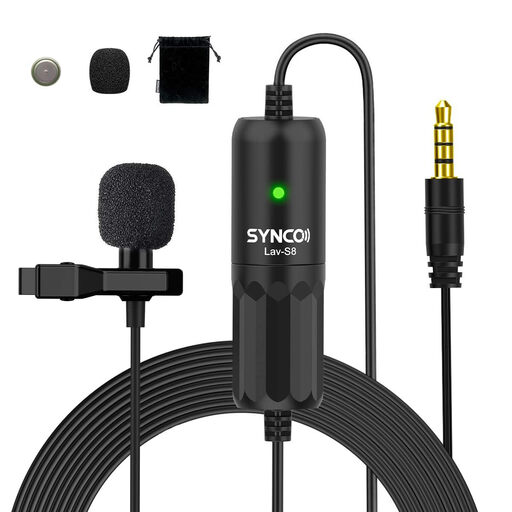 No image available
For wired voice recording with a clip-on microphone.
The product name lists smartphones, PCs, laptops and cameras as compatible devices. Check which connection is right for your specific recording device.
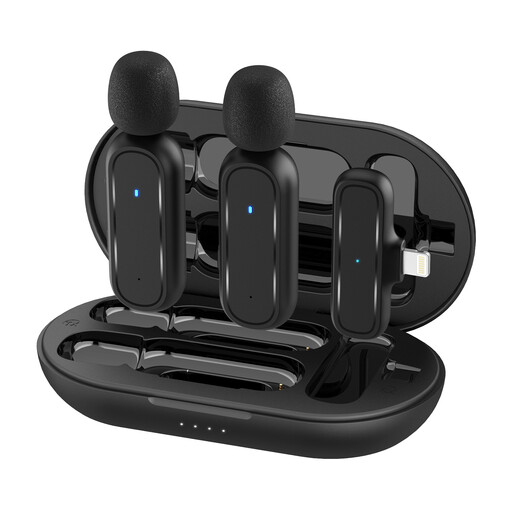 No image available
For wireless single-voice recording with a compatible USB-C mobile device.
The product title lists one transmitter and one receiver. Check that they work with your specific phone.
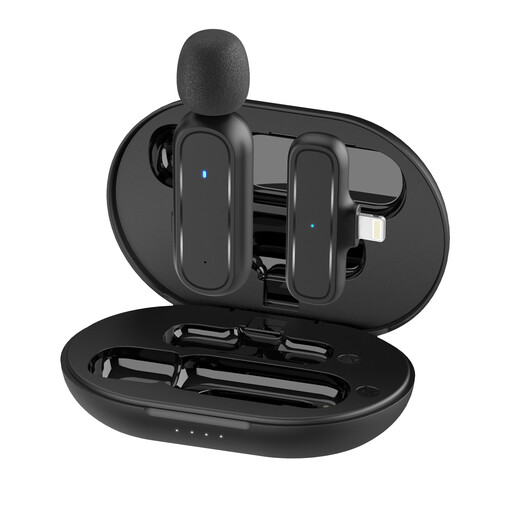 No image available
For wireless single-voice recording with a compatible iPhone or iPad.
The product title lists a Lightning connector, one transmitter and one receiver. Check compatibility with your specific device.
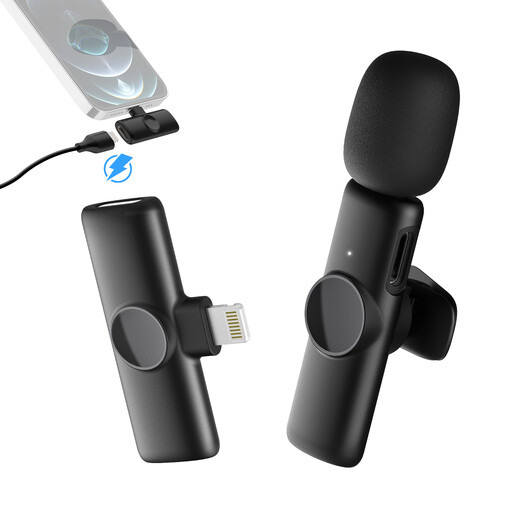 No image available
For wireless clip-on recording with a compatible iPhone or iPad.
The product title lists one transmitter and one receiver. Check that the receiver works with your recording device.
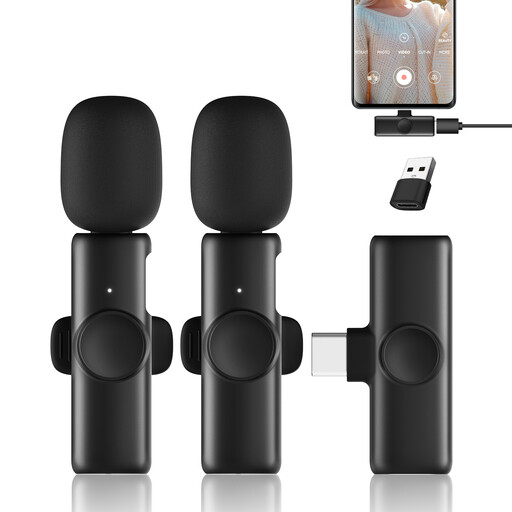 No image available
For recording two speakers on a compatible USB-C Android device.
The product title lists two transmitters, one receiver and 2.4 GHz. Check that your recording device supports the receiver.
Start at your chest or lapel, about a hand’s breadth — roughly 20–30 cm — from your mouth. RØDE suggests this as a starting point; keep fabric away from the capsule and listen to a test recording with quiet passages, emphatic lines and page-turning. The best position may vary depending on what you’re wearing.
No. The connector type and microphone support need to be compatible with your specific smartphone. The RØDE smartLav+ uses TRRS, while the Lavalier GO uses TRS, so check your device’s socket and whether you need a suitable adapter.
No. According to the manufacturers, 32-bit float can give compatible recorders or transmitters more headroom when levels vary, but it doesn’t replace a test recording. Check that recording has started and that the microphone is secure; this won’t fix room echo or clothing noise.
Section 201 of the German Criminal Code (StGB) covers the unauthorised recording of another person’s non-public speech. Check that you have permission before recording other people’s voices; the provision does not apply generally to recording your own voice.
Not simply because you read the text aloud yourself. Copyright law protects the right to make a work available to the public, so check the rights to the specific poem. Under section 64 of the German Copyright Act (UrhG), copyright generally expires 70 years after the author’s death. Whether a particular text is already in the public domain or other rights apply depends on the work in question.