Which setup is right for you?

Collectors of one-off stories

You want to capture a long, hard-to-repeat life story without the recording cutting out unnoticed. Pay particular attention to the actual recording time per take, make sure you have enough storage, and choose a setup you can monitor on site.

Interviewers recording two voices

You want to capture not just memories, but also questions or contributions from a second person clearly. Check whether the set includes two transmitters and how it records both voices.

People recording in different locations

You switch between a seated group and moving around, or use different recording devices. How the microphone is attached, its connection and a reliable power supply all affect which setup will work for you.

What should you consider when choosing?

Wired lavalier

A good fit if: You’re mainly recording one person who is seated, and you’ve checked the microphone input or USB-C audio connection on your device.

Bear in mind: The cable limits movement, and recording time still depends on the connected device.

Wireless set with transmitters

A good fit if: Someone will be moving around, or two people each need a microphone. Match the number of transmitters and the receiver connection to your recording setup.

Bear in mind: The transmitters and receiver need power. Internal transmitter recording needs to be enabled correctly and transferred later; it doesn’t remove the need to plan for the length of each take.

Lavalier with body-worn recorder

A good fit if: You mainly want to save one speaker’s long story as a separate file directly with them.

Bear in mind: Zoom quotes up to 15 hours from two AAA batteries for the F2. You’ll also need to prepare a memory card and plan to transfer the files later. This setup doesn’t automatically record the interviewer separately.

Priority What to check before buying Who it matters to
Long, one-off take Check recording time separately from storage capacity; make a test recording and listen back to the saved file. If I’m recording a life story that’s hard to repeat, I want to make sure the power and recording setup will last for the whole story. Around 33% of consumers prioritise securing a long, one-off take.
Two voices Check the number of transmitters, the receiver, outputs and whether you want mono or separate tracks. If I want to record the questions and memories of two people, I need one microphone per voice and a suitable recording mode. Around 27% of consumers prioritise recording two voices.
Moving around while recording Test the attachment, wind protection, reception and power supply at the actual recording location. If I switch between a seated group and moving around, I don’t want a cable tethering me to the recording device. Around 20% of consumers prioritise freedom of movement when recording.
Connection to your existing device Check the microphone input, signal path, power requirements and any adapters needed for your specific device. If I want to keep using my existing smartphone, camera or recorder, the connection needs to work without any uncertainty about adapters. Around 20% of consumers put connection compatibility first.

Which mistakes should you avoid?

  • Confusing storage hours with battery life

    A large internal memory doesn’t tell you how long the transmitters and receiver will run during an uninterrupted take. RØDE states that Wireless PRO has over 40 hours of internal recording storage per transmitter; that doesn’t mean the battery lasts just as long.

    Check the power supply you’ll need for the planned take separately from storage, and test the complete recording setup before the gathering.

    Depending on your setup, you may also need batteries or a memory card. Remember to allow time to transfer and check your files, too.

  • Assuming a lavalier is a complete recorder

    A microphone doesn’t automatically save an audio file on its own. Lavalier GO, XS Lav Mobile and XS Lav USB-C also have different connection requirements.

    Check the whole route from microphone to saved file: confirm the specific device, the right input, the power required and, if needed, a compatible adapter.

    Depending on your recording setup, you may need a suitable recording device, a transmitter or a compatible adapter.

  • Choosing a single-transmitter set for two voices

    A single microphone worn by one person won’t automatically record both speakers using their own transmitters. For example, DJI Mic 2 is available in versions with one or two transmitters.

    Check what’s included in the specific version and make a test recording with both voices in your chosen mode.

    If you want both voices recorded separately, you may need an additional compatible transmitter or a second recording setup.

Brands to consider

Sennheiser

The XS Lav versions mainly differ in their connections; the ME 2 is designed for specific bodypack transmitters.

  • According to Sennheiser, XS Lav Mobile and XS Lav USB-C each come with a 2 m cable and a windscreen.
  • XS Lav Mobile, XS Lav USB-C and ME 2 aren’t interchangeable connection options. Sennheiser lists the ME 2 for specific evolution Wireless SK bodypack transmitters.

RØDE

The range includes the Lavalier GO for compatible TRS inputs and the two-transmitter Wireless PRO set with internal transmitter recording.

  • According to RØDE, Wireless PRO includes two Lavalier II microphones, and each transmitter has over 40 hours of internal recording storage.
  • That storage figure isn’t battery life. According to the RØDE manual, 32-bit float applies to the internal transmitter files, not automatically to the camera audio.

Zoom

The F2 and F2-BT pair a lavalier with a body-worn recorder, saving one speaker’s voice locally.

  • Zoom quotes up to 15 hours from two AAA batteries for the F2 and up to 14 hours for the F2-BT; both also have a recording lock.
  • A microSD card is required for recording. You’ll need to transfer the file to use it elsewhere.

DJI

Mic 2 is available as a wireless option with one or two transmitters.

  • DJI quotes six hours of operating time for the transmitter and receiver under its own test conditions, and offers internal recording.
  • Longer figures quoted with the charging case don’t guarantee one uninterrupted take. Check which set version and number of transmitters you’re choosing.

Joybuy products for long recordings

This selection includes wireless lavalier sets for compatible smartphones and other recording devices, with versions for one or two transmitters.
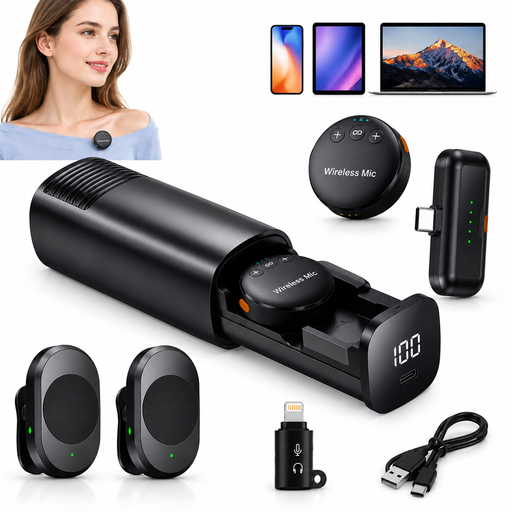
Wireless lavalier microphone set with two transmitters, USB-C and Lightning

Wireless lavalier microphone set, 2 transmitters, USB-C and Lightning

The two transmitters make this set suitable for a conversation where both people need to wear a microphone.

The product title specifies USB-C, Lightning, 2.4 GHz and a 500 mAh charging case. The product description quotes up to six hours per transmitter and 18 hours in total with the charging case; this isn’t a guarantee of an uninterrupted take.

View at Joybuy
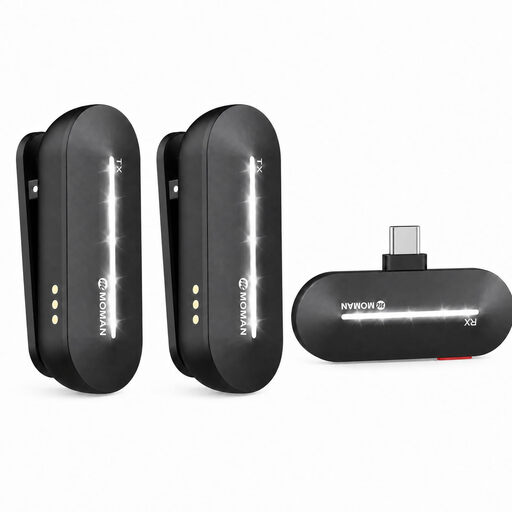
Moman M1CXT wireless lavalier set with USB-C, two transmitters and one receiver

Moman M1CXT, USB-C, 2TX+1RX

The two-transmitter configuration is designed for recordings where two people each wear a microphone.

USB-C; the product title specifies a range of 150 m. The product description quotes up to six hours of continuous battery life.

View at Joybuy
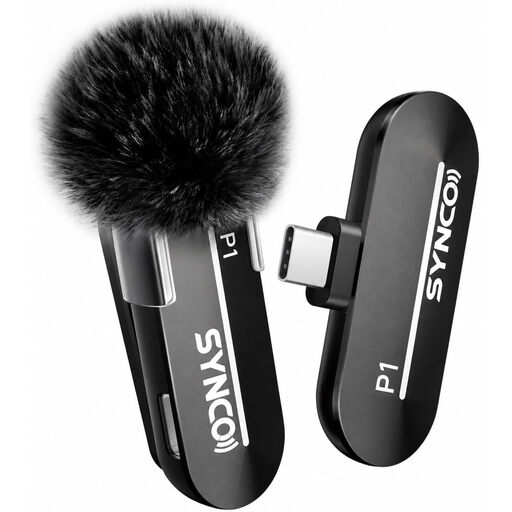
SYNCO P1XT wireless USB-C lavalier microphone

SYNCO P1XT, USB-C

This USB-C set is an option for recording with a compatible Type-C device; check the signal path before use.

The product description lists automatic pairing, an omnidirectional microphone capsule, a windscreen and up to five hours of continuous recording.

View at Joybuy
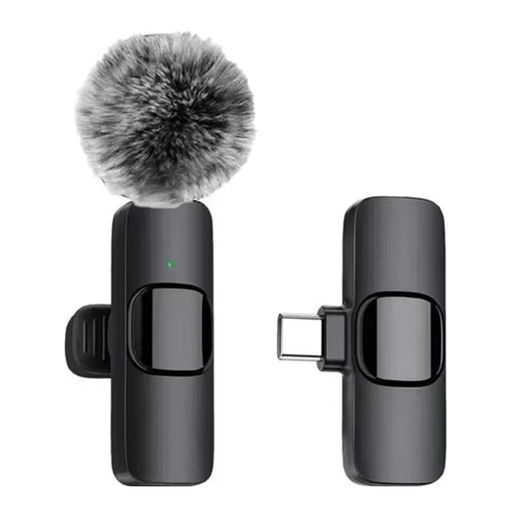
Verbex K9-Black wireless Type-C mini lavalier microphone

Verbex K9-Black, Type-C

This mini lavalier is described as suitable for recording with a compatible Type-C device. Check device compatibility beforehand.

The product description quotes a battery life of three to six hours.

View at Joybuy
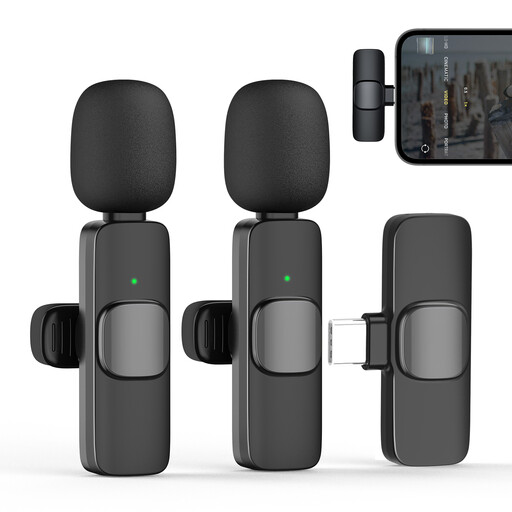
Moman CP1X(C) Type-C wireless lavalier set with one transmitter and one receiver

Moman CP1X(C), Type-C, 1TX+1RX

With one transmitter, this configuration is designed for one person wearing a microphone, not for recording two separate voices.

Type-C; the product description quotes up to five hours of continuous recording and includes a windscreen.

View at Joybuy

Frequently asked questions

How do I prepare for a long take?

Check that all devices involved have enough power and free storage, make a test recording in the mode you plan to use, then listen back to the saved file. According to the manufacturer, the Zoom F2 has a HOLD lock to prevent accidental stopping. The RØDE Wireless PRO manual distinguishes between manual and continuous internal transmitter recording.

Does 32-bit float on a wireless set mean the camera records in that format too?

According to RØDE, 32-bit float on the Wireless PRO applies to the internal transmitter files, not automatically to the audio saved by the camera. Check the signal path separately for any other model.

Can I simply record conversations at a village gathering?

No, recording a conversation isn’t automatically permitted: Section 201 of the German Criminal Code makes it an offence to record another person’s non-publicly spoken words without authorisation. The Federal Ministry of Justice explains this provision in its online legislation service. Check that you have permission from everyone involved before recording. If you later process or publish recordings containing personal data, you’ll need to check the relevant data protection legal basis separately. The Federal Commissioner for Data Protection and Freedom of Information explains the legal bases that may apply. Whether a particular conversation is non-public, and which legal basis applies to a specific disclosure, can’t be determined from the occasion alone.

Can I use any wireless microphone on any frequency in Germany?

No. The Federal Network Agency publishes general frequency allocations, which set out the permitted frequency bands and conditions of use. For the specific wireless model, check its frequency and version against the relevant allocation. On 15 April 2026, the Federal Network Agency published general allocation Vfg. 37/2026, replacing the microphone allocations listed previously.

Who should I contact if a new product I’ve bought is faulty?

For consumer purchases in the EU, you’re generally entitled to at least two years of legal protection against faulty goods from the seller. The Your Europe information page explains that this minimum period starts when you receive the goods. An additional manufacturer’s guarantee doesn’t replace your legal rights, so make sure you distinguish between the seller and the guarantee terms.