
当日/次日达

品质保障

开启新人专享福利: 全场免邮 | 低至 2 折 | 免费试用 30 天 JoyPlus 会员
下载 Joybuy
A cast iron Dutch oven is a piece of cookware prized for its ability to retain and distribute heat evenly. These physical properties make it a versatile tool for various cooking methods, including braising, roasting, baking, and searing. The Le Creuset Dutch Oven, made from enamelled cast iron, is a specific example of this product type, distinguished by its material composition and construction. This article analyses the technical features and practical applications of Le Creuset's round cast iron Dutch ovens to provide the basis for an informed purchasing decision.
When selecting a cast iron Dutch oven, several technical parameters that determine its functionality and longevity should be considered.
Le Creuset uses enamelled cast iron for its Dutch ovens. The cast iron base provides high thermal mass, which allows for slow and even heat release. The enamel, a glass-like protective layer, serves several functions:
The light-coloured interior enamel of the Le Creuset Signature series allows for easy monitoring of food and browning progress.
The volume of a Dutch oven, specified in litres, and its diameter are crucial for its intended use. A smaller Dutch oven of about 2-3 litres is suitable for households of one to two people or for preparing side dishes. Models with a 4-5 litre capacity are sized for families of three to four. Large Dutch ovens with a capacity of over 5 litres are designed for preparing meals for larger groups or for batch cooking.
A modern cast iron pot with a lid should be universally compatible. The Le Creuset Signature series models are suitable for all common hob types, including gas, electric, ceramic, and halogen. Its suitability as an induction-compatible Dutch oven is particularly relevant, as the ferromagnetic base ensures efficient energy transfer on induction hobs. Furthermore, a cast iron Dutch oven is oven-safe, allowing for a seamless transition from searing on the hob to braising in the oven. The heat resistance of the lid knob (stainless steel in the Signature series) is a key factor in this regard.
The following models from the Le Creuset Signature series represent different sizes for various household needs. This analysis focuses on their specifications and practical benefits.
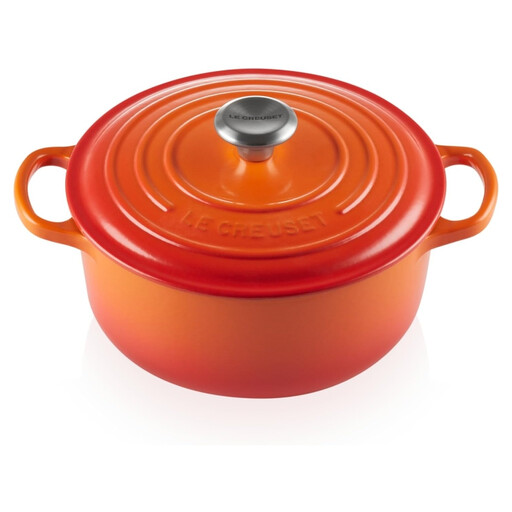
Why We Recommend This Product This model combines the material advantages of enamelled cast iron in a compact form factor. Its size is optimised for smaller portions, enabling energy-efficient cooking and minimising storage space.
Advantages:
Who It's For: This model is a functional choice for individuals, couples, or for preparing side dishes, sauces, and smaller braised dishes. It is also well-suited for baking smaller loaves of bread.
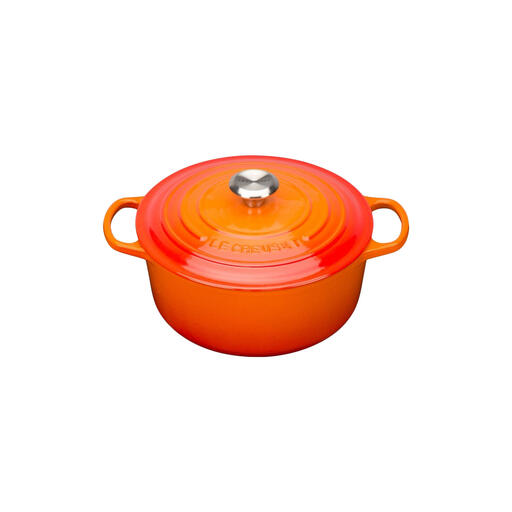
Why We Recommend This Product The 24 cm Dutch oven is a standard size that offers a high degree of versatility for everyday use. Its 4.2-litre capacity is sufficient for many classic recipes like goulash, roasts, or stews for an average-sized family.
Advantages:
Who It's For: This model is designed for families or home cooks looking for a versatile and durable piece of cookware for a wide range of dishes. It is the standard recommendation for a primary Dutch oven.
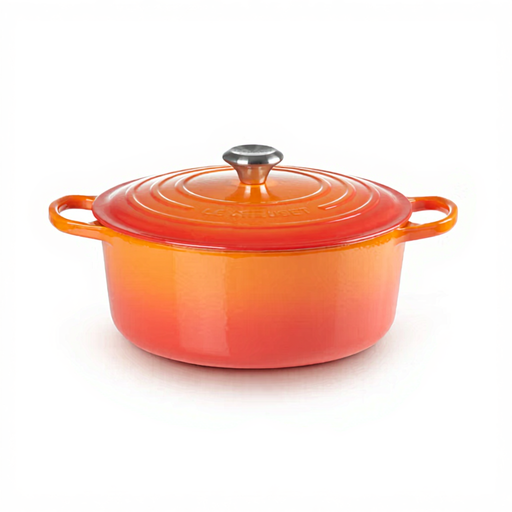
Why We Recommend This Product With a capacity of 5.3 litres, this model addresses the need for large cooking volumes. It is optimised for entertaining guests, for large families, or for preparing larger quantities of food in advance.
Advantages:
Who It's For: This model is aimed at users who regularly cook for larger groups, whether for family or guests. It is also a practical solution for meal prepping.
While a round Le Creuset cast iron Dutch oven offers great versatility for braising and roasting, other cooking techniques may require specialised cookware. Depending on the primary hob type you use, different materials and shapes can be advantageous. For specific requirements, such as use on gas hobs, exploring the Cookware for Gas category can reveal additional solutions.
1. Is a Le Creuset Dutch oven suitable for induction? Yes, the Dutch ovens in the Le Creuset Signature series have a flat, ferromagnetic base and are fully optimised for use on induction hobs. For efficient performance, the diameter of the hob should match the base diameter of the Dutch oven.
2. How do you properly clean an enamelled cast iron Dutch oven? Allow the Dutch oven to cool down after use. Then, clean it with warm water, a mild washing-up liquid, and a non-abrasive sponge. Stubborn residues can be loosened by soaking in warm water. The Dutch ovens are dishwasher-safe, but hand washing is often recommended to protect the enamel surface.