
Lieferung heute & morgen

Qualitätsgarantie

Willkommens-Angebote freischalten: KOSTENLOSE Lieferung | Bis zu 80 % RABATT | Kostenlose 30-Tage-JoyPlus-Testphase
App herunterladen
A suitable drinking cup helps many families make the transition from bottle to independent drinking. But not every model marketed as a leak-proof baby cup automatically suits your child’s age, drinking style or daily routine. Small design details determine whether the cup stays sealed in the pushchair, is easy to clean and can be held securely by little hands.
Valves, seals and lids can hold liquid back, but they only work when assembled correctly. If a valve is fitted crookedly or the seal isn’t properly replaced after washing, the cup can leak. So check whether the individual parts are easy to remove and reassemble.
Even a leak-proof baby cup shouldn’t be thrown loosely into a bag. Before travelling, it’s a good idea to do a quick leak test over the sink. With straw cups, a foldable or coverable drinking opening provides extra protection against dirt.
For babies from six months, smaller volumes are often sufficient. A cup from 6 months with around 160 to 200 ml can be held more easily than a large container. For older toddlers and longer outings, a children’s water bottle with 300 or 350 ml can be useful. What matters is your child’s size, how much they drink and where they’ll be using it – not just the maximum capacity.
A cup with several small parts can be time-consuming to clean in daily use. Residue builds up particularly around valves, straws and silicone seals. Look for clear cleaning instructions. A dishwasher-safe baby cup saves time, while models with a stainless steel body often need to be washed by hand.
A training cup with a soft silicone spout can be suitable for the transition from a baby bottle. A 360-degree drinking rim, on the other hand, supports drinking from the edge of the cup. A straw cup for toddlers is practical once your child can drink from a straw purposefully.
The manufacturer’s age recommendation is a guide and should be matched to your child’s abilities. For younger babies, handles, a low weight and a controlled flow of liquid are important. With a water bottle from 12 months, larger capacities and a closable straw may be the priority.
With a BPA-free cup, the material information should be clearly stated in the product description or on the packaging. Commonly used materials include polypropylene, silicone, stainless steel, polyethylene or silicone seals. Also check whether the cup is suitable for warm liquids. Some models are not intended for milk, fizzy drinks or hot liquids.
Look out for:
A cup should be checked regularly for cracks, discolouration, brittle seals and damaged spouts. If you notice any visible damage, it’s time to replace it.
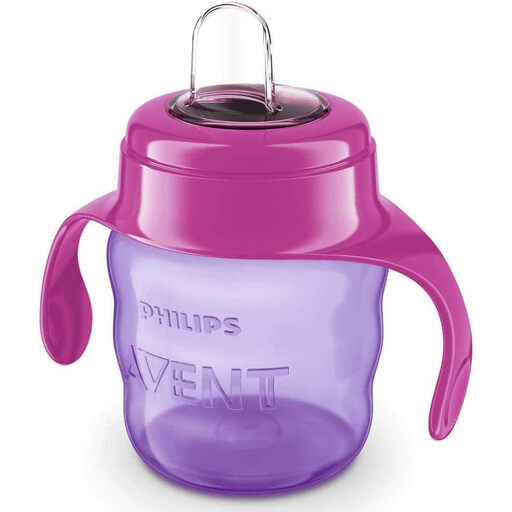
Why this product fits the profile: This compact baby cup is aimed at families looking for a simple start with a manageable capacity. The ribbed shape is designed for small hands.
The one-piece silicone spout and integrated valve reduce the number of fiddly small parts. Before buying, check the age guidance and instructions for fitting the valve correctly.
200 ml capacity, BPA-free materials and dishwasher-safe design. The cup is compatible with Philips Avent bottles, excluding glass bottles.
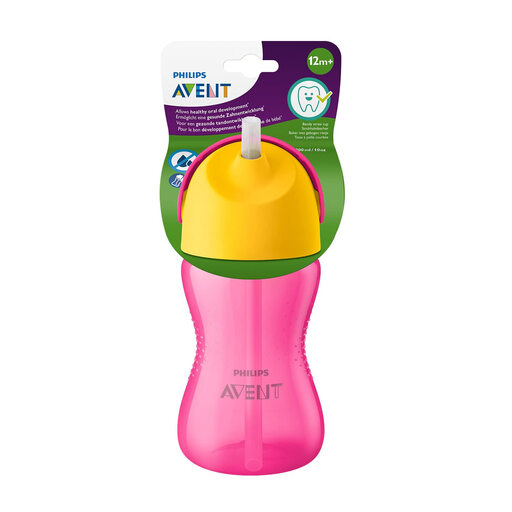
Why this product fits the profile: This straw cup combines a flip-top lid with ergonomic handles and is suitable for toddlers who are becoming more independent drinkers.
The flip-top lid protects the straw during transport. The anti-leak valve and easy-to-disassemble design make it simple to check seals and the straw.
300 ml volume, BPA-free plastic and dishwasher-safe care. The curved straw reaches to the bottom according to the product information.
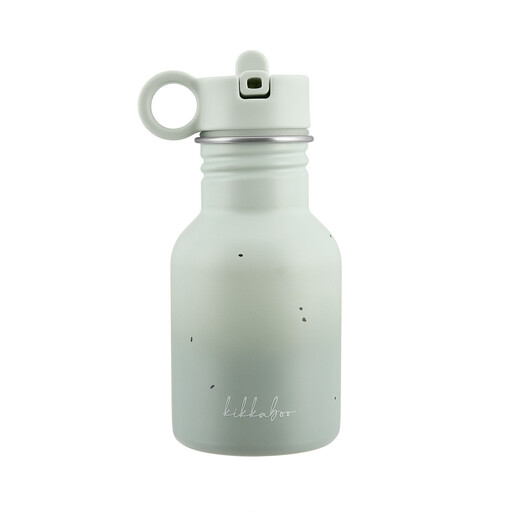
Why this product fits the profile: This children’s water bottle is designed for children from 12 months and, thanks to its capacity, is ideal for nursery, days out and longer journeys.
The straw opening can be folded back, so it’s covered during transport. As hand washing is recommended, the care effort is clear before you buy.
350 ml capacity, 304 stainless steel and BPA-free components. Not intended for milk or fizzy drinks.
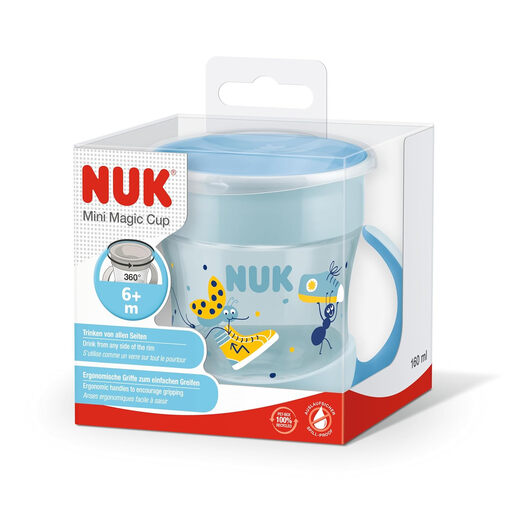
Why this product fits the profile: According to the product information, this cup is aimed at children from six months and allows drinking from all around the rim.
The 360-degree drinking rim avoids a fixed drinking direction. A protective lid helps during transport; make sure the lid is fitted correctly before each use.
160 ml capacity, ergonomic handles, BPA-free materials and suitable for both hand washing and the dishwasher according to the product information.
We’ve put together a full, regularly updated list of products that fully meet these strict selection criteria and the safety regulations in force in the EU.
Wash a new baby cup thoroughly before first use. Take apart valves, spouts and straws according to the manufacturer’s instructions. Even if the cup is dishwasher-safe, narrow straws should be checked occasionally. Don’t use damaged parts and, after reassembly, test that the lid is fully closed.
For transport in the pushchair, a suitable holder can be handy. The Kikka Boo cup and bottle holder is designed for handles with a diameter of 20 to 35 mm and containers up to 95 mm in diameter. Observe the weight limit and check the attachment regularly. A holder is an accessory and does not replace a secure lid on the cup.
Many models are intended by the manufacturer from six months. However, suitability also depends on whether your child can sit securely and hold the cup steadily. Start with small amounts of water and supervise their use.
There’s no fixed lifespan. What matters is the condition and hygiene. Seals, straws and spouts should be replaced if they show cracks, deformation, an unpleasant smell or persistent leaking. The cup body can last longer as long as it remains undamaged.
Not every cup is intended for milk. Milk residue can build up particularly in valves and straws. Check the manufacturer’s instructions and clean the cup immediately after use. With the Kikka Boo mini bottles, use with milk is expressly excluded.