
Lieferung heute & morgen

Qualitätsgarantie

Willkommens-Angebote freischalten: KOSTENLOSE Lieferung | Bis zu 80 % RABATT | Kostenlose 30-Tage-JoyPlus-Testphase
App herunterladen
A leak-proof lunch box is designed to transport meals safely, without soup, dressing or sauce ending up in your bag or rucksack. At the same time, it needs to fit your daily routine: professionals often need a compact size for the office, school and university students require a sturdy bento-style lunch box, while meal-prep users prefer greater capacity and stackable containers.
As a Joybuy Product Recommendation Officer, I filter the selection based on verifiable product data and highlight typical buying mistakes. After all, some claims sound convincing on their own, but say little about how well a product actually performs in practice.
A locking flap or a click-lid does not automatically mean a container is suitable for liquids. What really matters is a continuous seal, even pressure distribution and a closure that clicks fully into place. With removable inserts, the joins between compartments must also seal tightly.
Also check whether the product description explicitly states that it is leak-proof, or whether this is only implied by the product name. Always make sure the lid is fully closed before transporting.
A lunch box with compartments can keep foods separate. However, fixed dividers take up space and limit the size of individual portions. Removable compartments offer more flexibility, while a simple divider may be enough for sandwiches or fruit.
For a single meal, around 1.0 to 1.2 litres is often sufficient. If you prepare multiple portions, you are better off with a larger meal-prep container, such as a model with 1.4 or 3.5 litres of capacity.
“Microwave-safe” does not mean the lid can be heated as well. With many plastic boxes, the lid must be removed completely. Some models instead have a vent that must be opened before heating.
Dishwasher compatibility can also be limited: some manufacturers recommend using only the top rack. Stainless steel thermal containers, on the other hand, are often not suitable for the microwave or dishwasher and should be washed by hand.
For liquid foods, look for a multi-sided click closure, a continuous silicone or freshness seal, and a lid with a clearly audible locking point. An airtight lunch box can keep odours and liquids contained better. Even so, you should not overfill it, as food can deform the closure area or push the lid open.
Check before you buy:
A BPA-free lunch box made from polypropylene is lightweight and often suitable for the microwave, freezer and dishwasher. Terms such as “food-safe” or “food-grade” should be clearly stated in the product description. BPA-free describes a material property and is not a medical efficacy claim.
Glass is ideal for users who want a container for storing, heating and serving food. However, it is heavier and can be damaged by knocks. Stainless steel is robust and odour-resistant, but thermal containers often come with different care instructions.
For a lunch box for work and school, dimensions are just as important as volume. A tall container may hold a lot, but might not fit into a slim work bag. Rectangular shapes are usually easier to stack in the fridge. A wide container with a large opening makes filling and cleaning easier.
If you want to transport hot soup or stew, choose a leak-proof food container with a suitable sealing system or an insulated food jar. The manufacturer’s temperature retention claims should be understood as product information and depend on fill quantity, starting temperature and pre-warming.
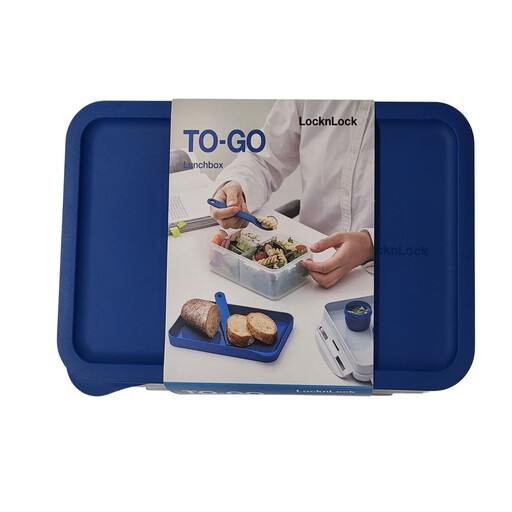
Why this product fits the profile: The 1-litre format is ideal for a single meal. Three removable compartments, cutlery and a sauce pot cover typical needs in the office, at school or on the go.
The compartments are removable, rather than permanently restricting the volume. According to the product information, the container is airtight and leak-proof.
BPA-free polypropylene, suitable for microwave, freezer and dishwasher according to the manufacturer; microwave use without the lid.
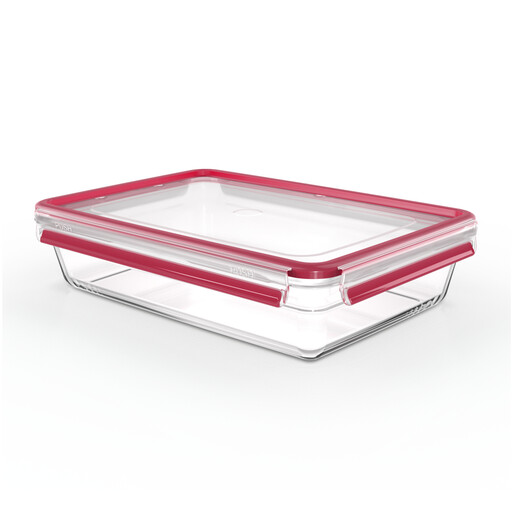
Why this product fits the profile: The large glass container is aimed at meal-prep users and households who want to store, freeze, heat and serve food in the same container.
The product description mentions a reinforced glass wall, a stacking rim and a clip closure with a seal. This makes it easier to store multiple portions in a controlled way.
3 litres capacity, suitable for oven, microwave, freezer and dishwasher according to the manufacturer; without lid up to the stated temperature.
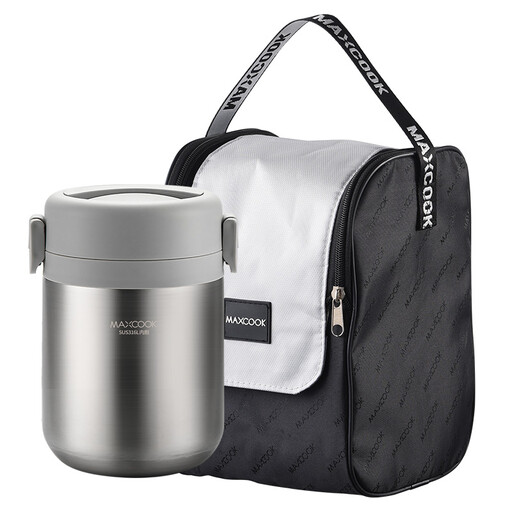
Why this product fits the profile: The wide closure is ideal for soups, stews and other hot foods. This model is designed for transporting meals and comes with an insulated bag.
The product information mentions a tightly sealing lid and 316 stainless steel. The container should be transported upright and cleaned by hand.
1.5 litres capacity, vacuum insulation, wide opening and included lunch bag; not suitable for microwave or dishwasher.
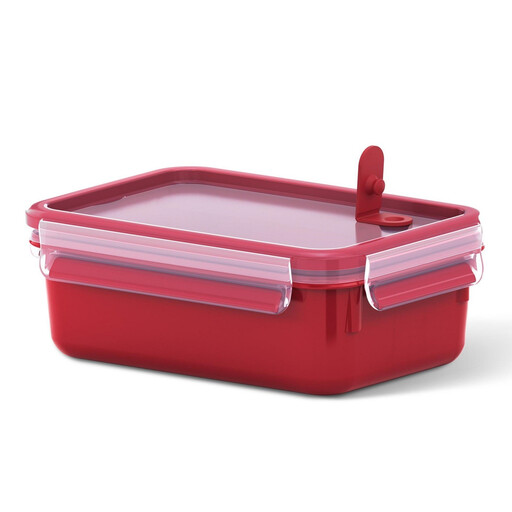
Why this product fits the profile: The rectangular shape is suitable for daily transport. According to the product information, a vent allows heating in the microwave without removing the lid completely.
The vent indicates the necessary steam release when heating. According to the instructions, it must be closed again before transport.
1 litre volume, Click-Lock closure and, according to the manufacturer, suitable for microwave, freezer and dishwasher; BPA-free material according to product data.
We have put together a complete, regularly updated list of products that fully meet these strict selection criteria and the safety regulations in force in the EU.
For a single main meal, around 1.0 to 1.2 litres is enough for many users. If you also transport fruit, side dishes or snacks, you can choose a model with several compartments or more volume. For pre-prepared portions at home, larger food storage containers are more practical.
No. Suitability depends on the material and the manufacturer’s instructions. With many plastic models, the lid must be removed before heating. With containers that have a vent, this must be opened. Stainless steel thermal containers are generally not suitable for the microwave.
It is not possible to give a reliable fixed lifespan. It depends on usage, cleaning, temperature changes and the condition of the seal. Check the closures and sealing ring regularly. As soon as the lid no longer closes evenly or material damage is visible, the container should be replaced.