
Lieferung heute & morgen

Qualitätsgarantie

Willkommens-Angebote freischalten: KOSTENLOSE Lieferung | Bis zu 80 % RABATT | Kostenlose 30-Tage-JoyPlus-Testphase
App herunterladen
A leak-proof lunch box should transport meals reliably without dressing, sauce or yoghurt ending up in your bag. At the same time, many professionals, students, schoolchildren and parents want a practical layout for a main course, sides and snacks. However, product descriptions don’t always use terms like “airtight”, “Bento Box” or “leak-proof” to the same technical standards.
Before you buy, it’s worth taking a close look at the construction, materials and care instructions.
A lid with a simple snap closure can be fine for dry foods. Liquid dishes or salad dressings, however, demand more. What matters is a continuous silicone seal, even pressure distribution and closures that secure the lid on multiple sides.
With an airtight lunch box, the lid should sit flush all the way round. A seal that can be removed and cleaned is also handy in daily use, as residue can otherwise build up there.
A lunch box with compartments is practical when you want to keep bread, fruit and sides apart. However, on many models the dividers are fixed and not designed for liquids. For salad, toppings and dressing, a removable insert or a separate dressing pot is a better choice.
Also check whether the compartments are actually sealed off from one another, or whether they simply organise the food inside the box.
“Microwave-safe” does not automatically mean the lid can be heated too. With several plastic models from this selection, heating is only intended without the lid. Temperature limits must also be observed.
A dishwasher-safe lunch box can make cleaning easier. However, some components should only go in the top basket. Stainless steel containers are often suitable for the dishwasher and freezer, but must not be used on hobs, in the oven or over direct heat.
Look for:
A leak-proof lunch box should be tested with water before first use. Close the empty box, turn it upside down carefully and check the lid edge. This simple test doesn’t replace the manufacturer’s specifications, but it can reveal assembly faults.
For a meal at the office or school, many practical sizes fall between 950 ml and 1.2 l. Smaller containers are good for snacks, while larger meal-prep boxes can hold a main course and sides.
A removable three-compartment insert offers flexibility: it can be used for rice, vegetables and a protein source, or removed for larger meals. A salad box with a dressing pot is especially suitable when you want to keep leafy salad and dressing separate until you eat.
With plastic boxes, polypropylene (PP) and a stated BPA-free design are common selection criteria. However, the material specification alone doesn’t tell you about freezer or microwave use. What matters are the specific manufacturer instructions.
Look for the following details:
Hot food should be allowed to cool before closing the box, if the product instructions require it. After cleaning, all parts must be completely dry before the box is reassembled.
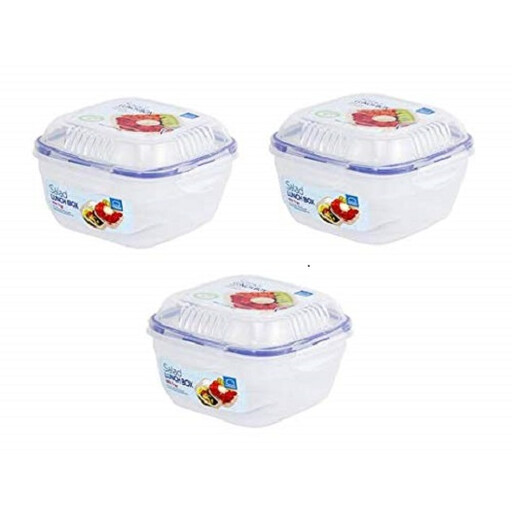
Why this product fits the profile: The set contains three containers, each 950 ml, and is suitable for pre-prepared meals, leftovers or salads at the office and school.
The product details mention an airtight and leak-proof construction, plus an insert for toppings and a dressing pot. According to the description, the box is not intended for the microwave.
Three equal-sized containers, stackable design and dishwasher suitability.
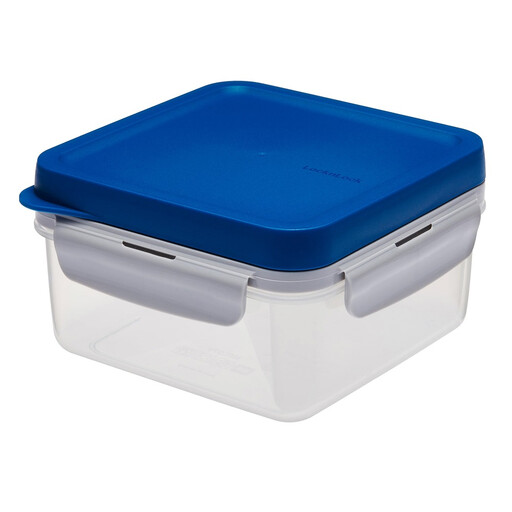
Why this product fits the profile: The box combines three removable compartments with cutlery and a sauce pot. It is designed for work, school, travel and pre-prepared meals.
The product data mention a four-sided closure system, a silicone seal, and suitability for the freezer and dishwasher. Liquid foods can be transported separately.
1.2 l capacity, BPA-free PP, cutlery set and microwave suitability without lid up to 120 °C according to product details.
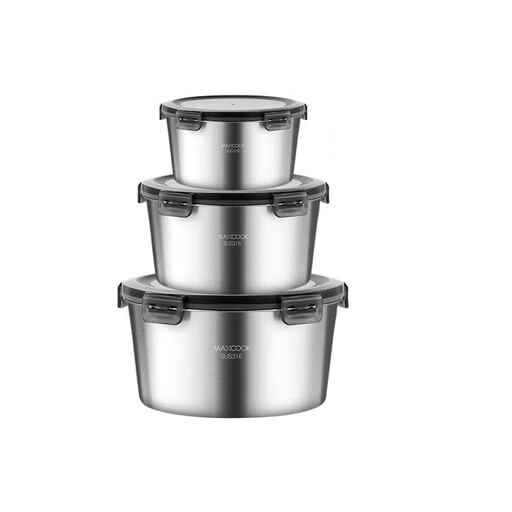
Why this product fits the profile: Two containers of 600 ml and one large container of 2,200 ml cover different meal-prep and storage situations.
According to the product description, the containers are made from 316 stainless steel and are intended for the freezer and dishwasher. Direct heat and sharp utensils should be avoided.
Three capacities in one set, stackable storage and a corrosion-resistant stainless steel material according to the supplier’s details.
We’ve put together a full, regularly updated list of products that fully meet these strict selection criteria and the safety regulations in force in the EU.
A leak-proof lunch box will only stay reliable if the seal and closures are looked after:
If you notice visible damage, stop using the container. This applies especially to the lid, closure clips and sealing rings.
A reliable assessment requires specific manufacturer information about the seal, closure system and liquid transport. Multi-sided closures and a continuous silicone seal are practical design features. Before use, the lid should be fitted correctly and checked for damage.
That depends on the specific model. With the LocknLock boxes mentioned, heating is intended without the lid up to a maximum of 120 °C according to the product description. An airtight box should not automatically be placed closed in the microwave.
It’s not possible to give a fixed lifespan. It depends on the material, daily use, cleaning and how you treat the seal. Replace the box or individual parts if cracks, significant warping or a permanently leaking seal occur.