
Lieferung heute & morgen

Qualitätsgarantie

Willkommens-Angebote freischalten: KOSTENLOSE Lieferung | Bis zu 80 % RABATT | Kostenlose 30-Tage-JoyPlus-Testphase
App herunterladen
A leak-proof lunchbox should keep meals securely in your bag, store food separately, and be easy to clean. For professionals, students, schoolchildren and families, the details that matter go far beyond a flashy colour or an oversized capacity. What counts are clear, verifiable specifications about the closure, material, compartments and how you’ll actually use it.
As a Joybuy Product Recommendation Officer, I’ve filtered the most important buying criteria from the product details and matched them to real-life situations.
The term alone tells you very little about the construction. Check whether the box has a continuous seal, multiple locking clips or a click-lock system. The lid design also matters: a loose-fitting insert can separate foods, but it won’t automatically prevent liquid from escaping.
Transporting food in a leak-proof lunchbox also means the box must be closed correctly and not overfilled. Liquid foods should only go into containers that have a dedicated seal for that purpose.
A lunchbox with compartments can neatly separate bread, fruit, sides or salad. However, fixed dividers are often harder to clean. Removable inserts offer more flexibility, but they take up extra space and need to be completely dry after washing.
For a salad box to go, a separate dressing pot is especially handy. This keeps the dressing away from the salad and toppings until you’re ready to eat.
“Microwave-safe” often applies only to the container, not the lid. With many models, the lid must be completely removed before heating, or a steam vent must be opened. Similarly, “dishwasher-safe” doesn’t always mean every accessory can be cleaned in every dishwasher basket.
Always read the specific care instructions. Temperature limits, top-rack dishwasher use and freezer suitability can vary from product to product.
For transporting yoghurt, dressings or saucy dishes, look for these features:
Even a product with an airtight, leak-proof closure according to the manufacturer should still be transported upright if the instruction manual recommends it.
For a sandwich and snacks, around 800 to 1,000 ml may be enough. If you’re transporting a full meal or meal prep, you might need 1.2 to 1.4 litres. However, a larger box isn’t automatically more practical: it takes up more space and can be unnecessarily heavy for small portions.
Pay attention to the dimensions of your bag and fridge. Stackable models are useful for storing food in advance. A bento lunchbox with several separate sections is ideal for varied meals, while a single large container can be more flexible for pasta, rice dishes or leftovers.
A BPA-free lunchbox is often made from polypropylene or another food-safe plastic. For stainless steel models, buyers should check for a well-fitting silicone seal and the care instructions.
Before you buy, check:
The EU labelling for food-contact materials is an important guide, but it doesn’t replace following the specific usage instructions.
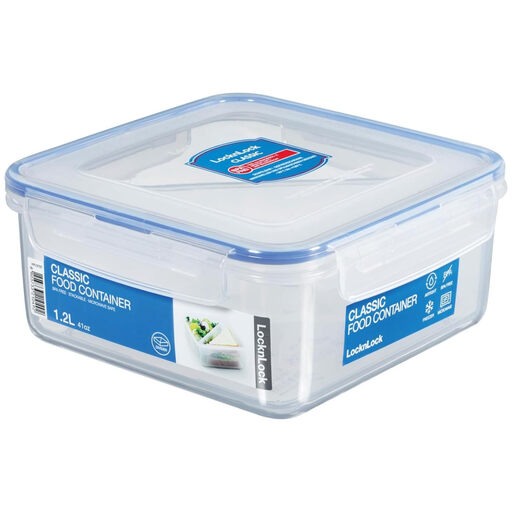
Why this product fits the profile: The 1.2-litre container features an integrated divider and is suitable for sandwiches, snacks and meals at school, university or the office.
The product details mention an airtight, leak-proof construction and an integrated divider. The lid must be removed for heating.
1.2-litre capacity, BPA-free plastic according to the product description, microwave-safe without the lid and dishwasher-safe.
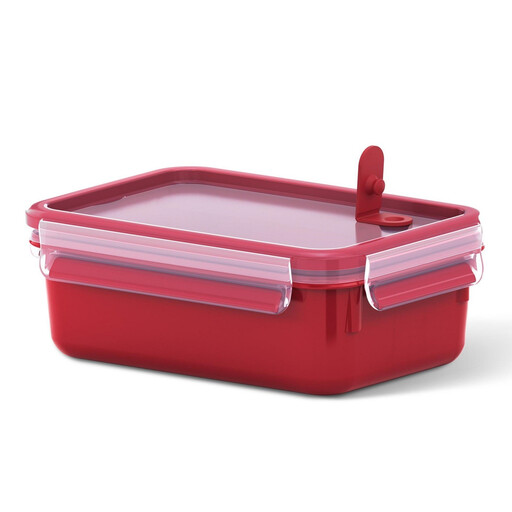
Why this product fits the profile: This model appeals to buyers who want to combine transport, heating, freezing and cleaning in a single container.
The click-lock system and integrated seal are designed for leak-proof transport according to the product description. The steam vent is opened for heating.
1-litre capacity, BPA-free according to the EU 10/2011 test method per the manufacturer, suitable for microwave, freezer and dishwasher.

Why this product fits the profile: Three removable compartments, a cutlery set and a sauce pot make it ideal for meal prep, salads and full meals on the go.
The separate inserts reduce food mixing; the sauce pot keeps liquid ingredients separate. The lid is completely removed for the microwave.
1.2-litre total capacity, three removable compartments, cutlery and sauce container; according to the product details, suitable for freezer, microwave without lid and dishwasher.
We’ve put together a full, regularly updated list of products that fully meet these strict selection criteria and the safety regulations in force in the EU.
How long your lunchbox actually lasts depends on the material, how you use it and how you care for it. These habits will help keep the seal reliable:
A lunchbox with cutlery reduces extra items in your bag. For salads or meal prep, however, the combination of compartments and a separate sauce pot is more important than an integrated cutlery holder.
For snacks or a sandwich, 800 to 1,000 ml is often enough. A lunchbox for work and school with 1.2 litres offers more space for a main dish, side and fruit, but it also needs more storage room.
Only if the manufacturer explicitly says so. Often, only the container without the lid can be heated. Models with a steam vent must be opened according to the instructions. A lunchbox should not be used in an oven, grill or on a hob unless this is specifically intended.
Clean the seal and closure regularly, remove any grease residue and check all parts. Overfilling, damaged seals and incorrectly fitted lids can affect the leak-proof performance. If you see visible damage, it’s time to replace it.