
Lieferung heute & morgen

Qualitätsgarantie

Willkommens-Angebote freischalten: KOSTENLOSE Lieferung | Bis zu 80 % RABATT | Kostenlose 30-Tage-JoyPlus-Testphase
App herunterladen
A wet bag, a ruined laptop, or soaked documents—the result of a leaky water bottle is more than just an annoyance. Although countless models are advertised as "100% leak-proof," reality often tells a different story. As a Joybuy Product Recommendation Officer, I see daily where many buyers go wrong. It's often not the major, obvious defects, but subtle design flaws and material weaknesses that render an initially good bottle useless after just a few months.
This guide will show you the crucial features of a truly reliable, leak-proof water bottle and help you sidestep the typical purchasing traps.
Before we turn to the solutions, it's important to understand the problems. Many manufacturers use marketing terms that hold little weight in practice.
To make an informed decision, you should check three technical aspects that determine the seal and safety of your bottle.
The heart of any leak-proof bottle is its closure. A simple screw-top lid is often more reliable than a complex flip-top, as it has fewer moving parts that can wear out. Regardless of the type, the silicone seal is critical.
A reusable water bottle should be made from a durable and food-safe material. While a "BPA-free water bottle" is a minimum standard today, there are significant differences in the quality of plastics.
The ideal water bottle for on the go fits your lifestyle.
Based on these objective criteria, we have identified several models that are particularly well-suited for specific use cases.
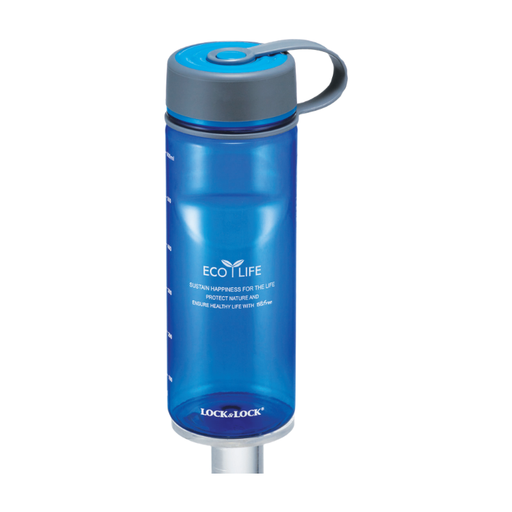
Why This Fits Their Persona: At 650 ml, this bottle offers an ideal capacity for the workday without being too heavy. The integrated carrying handle and slim design make it a practical companion on public transport and in the office. It fits easily into backpack side pockets.
The simple yet robust screw-top lid with a wide, securely seated silicone gasket minimises the risk of leaks often found in complex flip-top mechanisms.
Lightweight, BPA-free material; convenient carrying handle; straightforward and reliable closure.
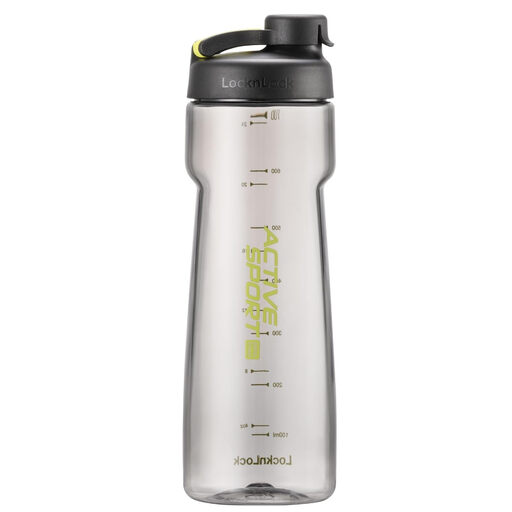
Why This Fits Their Persona: For athletes, quick, one-handed operation is crucial. This bottle features a one-touch flip-top lid with a safety lock to prevent accidental opening in a gym bag. The body, made of Tritan, is extremely durable and withstands impacts at the gym.
It bypasses the material fatigue trap by using impact-resistant Tritan. The additional safety lock addresses the weak point of many simple flip-top lids.
Durable Tritan body; one-handed operation with safety lock; ergonomic grip shape.
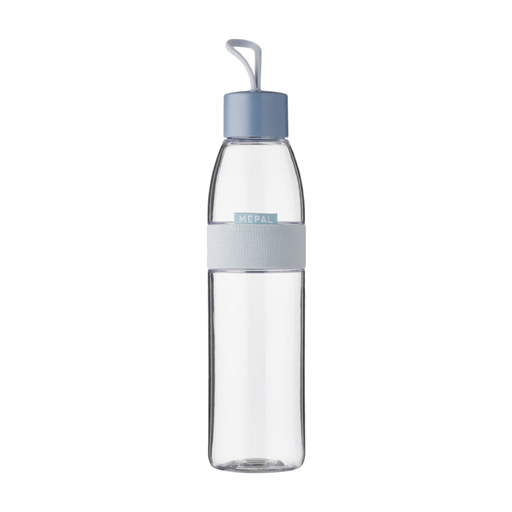
Why This Fits Their Persona: For users who don't want to give up their sparkling drinks on the go. This bottle is explicitly designated as suitable for carbonated drinks. Its design is engineered to withstand the resulting pressure without leaking.
It solves the overpressure problem that causes standard bottles to fail. The construction of the lid and thread is designed to safely contain the pressure, as long as the bottle is not filled to the brim.
Officially suitable for carbonated drinks; 100% leak-proof according to the manufacturer; dishwasher-safe (without the rubber band).
We have compiled a complete, up-to-date list of products that fully meet these strict selection criteria and German safety regulations.
1. How do I clean my water bottle properly to keep it leak-proof? The most thorough cleaning is done by hand with warm water and mild dish soap. Pay special attention to the silicone seal in the lid. If possible, remove it and clean it and the groove underneath separately. Let all parts air dry completely before reassembling the bottle. This prevents mould growth and ensures the seal sits correctly.
2. Is a Tritan water bottle suitable for hot drinks? Most Tritan bottles are designed for cold or lukewarm beverages. The temperature resistance is often a maximum of 60°C to 80°C (140°F to 176°F). Pouring boiling water into it is not recommended, as it can deform the material or lead to a dangerous pressure build-up. Always check the manufacturer's specifications for your specific model.
3. What does it mean if a bottle is not suitable for carbonated drinks? Carbonation creates overpressure in a sealed container. Standard water bottles are not designed to withstand this pressure. The closure can give way, leading to sudden leaks or, in extreme cases, the lid popping off. For such drinks, only use bottles that are explicitly labelled by the manufacturer as suitable for carbonated drinks.