
Lieferung heute & morgen

Qualitätsgarantie

Willkommens-Angebote freischalten: KOSTENLOSE Lieferung | Bis zu 80 % RABATT | Kostenlose 30-Tage-JoyPlus-Testphase
App herunterladen
Finding a leakproof lunch box sounds simple at first. In practice, however, the differences often only become apparent in your rucksack: the seal does not reliably keep sauce contained, the lid is difficult to close when you are out and about, or the box is suitable for the microwave but not the freezer. Whether you are a professional, school pupil, student, parent or meal-prep enthusiast, you should therefore consider more than just capacity or colour.
The information below about the products featured is based on the respective manufacturers’ details. The key consideration is which features suit your everyday needs.
A general marketing claim means little if it does not explain how the lid seals. Relevant features include all-round silicone seals, sturdy clip fastenings or a locking system that secures the lid on multiple sides. Correct use also matters: the lid must sit fully in place, and neither the seal nor the box should have any cracks or deformation.
Many containers can be used in the microwave, but not with the lid closed. Other models have an integrated steam valve. If this is not opened, pressure can build up. When choosing a microwave-safe lunch box, you should therefore always check:
A bento lunch box or sandwich box with compartments can keep dry and moist foods neatly separated. Removable inserts are practical for rice, vegetables, fruit or side dishes. However, they do not automatically prevent liquid from escaping between the sections. If you want to transport soups, dressings or sauces, a separate, tightly sealed sauce container is often the better choice.
For a lunch box for work and school, the closure should be easy to use but sturdy enough for transport. A four-sided clip fastening distributes pressure more evenly than a simple push-fit lid. With an airtight food storage container, it is also important to check whether the silicone seal can be removed for cleaning.
It is worth checking the care instructions before buying. Calling a product a dishwasher-safe lunch box does not always mean that every part can go in every section of the dishwasher. For several products, the top rack is recommended. Damaged seals should be replaced, as their effectiveness can deteriorate over time.
Polypropylene (PP) is relatively lightweight and is commonly used for lunch boxes and food storage containers. It is particularly suitable for everyday transport, provided the permitted temperatures are observed.
Borosilicate glass is transparent and, where specifically stated, can be used for reheating. However, it is heavier and may be damaged by strong impacts. Hot glass containers should not be placed directly on cold or wet surfaces.
Stainless steel is robust and does not affect the taste of food. Before buying, however, you must check whether the specific container is suitable for microwave use. Metal containers must not generally be placed in the microwave unless the manufacturer explicitly states that this is technically permissible.
For a small meal or snacks, around 600 to 900 ml may be sufficient. A capacity of approximately 1,000 ml provides more room for a main course and side dish, but also requires more storage space. Rectangular containers can be stored more efficiently in many bags than round ones.
As well as capacity, pay attention to the external dimensions. A large box may hold more, but it might not fit in your work bag or school rucksack. Measurement markings inside the container can help with portioning, but they do not replace planning according to your individual needs.
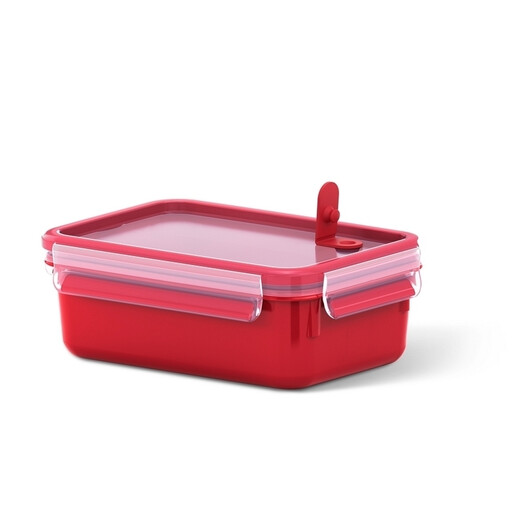
Why this product suits this profile: According to the manufacturer, this compact plastic box has a capacity of 0.8 l, integrated measurement markings, and is suitable for the microwave, freezer and dishwasher.
According to the manufacturer, the lid has an all-round leakproof seal and a steam valve. This must be opened before reheating.
BPA-free PP plastic, a rectangular format and use in the top rack of the dishwasher, according to the manufacturer.
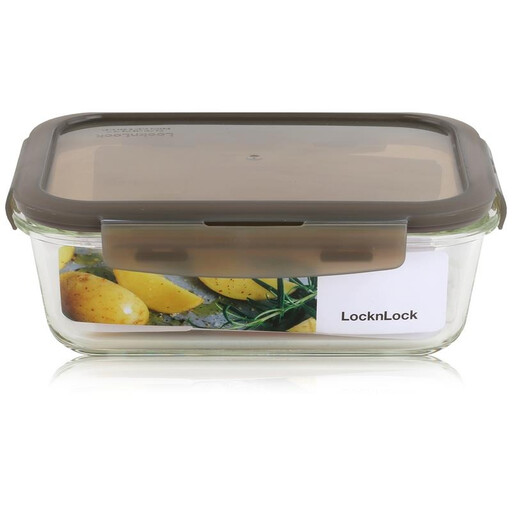
Why this product suits this profile: According to the manufacturer, the container is made from borosilicate glass and holds 630 ml. It is designed for storage, transport and serving food directly.
According to the manufacturer, the four-sided closure and silicone seal are designed to provide airtight and watertight storage. The lid must be removed before heating.
According to the manufacturer, suitable for freezing down to -20 °C, dishwasher-safe and suitable for use without the lid in the microwave and oven up to 400 °C.
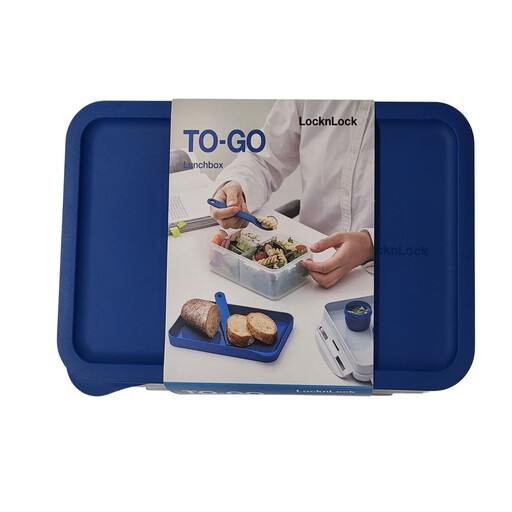
Why this product suits this profile: According to the manufacturer, the 1-l box contains three removable compartments, a cutlery set and a sauce container. This makes it suitable for meal prep and varied meals.
The removable compartments keep food organised and separate. For liquids, the manufacturer specifies an airtight and watertight closure system; the box should be fully locked before transport.
BPA-free PP plastic, a temperature range from -20 to 120 °C and cleaning in the top rack of the dishwasher, according to the manufacturer.
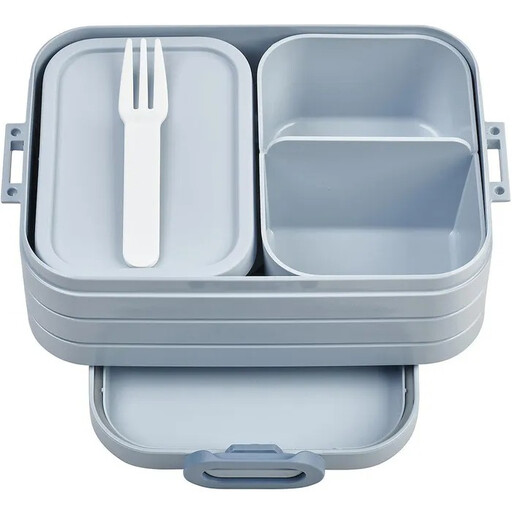
Why this product suits this profile: According to the manufacturer, the 900-ml bento lunch box has two sections and an additional box with a fork. It is suitable for different foods at the office or school.
The removable bento inserts make it easier to portion different foods separately. The manufacturer states that the inserts are microwave-safe without their lids, but that the lunch box is not suitable for freezing.
BPA-free material, a capacity of 900 ml and dishwasher cleaning, according to the manufacturer.
We have put together a complete, regularly updated list of products that fully meet these strict selection criteria and the safety regulations applicable in the EU.
Even a well-designed lunch box needs regular checks:
Look for an explicitly described watertight or leakproof seal. An additional sauce container can be useful if you want to keep different foods separate. Before using the box for transport for the first time, it is advisable to test it with water at home.
There is no fixed service life that applies in every case. It depends on the material, cleaning routine, exposure to temperatures and frequency of use. Check the seal, closure and container regularly. If you notice cracks, brittle silicone or a lid that no longer closes properly, the affected part should be replaced.
Not as a general rule. Many models are microwave-safe only without the lid. For containers with a steam valve, this must be opened according to the instructions for use. Details such as the maximum temperature and permitted heating time should be checked before use.