
Lieferung heute & morgen

Qualitätsgarantie

Willkommens-Angebote freischalten: KOSTENLOSE Lieferung | Bis zu 80 % RABATT | Kostenlose 30-Tage-JoyPlus-Testphase
App herunterladen
A leakproof lunch box should do more than simply store your lunch. It needs to fit in your rucksack, keep different foods as separate as possible and be easy to clean after use. However, requirements vary considerably between professionals, school pupils, students, families and commuters.
Many disappointing purchases come down to three common pitfalls:
Look for a full silicone seal, sturdy clips or a screw-top closure, as well as clear care instructions. With a food container featuring an airtight seal, the lid should sit evenly all the way around. For salads, a dressing cup or separate screw-top container is often more practical than one large, undivided compartment.
The term “leakproof” should always be considered in relation to the intended use. Carbonated drinks, dry ice, very hot food or an overfilled container can cause pressure or spillage. Check the closures before transporting the container and keep it upright wherever possible.
For a sandwich and fruit, 600 to 900 ml is often sufficient. A complete lunch with a side dish usually requires around 1 to 1.2 litres. If you want to transport soup, stews or larger meal-prep portions, you could consider a food jar with a capacity of 1.4 to 1.5 litres.
A bento lunch box with several compartments is ideal for snacks, bread, vegetables and fruit. However, the dividers do not automatically prevent liquid from moving from one compartment to another. Inserts and a separate dressing cup are therefore useful for salads.
Common materials include plastic, stainless steel and insulated textiles:
Regular cleaning is essential for seals. Remove the silicone ring if the instructions allow this and let all parts dry completely. Dishwasher suitability only applies to the components approved for this purpose.
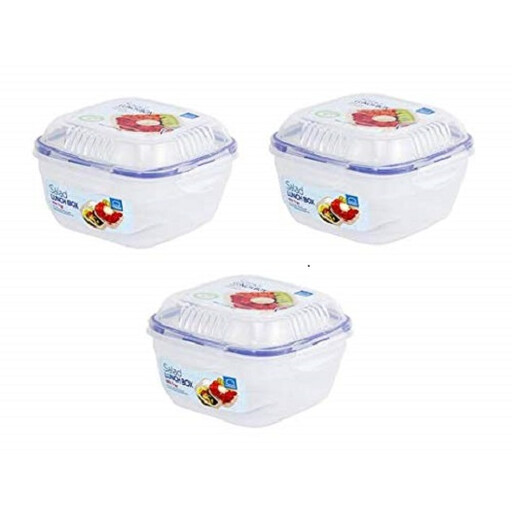
Why this product is a good match: Three transparent containers, each with a capacity of 950 ml, are suitable for prepared salads, leftovers and food storage. Their stackable design helps save space in the fridge.
The set includes a topping insert and a dressing cup. According to the product details, it is dishwasher-safe but not intended for microwave use.
Three 950 ml containers, an airtight seal according to the product description and separate components for salad ingredients.
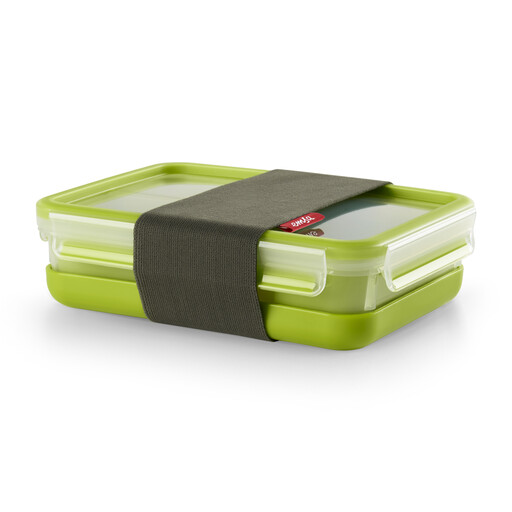
Why this product is a good match: With a capacity of 1.2 litres, three inserts and a separate plate, this lunch box is designed for work, school, travel and outdoor activities.
The product details mention a freshness seal, three inserts and an additional plate. The lid must be fully closed before transport.
According to the product description, it is suitable for use in the microwave, freezer and dishwasher at temperatures from -40 °C to +110 °C.
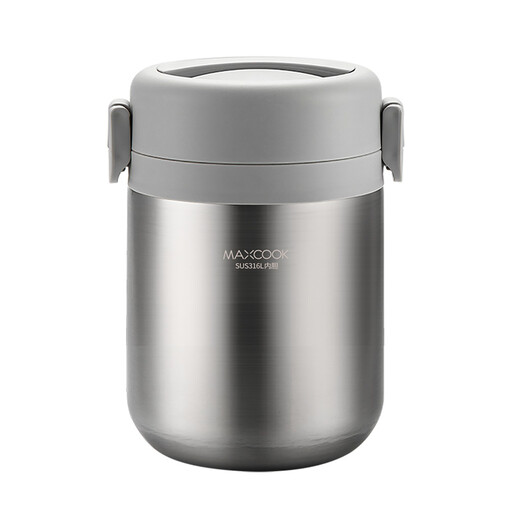
Why this product is a good match: The wide opening and vacuum insulation are ideal for anyone who wants to transport soup, stews or other hot meals.
According to the product description, the container is not suitable for microwave use or carbonated drinks. The lid must be firmly secured before packing.
1.5-litre capacity, 316 stainless steel, wide opening and vacuum-insulated construction according to the product data.
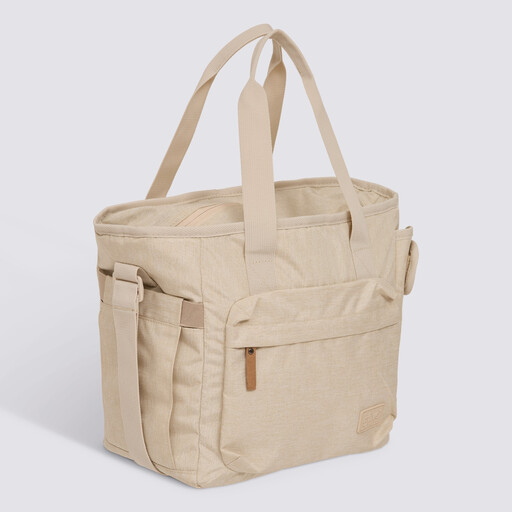
Why this product is a good match: Several internal and external pockets, together with its generous capacity, provide room for a lunch box, drinks, cutlery and snacks for work or family life.
The bag holds several sealed containers, reducing the need to transport loose food directly. According to the care instructions, it is not machine-washable.
12 litres of usable capacity, several pockets, insulated internal compartments and a weight of approximately 0.275 kg according to the product data.
We have put together a complete, regularly updated list of products that fully meet these strict selection criteria and the safety regulations applicable in the EU.
To keep a lunch box for work and school in use for as long as possible, these routines can help:
For soup, choose a meal-prep container with a secure seal or a vacuum-insulated food jar with a wide opening. Check the capacity, seal and temperature guidance. Do not overfill hot liquids, and open the container carefully before eating.
No. Leakproof performance and microwave suitability are two different properties. Some plastic boxes can be used in the microwave, whereas stainless steel lunch boxes and vacuum-insulated containers are generally not designed for this purpose. The relevant information is always the manufacturer’s guidance.
Its service life depends on the material, fastening, cleaning and daily use. Replace a container if the seal, lid or clips are damaged, if it retains odours permanently or if the box no longer closes securely. With a reusable food container, it is worth checking the sealing rings regularly.