
Lieferung heute & morgen

Qualitätsgarantie

Willkommens-Angebote freischalten: KOSTENLOSE Lieferung | Bis zu 80 % RABATT | Kostenlose 30-Tage-JoyPlus-Testphase
App herunterladen
A leakproof lunch box with compartments should keep meals separate, contain liquids securely and be easy to clean after use. For professionals, school pupils, students and families, this sounds straightforward at first. In practice, however, unclear manufacturer information, unsuitable closures or an impractical size can quickly lead to disappointing purchases.
Whether you are looking for a lunch box for work, lunch box for school, bento box or meal-prep box, the number of compartments is not the only consideration. The material, seal, closure system and care instructions all determine whether the box remains reliable for everyday use.
A leakproof design requires more than a lid that simply rests loosely on top. Look for a continuous seal and a closure that holds the lid evenly in place. On models with several clips, each clip should lock fully into position. The compartments themselves must also close securely if you plan to carry liquid foods or sauces.
A product description using terms such as “waterproof” or “airtight” reflects the manufacturer’s claim. You should also check whether the seller provides specific information about the seal, closures and maximum fill level.
Many compartments look generously sized in product photos, but they can vary considerably in everyday use. For example, a small compartment may be suitable for nuts or pieces of fruit, but not for a full side dish. Removable inserts offer greater flexibility than fixed dividers, as the box can also be used for larger portions when required.
For salads, a salad box with dressing container is more practical than a standard sandwich box with compartments. The dressing, toppings and salad leaves remain separate until you are ready to eat.
“Microwave-safe” does not automatically mean that the entire box, including the lid, can be heated. In many cases, the lid must be removed completely. Seals, inserts and cutlery may also have different care instructions from the main container.
You should therefore check:
For a filled sandwich, fruit and small snacks, a compact lunch box of around 1 litre may be sufficient. If you want to carry a complete meal with a side dish and dessert, you will often need 1.2 litres or more. However, a larger capacity is only practical if the box fits in your bag, rucksack or fridge.
For meal prep and food storage, several containers in a food storage container set can be useful. Stackable designs save space and make it easier to prepare several portions.
Polypropylene is often used for lightweight lunch boxes. In the product information available here, several models are described as being made from BPA-free polypropylene. This information relates to the respective manufacturer’s claim and should not automatically be applied to every product.
Glass containers are generally heavier, but may be suitable for storing food in the fridge. With a glass food storage container set, pay particular attention to the lid material, seal, weight and resistance to breakage during transport.
A four-sided closure can press the lid evenly against the seal. However, this alone does not replace correct filling. Leave enough space below the rim when carrying liquid foods, and check that the lid is fully closed before transporting the box.
For microwave-safe models, the relevant manufacturer’s information applies. According to the product description, the LocknLock models in this selection can be used in the microwave without the lid at temperatures of up to 120 °C. The Emsa CLIP & GO Lunchbox is specified for a temperature range of -40 °C to +110 °C. These plastic boxes are not designed for use on a cooker, hob, in an oven or directly on a heat source.
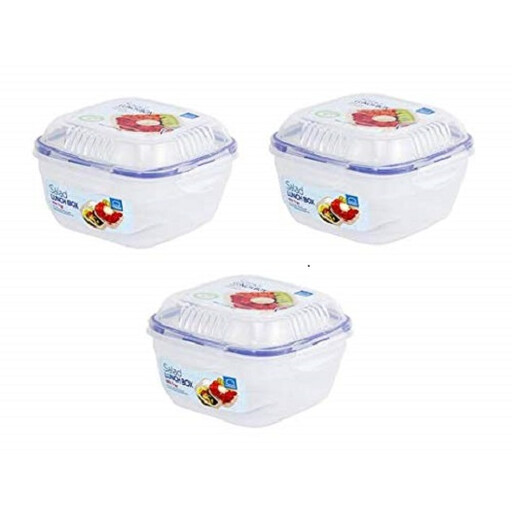
Why this product suits this profile: Three 950 ml containers are suitable for prepared salads, leftovers or individual snack portions. The stackable design can make storage in the fridge easier.
According to the product information, each container has an airtight closure, a separate insert for toppings and a dressing cup. Microwave use is expressly excluded.
Three units, each with a capacity of 950 ml, BPA-free plastic according to the manufacturer’s information, and dishwasher-safe cleaning.
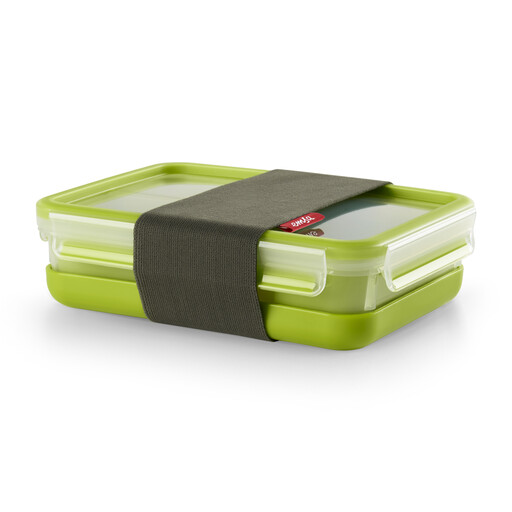
Why this product suits this profile: Three inserts, a separate plate and a seal are designed for different meals during the working day or when travelling.
The product information specifies a freshness seal and gives a maximum capacity of 1.2 l. This helps prevent overfilling, which can be a possible cause of leaks.
According to the product description, suitable for use in the microwave, freezer and dishwasher; three inserts and a separate plate are included.
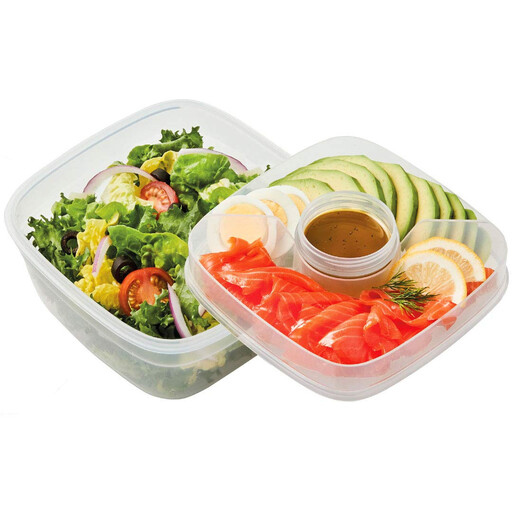
Why this product suits this profile: The two large containers are intended for people who regularly prepare and transport salads or generous meal-prep portions.
The topping insert and dressing container keep delicate ingredients and liquids separate until you are ready to eat. According to the product description, four clip closures are provided.
Two containers, each with a capacity of 1.6 l, BPA-free polypropylene according to the manufacturer’s information, and dishwasher-safe cleaning.
We have put together a complete, regularly updated list of products that fully meet these strict selection criteria and the safety regulations applicable in the EU.
Even a sturdy dishwasher-safe lunch box needs to be checked regularly. Clean the seal, lid and inserts thoroughly after every use. Allow all parts to dry completely before putting them back together. This helps prevent trapped moisture and unpleasant odours.
Before filling the box, check it for cracks, warping and a correctly positioned seal. Damaged parts should no longer be used. With a microwave-safe lunch box, the lid must be removed in accordance with the instructions. Hot food should be allowed to cool before sealing the box airtight, unless the manufacturer specifies otherwise.
Models with a continuous seal, several secure closures and clear information about leak resistance are suitable. A separate dressing container is recommended for salads. Do not fill the box beyond its stated capacity, and check the closure before transporting it.
For smaller meals and snacks, a capacity of around 1 litre may be enough. For complete main meals with side dishes, 1.2 litres or more is often more practical. The external dimensions and the amount of space available in your bag or rucksack are also important.
It is not possible to give a fixed lifespan that applies in every case. It depends on how the box is used and cleaned, the temperatures it is exposed to and the condition of the seal. Replace the box or individual components if cracks, severe warping or a permanently leaking seal develops.