
Lieferung heute & morgen

Qualitätsgarantie

Willkommens-Angebote freischalten: KOSTENLOSE Lieferung | Bis zu 80 % RABATT | Kostenlose 30-Tage-JoyPlus-Testphase
App herunterladen
By Joybuy Product Recommendation Officer, July 28, 2026
Choosing the right garden lighting can be the difference between an atmospherically illuminated outdoor space and a disappointing investment. Many homeowners invest in LED lights only to find they don't survive the first winter, their brightness quickly fades, or the installation is more complicated than expected. Before you make a decision, it's crucial to understand the common pitfalls often hidden behind appealing product images.
Two of the most frequent problems are inadequate weather resistance and misleading brightness claims. A light might be advertised as "weatherproof," but without a specific IP rating, this could mean it only withstands light drizzle. Similarly, solar lights are often sold with weak panels whose batteries can barely store enough energy for a few hours of dim light—unsuitable for anything more than short-lived decoration.
To find durable and functional LED garden lighting, don't be guided by marketing promises, but by verifiable technical specifications. Three parameters are of central importance here.
The IP (Ingress Protection) rating indicates how well a light is protected against the ingress of foreign objects (first digit) and water (second digit). For outdoor use, these values are critical.
Always look for one of these ratings to ensure your weatherproof outdoor lights can withstand the elements.
The light output and colour temperature determine the character and function of your lighting.
The choice of material has a direct impact on the lifespan of your outdoor lighting. Cheap plastic can quickly become brittle and fade due to UV radiation. Stainless steel is only a good choice if it is a high-quality, rust-proof alloy (e.g., 304 or 316 grade). A very robust and durable option is die-cast aluminium with a powder coating. This material is corrosion-resistant, dissipates heat efficiently, and retains its shape and colour for years.
Based on these objective criteria, we have compiled a selection of products suitable for specific requirement profiles in gardens across the country.
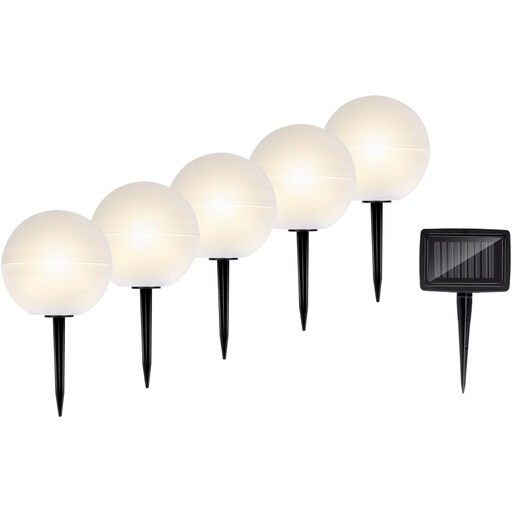
Why This Fits Their Persona: Ideal for users who want to create an atmospheric setting without effort or electricity costs. Perfect for marking paths or accentuating flowerbeds and patios. The installation is incredibly simple and requires no technical knowledge.
Avoids the pitfall of weak solar lights with a system perfectly matched to the light source. The battery is designed for a runtime of 6-8 hours, which is sufficient for decorative evening ambience.
Zero Running Costs: Operates purely on solar energy. Flexible Lighting Design: Switchable between warm white and an RGB colour-changing mode.
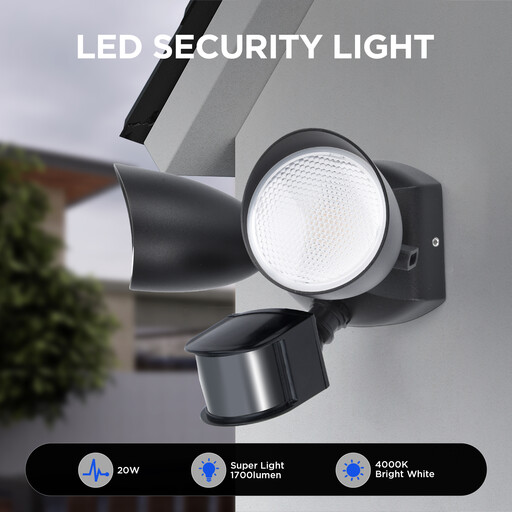
Why This Fits Their Persona: Designed for users whose priority is the reliable illumination of driveways, yards, and entrance areas. The integrated motion sensor provides light on demand and enhances security.
Solves the problem of insufficient brightness with a luminous flux of 1700 lumens. The neutral white light colour (4000 K) ensures clear visibility instead of just providing a faint glow.
Integrated Sensor: Automatically turns on with motion, increasing efficiency and deterrence. High Luminosity: Ideal as a functional security light.
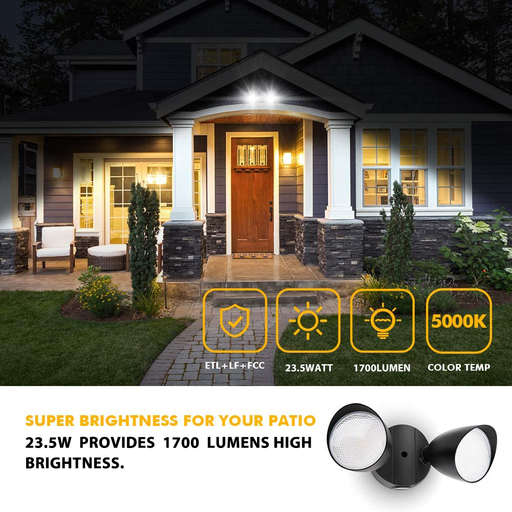
Why This Fits Their Persona: For homeowners who value design, material quality, and flexible light direction. The two adjustable spotlights allow for the targeted highlighting of facades, plants, or architectural details.
Evades the trap of inferior materials with a housing made of die-cast aluminium with a powder coating. This prevents rust and weathering, ensuring a long lifespan and a high-quality appearance.
Robust Construction: Durable and corrosion-resistant material. Flexible Adjustment: Two individually pivoting spotlight heads for precise accent lighting.
We have compiled a complete, up-to-date list of products that fully meet these strict selection criteria and safety standards.
The lifespan of solar lights in the garden primarily depends on the quality of the solar panel and the battery. On high-quality models, the battery (often a Ni-MH or lithium-ion type) may lose capacity after about 2-3 years and might need to be replaced. The LED itself has a very long lifespan, often exceeding 20,000 hours. The nightly runtime varies depending on the amount of sunlight during the day and is typically between 6 and 8 hours.
For general use in the garden where lights are exposed to rain, IP65 is a safe choice. They are dust-tight and protected against water jets. If the light is located under an eave or on a sheltered wall, IP44 (protection against splashing water) is often sufficient. For in-ground spotlights or lights near ponds, IP67 should be chosen, as they are protected against temporary immersion.
That depends on the type of light. Solar-powered ground spike lights or battery-operated models can be easily placed in the ground without any expert knowledge. Hard-wired lights like an LED outdoor wall light or a floodlight for the garage, which connect to the 230-volt mains supply, must be installed by a qualified electrician in accordance with local regulations.