
Lieferung heute & morgen

Qualitätsgarantie

Willkommens-Angebote freischalten: KOSTENLOSE Lieferung | Bis zu 80 % RABATT | Kostenlose 30-Tage-JoyPlus-Testphase
App herunterladen
Toddlers are naturally curious. They want to be part of family life, especially in the kitchen where all the chopping, stirring, and baking happens. A regular chair is often too unstable, and a simple step stool offers no protection from falls. A learning tower is specially designed to give children a secure platform, allowing them to help out at counter height and discover the world of grown-ups.
This article serves as a guide. It introduces different types of children's stools and highlights objective criteria to help you choose the right model for your child.
The decision to buy a child's stool depends on several factors beyond just its design. Functionality and safety are the key aspects here.
A safe standing stool for a child must be one thing above all: tip-resistant. Look for a wide base or special design features that prevent it from tipping over, even when your child moves or leans against it. The design should include a surrounding safety rail to secure the child on the platform. Rounded edges and the absence of pinch points for little fingers are also important features. The materials and finishes used should be certified as safe for children's furniture.
Children grow quickly. An adjustable stool with a height-adjustable platform adapts to your child's size, ensuring it can be used for longer. This adaptability is not only cost-effective but also ensures the stool always provides the ergonomically correct height for your child. Models that can later be converted into a regular stool or table offer additional functionality beyond the toddler years.
Learning towers are often used as kitchen helpers for kids and will inevitably come into contact with food. The material should be durable and easy to clean.
Here is a selection of different stool types that cover various needs and use cases.
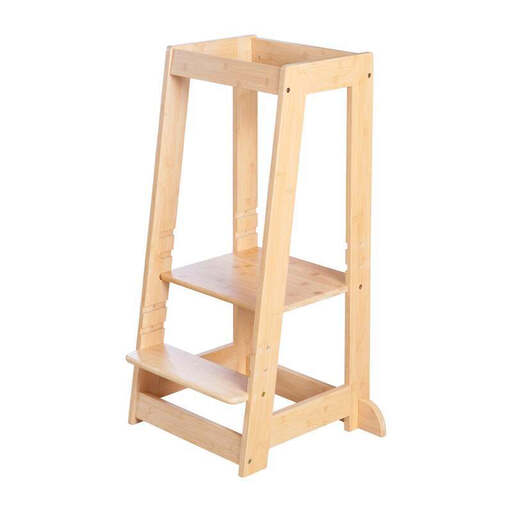
Why it stands out: This Montessori stool is a classic learning tower, consistently designed for safety and adjustability. Made from FSC-certified bamboo, it features a height-adjustable platform and step. The flared legs significantly increase its tip-resistance.
Pros:
Who is it for? For families looking for a dedicated, safe, and durable kitchen helper for kids that promotes independence according to Montessori principles and can be used for several years.
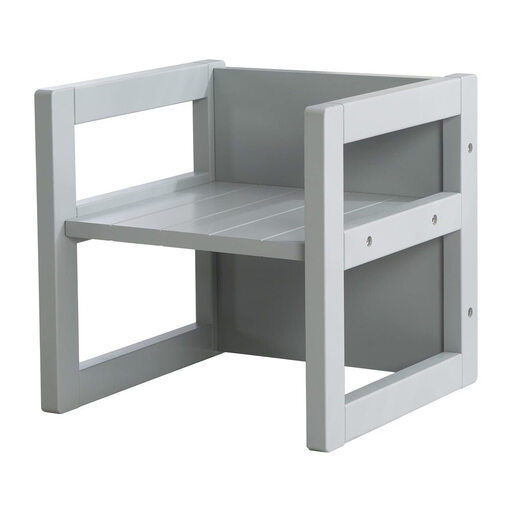
Why it stands out: This model is a multifunctional cube stool that offers three different seat heights by simply rotating it. It doesn't serve as a standing aid with a safety rail, but rather as a versatile children's stool that grows with your child.
Pros:
Who is it for? For those looking for a flexible, space-saving seating option for a child's room or living area that can be used for many years and serves multiple functions.
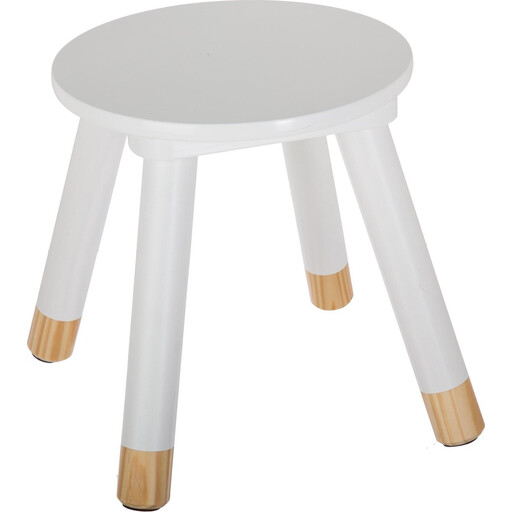
Why it stands out: The stool from Atmosphera is a simple, classic wooden seat. It's not a learning tower, but rather a basic step stool for children or an extra seat. Its minimalist design fits into many interior styles.
Pros:
Who is it for? For parents who need a straightforward, lightweight, and affordable stool as a seat or a small step for older children who are already steady on their feet.
A learning tower is a specific solution. Depending on the child's age and the intended use, a simple step stool, a small bench, or a multifunctional child's chair might also be the right choice.
? Discover more models in our Stools & Furniture category
A learning tower is generally useful once a child can stand independently and securely. This is usually between 12 and 18 months of age. It is important that the child uses the tower exclusively under adult supervision.
The key difference lies in safety. A learning tower has a surrounding safety rail that protects the child on the platform. A conventional step stool for children is an open step without side guards and therefore offers less protection against falling off the side, especially for very young children.
Always place the tower on a flat, stable surface. Never leave your child unsupervised in the tower. Keep dangerous objects like knives or hot pots out of the child's reach. Regularly check that all screws and connections are tight. Adjust the platform height to your child's size so they can comfortably see over the edge of the countertop without having to lean out too far.