
Lieferung heute & morgen

Qualitätsgarantie

Willkommens-Angebote freischalten: KOSTENLOSE Lieferung | Bis zu 80 % RABATT | Kostenlose 30-Tage-JoyPlus-Testphase
App herunterladen
Learning toys for children aged 3 and over should be entertaining, age-appropriate and practical for everyday use. But just because a product is described as ‘educational’, ‘STEM’ or ‘Montessori’ doesn’t automatically mean it’s right for a child’s stage of development. That’s why parents, grandparents, family members and childcare settings should take a closer look at the recommended age, materials, piece size and how the game works.
Lights, sounds and lots of accessories can seem appealing at first. But younger children may find an overloaded toy difficult to understand. A clear task – such as sorting, doing a puzzle, building or matching – makes it easier to get started and allows for different levels of difficulty.
‘Ages 3+’ is no substitute for checking the safety information. Puzzles, magnetic building pieces and dice games may contain small parts. Take extra care with products containing magnets: loose or swallowed magnets can pose a serious health risk. Check the pieces regularly for cracks, loose magnets and damaged edges.
Terms such as educational toys, Montessori toys or STEM toys don’t automatically tell you how good a product is. More useful details include the number and size of the pieces, materials, batteries required, number of players, playing time and type of activity.
For a jigsaw puzzle for children aged 3 and over, around 12 to 24 pieces often make a good starting point, depending on the child’s experience. Some children prefer short tasks, while others are already ready for more challenging pictures. What matters is whether the child can recognise shapes, pick up pieces deliberately and stay focused on a task for several minutes.
Simple rules and short playing times are helpful for board games. A game for two to four players could suit families, nursery groups or shared playtime. For independent play, options include sorting boards, magnetic mazes and construction sets.
Look for rounded edges, securely connected pieces and surfaces that are easy to clean. Cardboard puzzles should be sturdy enough for little hands. With wooden toys, smooth surfaces and undamaged paintwork are important. Plastic pieces should be free from sharp edges or moulding burrs.
The product description should also include details of the manufacturer, the responsible person in the EU and any warnings. For magnetic pieces, it should clearly state that the magnets are securely enclosed. However, this doesn’t replace regular checks during use.
Light-up features often need batteries, which may not be included. Check whether batteries need to be fitted or replaced, and whether this should only be done by an adult. A storage bag or suitable packaging can help keep all the pieces together and make it easier to tidy the toy away after use.
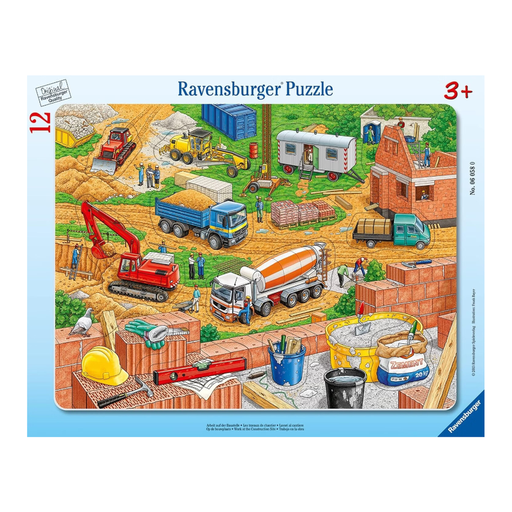
Why this product suits this profile: This tray puzzle offers a manageable introduction, with 12 pieces and a child-friendly construction site picture. It doesn’t need batteries and is suitable for short play sessions at home or in a childcare setting.
The low piece count helps reduce the risk of overwhelming a child with a task that’s too difficult. The frame provides a clear visual guide.
12 sturdy puzzle pieces, frame with finger holes, no batteries required and suitable for ages 3 and over.
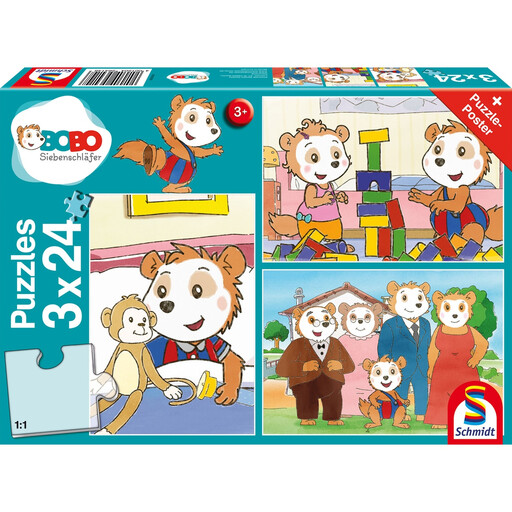
Why this product suits this profile: Three puzzles, each with 24 pieces, offer plenty of replay value and different scenes from family life. According to the product information, the matt linen-textured surface helps reduce glare.
The clearly stated piece count makes it easier to choose based on facts rather than colourful marketing claims. Three pictures add variety without changing the basic activity.
3 × 24 pieces, precisely cut puzzle pieces, matt linen-textured surface and no batteries required.

Why this product suits this profile: This set is designed for repeated building with magnetic tiles, track pieces and a light-up feature. It’s a good fit for children who enjoy creating their own constructions and concentrating on a task for longer.
The description gives the piece count, materials, battery requirements and specific safety warnings. Because the set contains small parts and strong magnets, an adult must supervise children directly.
126 pieces, transparent 3D building tiles, light-up feature and powered by 3 AA batteries, required separately.
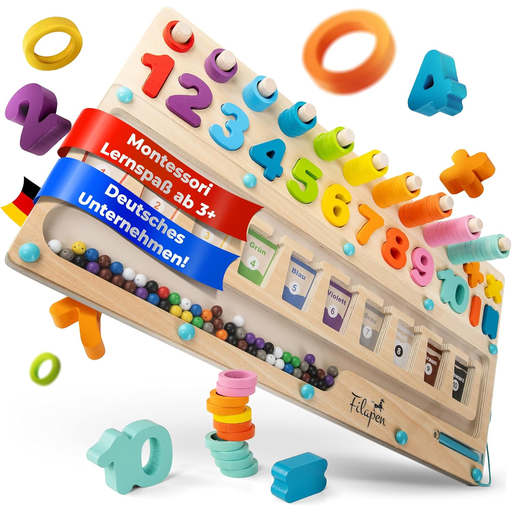
Why this product suits this profile: This wooden board combines a magnetic maze with colour matching and numbers from 1 to 10. It can be used for short practice sessions or calm, independent play.
The activity focuses on sorting, guiding and matching. No batteries are needed, and you can explain how to use it one step at a time.
Solid wood, magnetic pen, colour matching, numbers from 1 to 10 and no batteries required.
We’ve put together a complete, regularly updated list of products that meet these strict selection criteria and fully comply with the safety regulations in force in the EU.
Toys with manageable rules and pieces that are easy to hold are a good choice. These include simple puzzles, colour and number games, magnetic building blocks and creative construction toys. Check the manufacturer’s age recommendation against the child’s abilities and the safety information.
Magnetic building blocks may be suitable from age 3, provided this is stated by the manufacturer. Because of the risk from small parts and magnets, direct adult supervision is advisable. Check the casings regularly. If a magnet is loose or has come out, stop using that piece.
How long a toy lasts depends on its materials, build quality and how it’s used. Store cardboard puzzles in a dry place, clean wooden boards with a soft cloth, and protect plastic pieces from high temperatures and harsh cleaning products. Regular checks and tidy storage make it easier to spot missing or damaged pieces early.