
Lieferung heute & morgen

Qualitätsgarantie

Willkommens-Angebote freischalten: KOSTENLOSE Lieferung | Bis zu 80 % RABATT | Kostenlose 30-Tage-JoyPlus-Testphase
App herunterladen
Learning toys for babies and toddlers should do more than just grab attention for a short while. Parents, grandparents and relatives usually look for products that are age-appropriate, easy to use and offer a variety of play opportunities. However, there is often a gap between marketing claims and real-life usefulness.
1. Too many features are mistaken for educational value.
Lights, music and lots of buttons may look appealing, but they can also overwhelm a child. What matters is whether the features invite a specific action: pressing, turning, sorting, stacking, crawling or building.
2. The age recommendation is not checked carefully.
A shape sorter with small pieces is not suitable for babies. Magnetic building blocks should only be used by children from the stated age upwards because of the risk of swallowing small parts. When buying a gift for a toddler, you should pay attention not just to the design but above all to the safety labelling.
3. Noise and battery issues are underestimated.
Musical instruments for children can quickly become annoying in a home if there is no volume control. With electronic toys, you should also check the battery compartment, what is included in the box and whether there is an automatic shut-off. Batteries are not included with several of the products mentioned here.
The age recommendation is a binding guide for the intended use. For babies from 6 months, large, easy-to-grip elements without any loose small parts are ideal. From 12 months, simple motor skills toys, posting games and wooden puzzles become suitable. From 3 years, magnetic building blocks with small pieces can be used, provided the safety instructions are followed.
Warning labels are not a substitute for supervision. This is especially true for toys with magnets, small parts, batteries or inflatable components. Damaged pieces should be removed immediately.
Look for rounded edges, a sturdy construction and securely closed battery compartments. For plastic products, information such as ABS and BPA-free can offer guidance, but they are not a substitute for the full product details. The CE marking indicates that the manufacturer declares compliance with the relevant EU requirements. It is not an independent quality seal. The EN 71 standard covers various safety aspects of toys.
For wooden toys, information about the origin of the wood, such as an FSC certification, may be relevant to buyers. Instructions regarding splinters, paintwork and cleaning are also important.
Meaningful baby toys should enable an action that matches the child's developmental stage. An activity table for babies is practical if it can be used both on the floor and when standing up. A compact activity cube is great for travel, whereas a large drum set needs more space and a suitable playtime.
Also check:
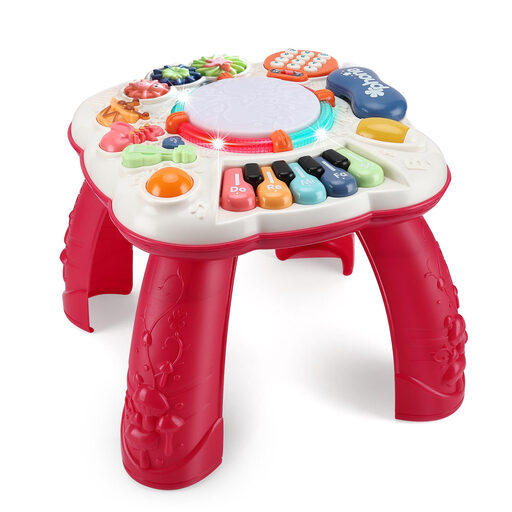
Why this product fits the profile: The table covers several types of play in one product and is intended for ages 6 to 36 months according to the product details. Removable legs allow it to be used as a floor play mat or a standing table.
The six play zones combine buttons, a drum, gears and role-play. The volume control helps you adjust the noise level in your living space.
ABS plastic, rounded edges, six play areas and an adjustable sound level as described.
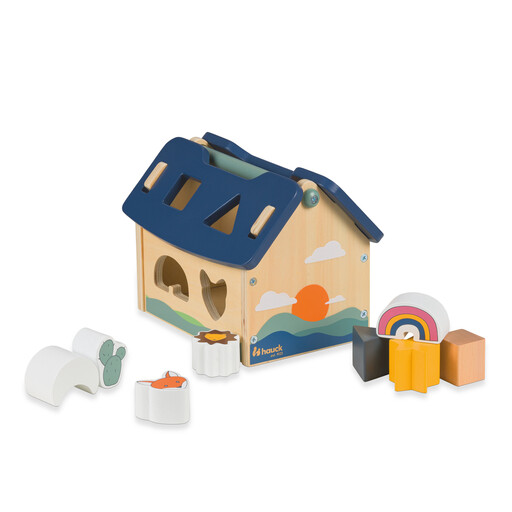
Why this product fits the profile: This wooden toy is designed for children from 12 months and focuses on sorting, stacking and recognising shapes and colours.
It does not rely on electronic stimuli but on a clearly recognisable task. The product description explicitly mentions small parts and the need for supervision.
FSC-certified wood according to the supplier, eight building blocks, a removable roof and an integrated storage option.
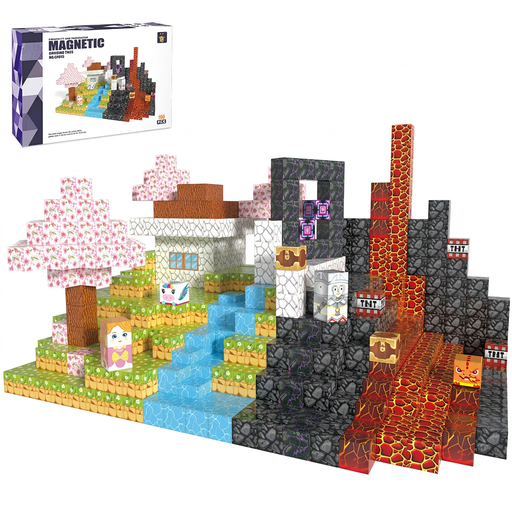
Why this product fits the profile: This set is designed for children from 3 years and offers 100 pieces for repeated, open-ended construction at home or on the go.
The age limit and the warning about swallowable magnets are clearly stated. Regular checks for cracks or exposed magnets remain necessary.
100 ABS pieces, 2.5 cm format, storage bag and compatibility with matching magnetic tile sets according to the product details.
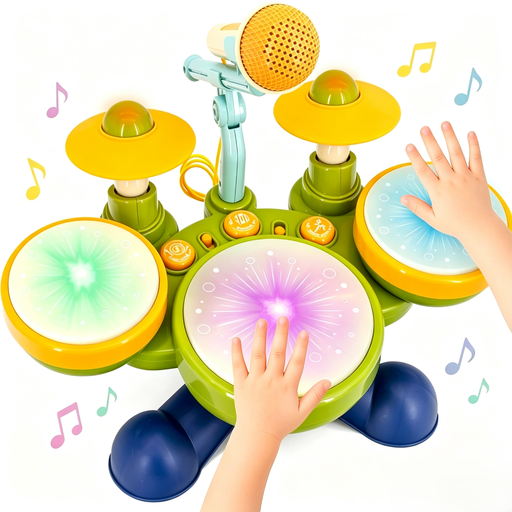
Why this product fits the profile: This musical instrument is intended for ages 1 to 3 according to the supplier and combines drum surfaces, cymbals and a microphone for shared musical play.
The built-in volume control addresses the typical noise issue. The removable stand allows it to be used as a flat play board on the floor instead.
Three illuminated drum surfaces, two height-adjustable cymbals, microphone and ABS plastic with rounded edges according to the product details.
With electronic sensory toys, it is worth checking the power supply: are batteries included, how is the compartment secured and can the product be cleaned? For a motor skills toy from 1 year, large, easy-to-grip elements make sense. For a learning toy from 3 years, the task can be more complex, provided small parts and magnets are handled safely.
An early development product does not replace shared activity. Sorting, building or making music usually becomes clearer when adults first demonstrate, name things and then give space. This keeps play age-appropriate without creating pressure to perform.
We have put together a complete, regularly updated list of products that fully meet these strict selection criteria and the safety regulations in force in the EU.
From 12 months, shape sorters, simple wooden puzzles, posting games, large building blocks and sturdy vehicles are obvious options. What matters are the manufacturer's recommendation, the size of the pieces and direct supervision with products that contain small parts.
A fixed duration cannot be set for every child. Short, supervised play sessions with breaks and a variety of activities are sensible. With musical toys, the volume should be set low and the child's behaviour should be observed.
Magnetic building blocks are generally only suitable from the stated age limit, often from 3 years. Swallowed magnets can be dangerous. Therefore, the pieces must be checked regularly for damage and kept out of reach of younger children.