
Lieferung heute & morgen

Qualitätsgarantie

Willkommens-Angebote freischalten: KOSTENLOSE Lieferung | Bis zu 80 % RABATT | Kostenlose 30-Tage-JoyPlus-Testphase
App herunterladen
Learning toys for children should do more than keep them occupied for a short while. They should suit your child’s age and interests, as well as the space you have available. However, there are clear differences between educational toys, role-play toys, construction toys and DIY craft kits. A large number of pieces or lots of lights and sounds aren’t reliable ways to judge a toy on their own.
Three common buying mistakes are particularly likely to lead to a purchase you regret:
For toys for ages 3+, parents and carers should start by reading the warnings. The numbers on the packaging aren’t the only thing that matters: your child’s motor skills are important too. Small components may pose a choking hazard. With magnetic building blocks for children, it’s also important to check that the magnets are securely enclosed and to find out how to inspect the product for damage.
For example, the WANGE building set has 438 pieces and is recommended for children aged 6 and over, with assembly under full supervision. The medical role-play set and doctor’s kit from Theo Klein, on the other hand, are intended for children aged 3 and over, but also contain small accessories. An experiment kit that involves heating or chemical mixtures requires adult supervision, regardless of the child’s age.
Material details such as ABS plastic, wood or plastic with rounded edges can help you narrow down your options. However, they don’t tell you on their own how long a product will last. Also check:
The bow and arrow set is described as being made from plastic, with a statement that it has been tested to ASTM-F963, and includes nine arrows with suction cups. Check the suction cups for wear before every use. Information like this is more specific than general claims such as ‘safe’ or ‘particularly sturdy’.
The size of a product will determine whether it’s practical to use in your child’s bedroom, the living room or on the go. A large play kitchen needs floor space and time to assemble. A doctor’s kit or a cutting set with a storage bag is easier to put away.
Running costs should also factor into your decision. Several products need AA or AAA batteries, which may not be included. Other sets are entirely manual and don’t incur battery costs after purchase. For creative toys, you should also consider consumables: a craft set or experiment kit may only provide enough materials for a limited number of projects.
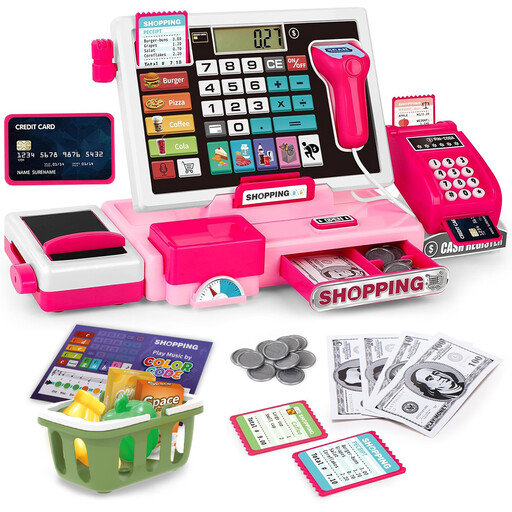
Why this product suits this profile: This set combines role play with a built-in calculator and doesn’t require a large collection of extras to get started.
The features are clearly listed in the description: calculator, scanner, play money and shopping basket. This makes it easy to check exactly what’s included before you buy.
Suitable for ages 3+; includes sound and light effects, play money, a credit card and accessories. Batteries aren’t included.

Why this product suits this profile: This height-adjustable wooden kitchen is designed for long-lasting indoor role play and comes with a clearly specified set of features.
Its dimensions of 91 × 30 × 91 cm and weight of 7.8 kg make it easy to see how much space you’ll need. You can also plan ahead for assembly and buying batteries.
Wooden construction, FSC information, height-adjustable worktop, plus wooden and stainless steel accessories. Suitable for ages 3+.
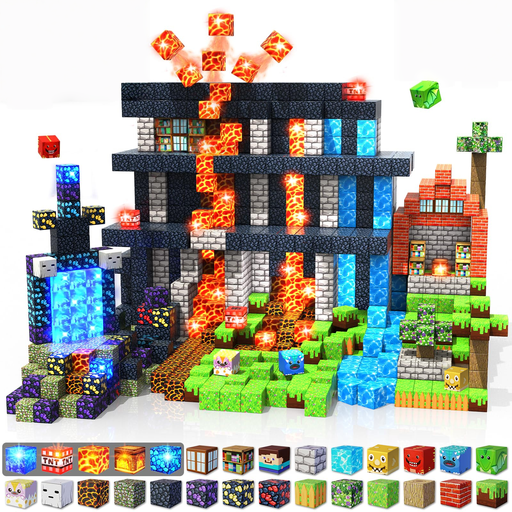
Why this product suits this profile: The large number of pieces makes it a good choice for families who enjoy building, rebuilding and trying out different construction ideas together on a regular basis.
The product details specify the number of pieces, themes and a recommended age of 3+. As there are small parts, check the condition and that everything is present regularly.
150 magnetic cubes, 24 light-up blocks, storage and ideas for open-ended building activities.

Why this product suits this profile: Designed for children aged 8 and over, this set combines a DIY project with step-by-step explanations of gelling agents and changes of state.
The age recommendation, limited amount of materials and need for supervision when heating are all clearly stated. This makes it easier to judge the effort involved and how the set can be used.
Two flavours, moulds, measuring cup and storage jars; no batteries required. An adult must supervise preparation.
We’ve put together a complete, regularly updated list of products that meet these strict selection criteria and fully comply with the safety regulations in force in the EU.
For children aged 3 and over, options include simple role-play toys, a play kitchen, a doctor’s kit, a cutting set or age-appropriate magnetic building blocks. Look for pieces that are easy to grip, straightforward ways to play and clear warnings for the specific product. Small parts should only be used with appropriate supervision.
How long a toy lasts depends on its materials, how it’s used and your child’s interest in it. Construction toys can remain engaging for a long time if they allow for different ways to build. With role-play toys, sturdy connections, wipe-clean surfaces and tidy storage all help make them practical for everyday use. Check moving parts, battery compartments, magnets and accessories regularly for damage.
Manual creative toys usually don’t incur battery costs, but may need consumable materials. Batteries may not be included with electronic play kitchens, tills or bow sets. Before buying, it’s worth checking the power supply, battery type and what’s included.