
Lieferung heute & morgen

Qualitätsgarantie

Willkommens-Angebote freischalten: KOSTENLOSE Lieferung | Bis zu 80 % RABATT | Kostenlose 30-Tage-JoyPlus-Testphase
App herunterladen
A learning tower for children can help toddlers join in at the right height at the sink, kitchen worktop or during simple family activities. But to make sure a children’s learning tower is genuinely practical for everyday use, parents should look beyond its colour and Montessori-inspired design. Construction, footprint, age recommendation and the ability to adjust the model to suit your child’s height are all important considerations.
A claim such as “up to 80 kg” describes the maximum weight capacity; it does not automatically mean a product is suitable for a toddler. Base width, centre of gravity, standing platform and side supports also matter for everyday use. A sturdy wooden learning tower should rest evenly on a flat, non-slip surface. Never exceed the weight limit, and make sure only one child uses the tower at a time.
Some models have a platform that can be adjusted to several heights, while others combine an existing highchair with an attachment. Before buying, check which parts are adjustable and whether you’ll need tools. A height-adjustable learning tower is particularly useful if you plan to use it for several years.
A simple children’s step stool may be enough for washing hands or reaching a low shelf. A full learning tower usually has a raised standing platform and additional side supports. In the kitchen or at worktops, a sturdy step stool with a wide platform is suitable only if your child can stand independently and is closely supervised throughout use.
Labels such as learning tower from 1 year or learning tower from 18 months are useful guides, but they don’t replace an individual assessment. Your child should be able to stand independently, in line with the product’s age recommendation. It’s also important to consider whether they can climb up and down safely and understand instructions while using the tower.
Look for a sufficiently wide base and a platform that doesn’t wobble. Side panels, a safety rail or handles can help your child climb up and hold on, but they won’t prevent every fall. Before each use, check:
Engineered wood and solid wood differ in weight, finish and care requirements. A smooth, splinter-free finish makes cleaning easier, but don’t let water soak into the material. If your Montessori learning tower needs assembling, follow the instructions and use the specified fixings. Once assembled, it’s a good idea to check it again after the first few days of use.
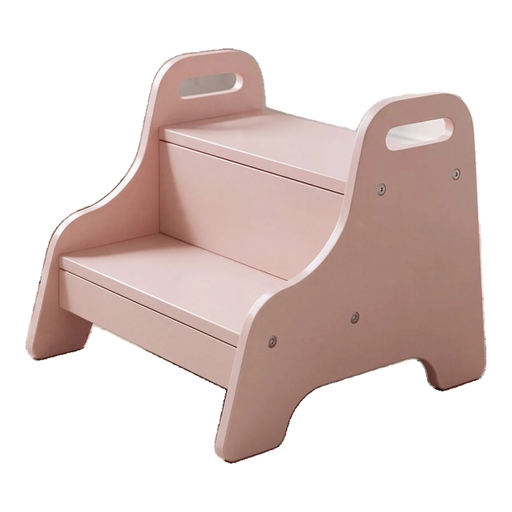
Why this product suits this profile: This children’s step stool for the bathroom and kitchen is designed for families looking for a compact step-up aid with a wide platform and built-in side handles.
The product information specifies reinforced mortise-and-tenon joints and a wide base. This makes key details, such as the base width and fixings, clear.
High-density engineered wood panels, water-based paint, side handles and a wipe-clean surface, according to the product description.
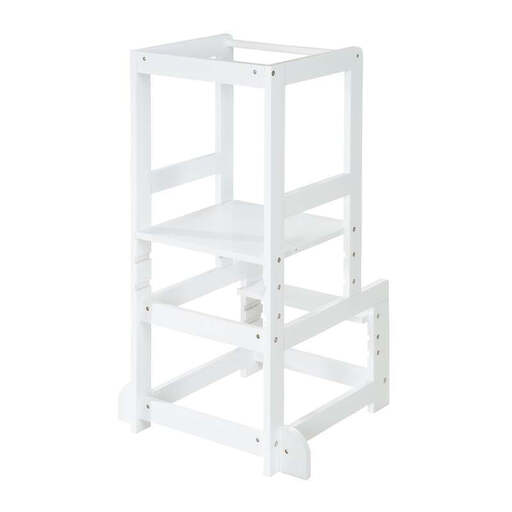
Why this product suits this profile: This model is for families looking for a height-adjustable option for the kitchen and sink, with a stated weight limit of up to 80 kg.
The product details specify three height settings, an adjustable standing platform and foot platform, dimensions of 47 × 47 cm and a maximum height of 90 cm.
Height-adjustable platform, stated weight limit of 80 kg and no assembly required, according to the product description.
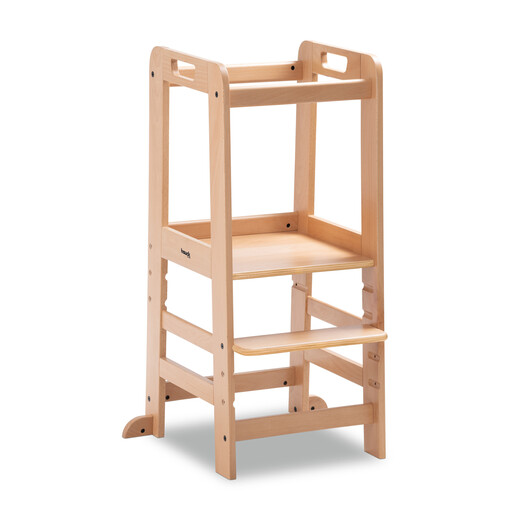
Why this product suits this profile: A good fit for households where the tower will be used regularly in the kitchen, dining area or bathroom, and where three platform heights are needed.
The product information gives a recommended age of around 18 months and up, three platform heights and a weight limit of 40 kg. The age recommendation is therefore based on more than a design claim.
FSC-certified European beech wood, according to the product information; three height settings; tools included; and stated TÜV testing.
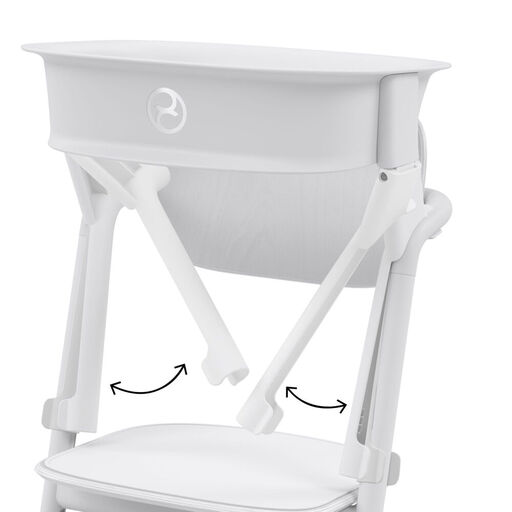
Why this product suits this profile: This attachment is worth considering if your family already owns a Lemo chair and doesn’t need a separate unit that stays set up all the time.
Compatibility with the Lemo chair, sold separately, is clearly stated. This means you can check whether your existing chair is suitable before you buy.
Tool-free assembly in two clicks, a foldable design and silicone mats on the seat and foot platform, according to the product description. The stated age range is from 1 year, up to 25 kg, when used with the Lemo chair.
We’ve put together a complete, regularly updated list of products that meet these strict selection criteria and fully comply with the safety regulations in force in the EU.
Always position the learning tower so your child can’t reach hot pans, sharp kitchen utensils or cleaning products. In the bathroom, don’t place the children’s learning tower directly on a wet, slippery patch of floor. An adult should stay close by throughout use.
For many models, a damp cloth is all you need for cleaning. Don’t use abrasive products, and don’t leave spilled water on wood or engineered wood. Regularly check the screws, joints, feet and surfaces. How long the tower lasts depends on its materials, how heavily it’s used, how well it’s cared for and how quickly your child grows.
It depends on the model and your child’s stage of development. According to the product information, some models are designed for children from around 1 year, while others are for children from around 18 months. Your child should be able to stand independently and should only climb onto the tower under supervision.
A step stool is suitable for short tasks at the sink or for reaching low shelves. A learning tower usually offers more side support and a raised platform for activities at worktops. The right choice depends on where it will be used, your child’s age and stability, and the manufacturer’s guidance.
There’s no fixed answer, as it depends on the individual product and child. Height-adjustable models can adapt to your child’s height for longer. The key factors are the maximum weight limit, safe use and whether your child can climb up and down independently.