
Lieferung heute & morgen

Qualitätsgarantie

Willkommens-Angebote freischalten: KOSTENLOSE Lieferung | Bis zu 80 % RABATT | Kostenlose 30-Tage-JoyPlus-Testphase
App herunterladen
Anyone looking for Le Creuset baking dishes usually values durable materials, attractive design and versatile use. However, there are clear differences between baking dishes, ramekins, muffin tins and flan dishes. A dish that is suitable for a gratin will not necessarily be right for delicate tarts or small desserts.
To ensure your choice is not based solely on the brand name or colour, it is worth considering the material, dimensions, temperature range and care instructions.
A decorative dish may not provide enough capacity in practice for the portion size you want. For individual desserts, soufflés or side dishes, 200 ml is often sufficient. For a quiche or a family-sized bake, however, you will need considerably more surface area and height.
You should therefore check:
“Ovenproof” does not mean the same thing for every product. According to the product specifications, a stoneware-based Le Creuset baking dish may be designed for a particular temperature range, while a non-stick carbon steel baking tin may have a different upper limit.
The transitions between cooling and heat sources are also important. Even if a dish is suitable for the freezer and oven, it should not be exposed to sudden, extreme temperature changes. Allow hot dishes to cool before cleaning them or placing them on a cold surface.
A non-stick baking tin is often easy to release, but is more vulnerable to knives, metal forks and abrasive cleaners. For coated dishes, silicone, wooden or heat-resistant plastic utensils are the practical choice.
According to the relevant product specifications, glazed stoneware has a surface that is resistant to staining and odour absorption. Nevertheless, abrasive sponges and harsh cleaning products should be avoided.
Stoneware baking dishes retain heat and are suitable for even cooking and serving straight at the table. Glazed surfaces can also be odour- and flavour-neutral. However, they are heavier and should be protected from knocks and thermal shock.
Carbon steel tins are generally lighter and particularly practical for flan, muffin and tartlet tins. With a non-stick baking tin, gentle cleaning and suitable kitchen utensils are essential. A removable base can make it easier to release tarts.
For crème brûlée, small bakes, baked eggs and desserts, Le Creuset ramekins with a capacity of around 200 ml are well suited to individual portions. For gratins and side dishes, sets with rectangular or square dishes in different sizes offer greater flexibility.
A Le Creuset baking dish set is particularly useful if you regularly prepare both small and medium quantities. When choosing one, check that the sizes included really suit your recipes and the storage space available.
Stackable dishes take up less space in the kitchen cupboard and are ideal for households that want to store several individual portions. However, check whether the product description confirms that the dishes are genuinely stackable and whether they are suitable for cleaning in the dishwasher.
Hand washing is often recommended for coated carbon steel tins. Depending on the model, glazed stoneware dishes may be dishwasher-safe. The individual product description is therefore the decisive source of information.
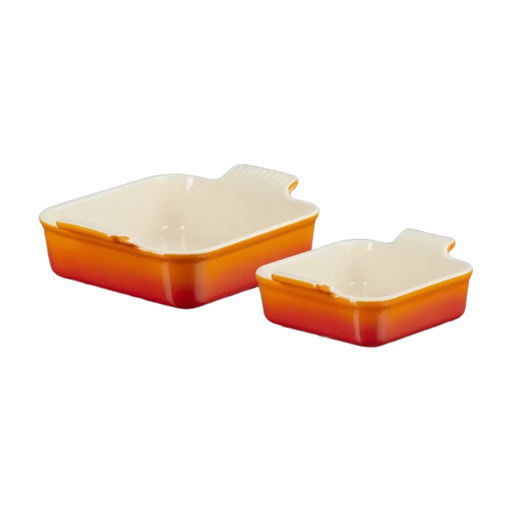
Why this product suits the profile: Two square stoneware dishes measuring 13 and 20 cm cover small portions as well as medium-sized side dishes and bakes.
The different sizes reduce the risk of having to buy a separate dish for every recipe quantity. The specified temperature range is from -18 °C to 260 °C.
Enameled stoneware, side handles, and suitability for the oven, microwave, freezer and dishwasher according to the product description.
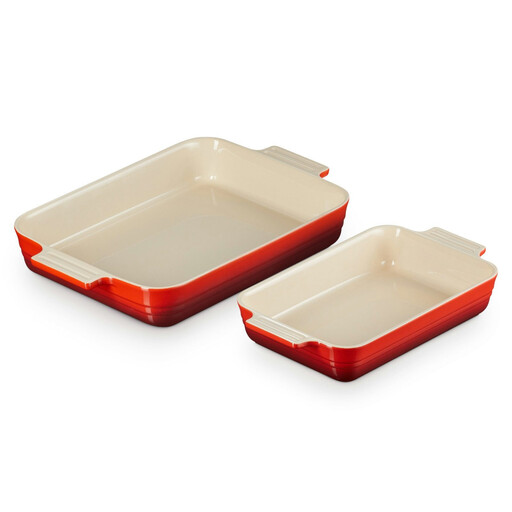
Why this product suits the profile: The rectangular dishes measuring 25 and 32 cm are designed for gratins, bakes, side dishes and desserts for small to medium-sized households.
The clearly stated temperature range of -23 °C to 260 °C makes it easier to plan how the dishes can be used. Nevertheless, the scratch-resistant glaze should not be cleaned with abrasive products.
Stoneware with even heat distribution, an enamelled surface, and suitability for the oven, microwave, freezer and dishwasher according to the specifications.
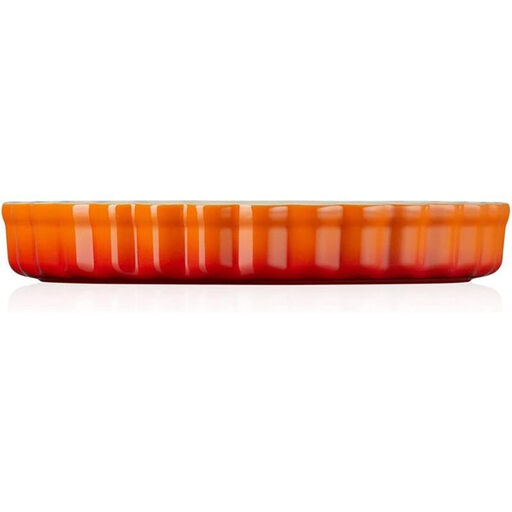
Why this product suits the profile: The 24 cm flan dish with a fluted rim is designed for tarts, quiches, cakes and flans, and can go straight from the oven to the table.
The diameter and 1.4 l capacity are clearly specified. This makes it easier to match the dish to recipe quantities than an offer without dimensional information.
Stoneware with a scratch-resistant glaze, a temperature range of -23 °C to 260 °C, and suitability for the oven, freezer, microwave and dishwasher according to the product specifications.
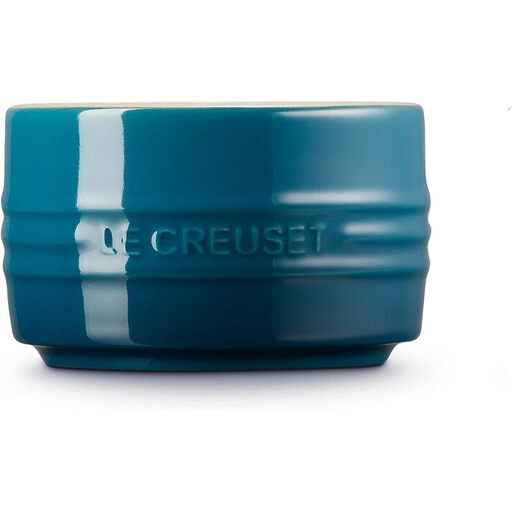
Why this product suits the profile: This stackable stoneware dish with a 200 ml capacity is suitable for individual desserts, starters, snacks and small bakes.
The stackable design is ideal when storage space is limited. The capacity also prevents individual portions from spreading out in a dish that is too large.
Stackable stoneware, ovenproof up to 260 °C, and suitable for the freezer and dishwasher according to the product description.
We have put together a complete, regularly updated list of products that fully meet these strict selection criteria and the safety regulations applicable in the EU.
Many of the stoneware dishes mentioned are ovenproof up to 260 °C, according to the product description. Depending on the model, the non-stick carbon steel tins are suitable for temperatures of up to 240 °C. The temperature specification for the individual product is always decisive. The stoneware dishes mentioned are not designed for use on the hob or over direct heat.
For quiches, tarts and flans, a dish with a suitable diameter and a shallow, shaped rim is a sensible choice. The 24 cm flan dish is designed for these dishes. For long, narrow tarts, the rectangular carbon steel tin measuring 33 × 13 cm with a removable base may be a better match for your recipe.
A set can be worthwhile if you regularly prepare different portion sizes. The key factors are the dimensions included, the material and the storage space available. For small households, baking dishes in different sizes are practical; for desserts and snacks, several stackable dishes may be the more space-efficient solution.