Students building up a growing archive of recordings
If you collect recordings over a long period, make sure you have enough usable capacity and a practical way to transfer files from your laptop to central storage.


A NAS is a good choice if you regularly want to store lecture recordings over your network or give several authorised devices access to them. For occasional copies from a single computer, an external hard drive may be simpler. Plan for the storage you can actually use, as well as a separate backup that you can restore from. The German Federal Office for Information Security (BSI) recommends keeping backups separate and planning how to restore them.
If you collect recordings over a long period, make sure you have enough usable capacity and a practical way to transfer files from your laptop to central storage.
For your own teaching materials, plan for a separate backup as well as storage, and make sure you can test restoring files from it. If the recordings belong to other people, check their rights separately.
If several authorised devices need access to the same files, check your shared folders, access permissions and network connection at your workplace.
Suitable if: you want to store files over your network regularly or give several authorised devices access.
Bear in mind: setup, power, suitable drives and a separate backup all add to the overall cost and effort.
Suitable if: you already have a compatible NAS enclosure and want to expand its storage or replace a drive.
Bear in mind: an internal hard drive on its own does not provide network storage. Check that the specific drive is compatible with your enclosure and software version.
Suitable if: you mainly copy files occasionally from one computer, or need a backup destination that is separate from your NAS.
Bear in mind: it does not provide the central network sharing you get with a NAS. You should plan how to restore files from it, too.
First decide whether you need network access or mainly copy files locally. You can then plan your storage, backups and connection more effectively.
| Buying priority | What should you check before buying? | Who should pay particular attention? |
|---|---|---|
| Usable storage | Assess your existing recordings and expected growth; check the usable storage available with your chosen drive configuration. | If my archive is growing, I want enough room for existing files and new recordings. I don’t want to mistake the drives’ combined advertised capacity for usable storage. Capacity is the main concern for around 30 % of consumers. |
| Restoring files | Plan a separate backup destination and test restoring a sample file. | If my recordings are hard to replace, I want to be able to recover them from a separate copy after loss or accidental deletion. Around 30 % of consumers put the ability to restore files first. |
| Transferring files from a laptop | Check network access at your workplace and consider your computer, network and NAS connections together. | If I regularly transfer large files from my laptop, I need a suitable connection throughout the whole network. For around 20 % of consumers, this transfer route is their top buying priority. |
| Access and equipment | Check shared folders, access permissions and what’s included; some NAS enclosures are sold without drives. | If several people or devices need access, I want to plan access permissions and any additional components in advance. For around 20 % of consumers, controlled access and keeping the overall setup manageable are the main priorities. |
Mirroring alone does not give you a recovery copy separate from your NAS. To protect against ransomware, the BSI recommends keeping backups separate and planning and testing how to restore them.
Plan for a separate copy before you buy, and test whether you can restore a recording from it.
If you buy an enclosure without drives, you’ll need to budget for compatible internal hard drives and, if necessary, a separate backup destination.
A fast port on the NAS does not prove that the entire transfer route from your laptop will reach the same speed.
Consider your computer, network and NAS together before choosing a connection for your workflow.
Depending on your existing network, you may need additional compatible components.
Drive ranges can use different recording technologies, and compatibility depends on the specific combination of drive, NAS model and software version.
Check the full drive model number against the device manufacturer’s information.
DiskStation NAS models such as the DS225+ are worth considering as central storage for a network archive.
The TS-264-8G is a two-bay NAS enclosure for file storage and other network tasks.
The F2-425 is a two-bay NAS; the F2-425 Plus is a separate model variant.
The NASync DXP4800 Plus is a four-bay option for a larger or expandable archive.
WD Red Plus is a range of internal NAS HDDs for an enclosure you’ve already chosen or own.
The Joybuy products below are internal Synology NAS hard drives for an existing, compatible enclosure. On their own, they do not provide network storage. Check compatibility with your NAS before buying.
 No image available
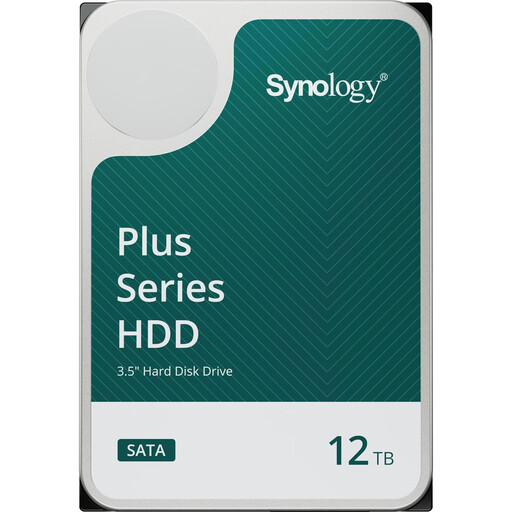
Designed for a compatible Synology NAS when you want to add storage for a growing archive.
12TB; SATA III; 3.5 inches; 7200 RPM; 512MB cache; CMR; helium.
Requires a compatible Synology NAS enclosure and does not provide network storage on its own.
 No image available
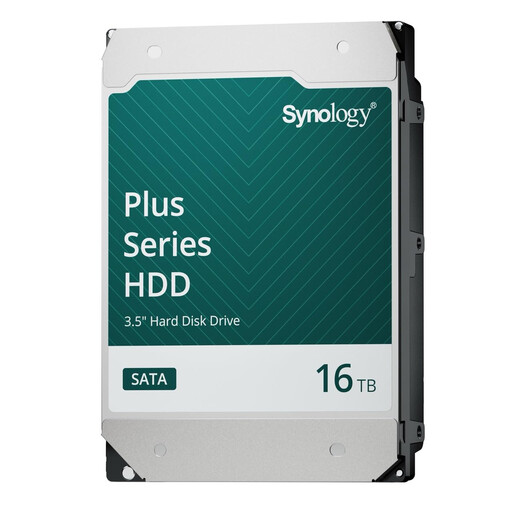
Designed for a compatible Synology NAS when you want to add storage for a larger archive.
16TB; SATA 6Gb/s; 3.5 inches; 7200 RPM; CMR.
Requires a compatible Synology NAS enclosure and does not provide network storage on its own.
 No image available
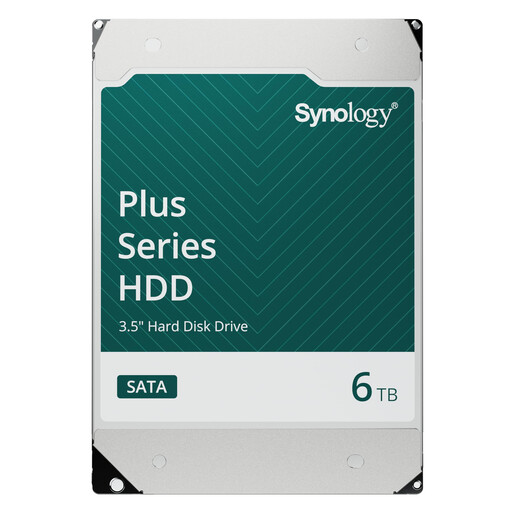
Designed for a compatible Synology NAS if you’re looking for an internal hard drive for your recording archive.
6TB; SATA 6Gb/s; 3.5 inches; 5400 RPM; CMR.
Requires a compatible Synology NAS enclosure and does not provide network storage on its own.
No. An internal hard drive is designed to be fitted inside a suitable NAS enclosure; the enclosure is what provides network storage. If you’re buying an enclosure, check whether drives are included and whether they’re compatible.
Check the exact drive model number and the compatibility information for your DS225+ and DSM version. Since DSM 7.3, Synology says Plus models from 2025 onwards offer more flexibility with third-party HDDs; this is not a blanket guarantee that every drive will work.
Set up a backup routine, keep a separate copy and test that you can restore a file. To protect against ransomware, the BSI recommends keeping backups separate from the rest of the network and testing that they can be restored.
It depends on the specific offer. QNAP explicitly states that the TS-264-8G does not come with an HDD. So check what’s included and whether the drives are compatible with the enclosure you’re considering.
Buying a NAS does not give you the right to make recordings. The University of Bremen notes that students cannot assume they have permission to record just because a lecturer has consented to a recording. You must respect the rights of the speakers and, where relevant, anyone else who is recorded; section 201 of the German Criminal Code makes the unauthorised recording of spoken words not intended for the public a criminal offence. Whether a particular recording may be stored or shared depends on where it came from, the rights granted and the circumstances.