Students running out of device storage
If your internal storage is running low, you can move existing lecture files elsewhere. When planning, allow for future semesters and the amount of storage you can actually use.


If you want to store recordings centrally and access them from several devices, a NAS with suitable drives could be a good option. If you already have a NAS, first check whether an additional drive is compatible. For an archive you mainly use with one device, an external hard drive may be the simpler storage option. Whichever you choose, plan for a separate backup: Germany’s Federal Office for Information Security (BSI) does not consider RAID mirroring to be a backup.
If your internal storage is running low, you can move existing lecture files elsewhere. When planning, allow for future semesters and the amount of storage you can actually use.
If you want to recover files after a fault or accidental deletion, you need a separate backup option as well as your working archive. The BSI recommends including recovery in your backup plan.
If you want to save recordings on one device and access them on another, a NAS can provide a central archive. Synology documents cross-device access for the DS223j; setting up network access is still something you’ll need to plan for.
Suitable if: you want to store recordings centrally and access them from several devices.
Keep in mind: you’ll need to consider the enclosure, drives and setup separately. Two bays don’t automatically provide a separate backup.
Suitable if: you already own a NAS and need additional archive storage for it.
Keep in mind: the drive isn’t a standalone network storage device; its model and form factor must be compatible with your existing enclosure.
Suitable if: you mainly store files on one device and don’t need central network access.
Keep in mind: you’ll need to manage connecting, copying and restoring files yourself. A single drive doesn’t also count as a separate backup.
| Consideration | What should you look for when buying? | Who is this particularly important to? |
|---|---|---|
| Usable archive space | Estimate file sizes and future storage needs; consider the available bays and storage configuration. | If I want to keep recordings from future semesters, the amount of space I can actually use matters; around 36% of consumers make archive capacity their top priority. |
| Recovery | Plan for a separate backup destination and check that you can restore files from it. | If I want to be able to recover deleted or damaged recordings, mirroring alone isn’t enough; around 29% of consumers put recovery first. |
| Access from multiple devices | Check which devices you need to use and how to connect to your network; set up access permissions for the archive. | If I want to open the same archive on several devices, central network access is essential; around 21% of consumers prioritise access from multiple devices. |
| Drive for an existing NAS | Check the full model number, supported form factor and compatibility information from the enclosure manufacturer. | If I already own a NAS and just need compatible extra storage, I don’t want to choose a second enclosure; around 14% of consumers make upgrading an existing NAS their top priority. |
IronWolf, WD Red Plus and Toshiba N300 are drive ranges. To access files over a network, you need a suitable NAS that has been set up.
Before choosing, check whether the product is an empty enclosure, an internal drive or a complete system with drives installed.
The BSI points out that mirroring can also copy unwanted changes and is no substitute for a backup.
Keep your working archive separate from your backup destination, and check that you can actually restore your recordings.
Western Digital distinguishes between WD Red with SMR and WD Red Plus and WD Red Pro with CMR. A similar range name alone doesn’t tell you whether a drive is compatible with your enclosure.
Compare the full model number and recording technology, and check the NAS manufacturer’s compatibility information.
Synology offers NAS enclosures for centralised file management; the DS223j is a documented option with two drive bays.
The QNAP TS-233 is a NAS enclosure with two drive bays for a central archive on your home network.
Western Digital offers internal NAS drives; the full model name is essential when choosing one.
Seagate’s IronWolf range comprises internal drives for NAS systems and multimedia storage.
Toshiba describes its internal N300 range as suitable for use in NAS systems, including for archiving, backups and streaming.
This selection includes Synology NAS enclosures with four or eight drive bays, as well as internal Synology drives for a compatible NAS.
 No image available
For a central archive if you want to use multiple drives in one NAS enclosure.
The product description lists two 2.5GbE ports, M.2 NVMe SSD caching and expansion to up to nine bays. According to the product information, Synology-branded drives must be used.
 No image available
For a central archive if you’re looking for a NAS enclosure with eight drive bays.
The product description lists two 2.5GbE ports, an optional 10GbE upgrade and capacity for up to 360 TB. Before choosing, check which drives and expansions suit your needs.
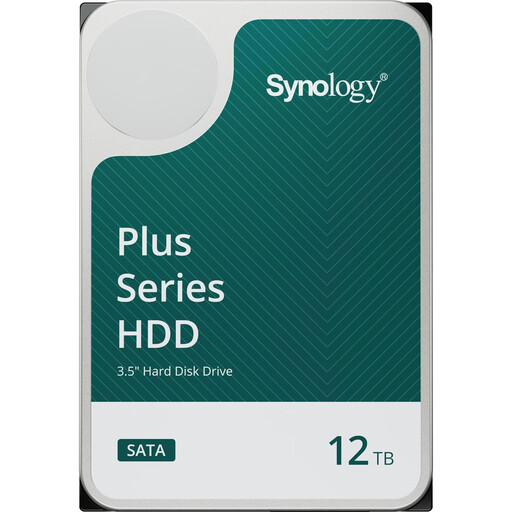 No image available
For a compatible Synology NAS if you want to add an internal drive to your archive.
The product description lists 3.5 inches, SATA III, 7,200 rpm, 512 MB cache and CMR. The drive isn’t a standalone network storage device.
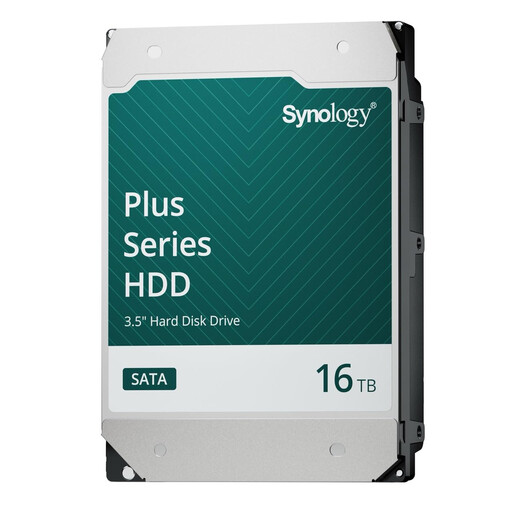 No image available
For a compatible Synology NAS if you want to add an internal drive with the stated capacity.
The product description lists SATA at 6 Gb/s, 3.5 inches, 7,200 rpm and CMR. The drive isn’t a standalone network storage device.
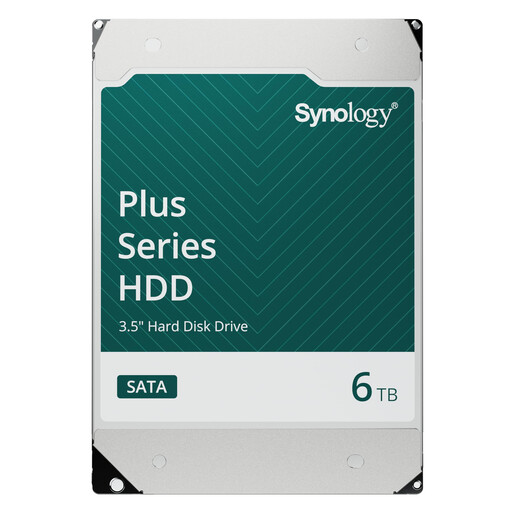 No image available
For a compatible Synology NAS if you need an internal drive to add more archive space.
The product description lists SATA at 6 Gb/s, 3.5 inches, 5,400 rpm and CMR. The drive isn’t a standalone network storage device.
First, copy the files to your configured destination and check that they open correctly there. Only delete the original files once your separate backup destination is working and you’ve tested the recovery process. The BSI stresses that a backup plan should include recovery.
No. According to the BSI, RAID mirroring doesn’t count as a backup because changes can be applied to both mirrored copies of your data. So make sure you have a separate backup destination.
Check whether the enclosure comes with drives, which drives are compatible and where you’ll keep a separate backup. A NAS enclosure on its own isn’t the same as a configured archive with a tested recovery process.
No, there isn’t a blanket yes to this question. Section 201 of the German Criminal Code covers the unauthorised recording of words spoken in private and certain uses of such recordings. Section 53 of the German Copyright Act permits private copies only subject to its conditions and doesn’t grant general permission to record or share them. Before recording or setting up access, check that you have permission for the specific event, and check your university’s rules and the rights to share the recording. These laws are published on the “Gesetze im Internet” website by the Federal Ministry of Justice and the Federal Office of Justice.
A voice can be personal data; the University of Münster explicitly lists voices as an example. Who is responsible for data protection in a particular project depends on how the data is processed and can’t be determined simply by choosing a NAS.